

.png) 3 hours ago
8
3 hours ago
8
PROTECT YOURSELF with Orgo-Life® QUANTUM TECHNOLOGY
Orgo-Life the new way to the future Advertising by Adpathway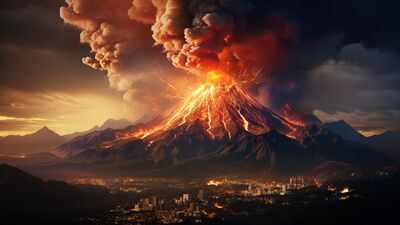
Tiny fossils have helped scientists crack a Cretaceous cold case. Using chemical signals preserved in microscopic shells, Northwestern University researchers found strong evidence that ocean acidification helped trigger one of the biggest extinction events in the history of planktic foraminifera, small shell-building organisms that are essential to Earth’s carbon cycle.The extinction happened around 113 million years ago, during the Early Cretaceous, and appears to have been driven by massive volcanic eruptions from the Kerguelen Plateau in the southern Indian Ocean. Those eruptions released huge amounts of carbon dioxide into the atmosphere, which then dissolved into the sea and made surface waters more acidic. That chemical shift made it much harder for marine organisms to build and maintain their shells.
What the fossils revealed
The study focused on planktic foraminifera, tiny organisms that live near the ocean surface and build shells out of calcium carbonate. Because they lock carbon into their shells, they play an important role in the ocean’s natural carbon cycle.What made this discovery possible was a clue hidden inside the fossils themselves: calcium isotopes. The researchers found a sharp rise in calcium isotope ratios right as the extinction unfolded, which suggests the organisms were calcifying far more slowly than usual.
In other words, their shell-building process was under severe stress.Jonathan Chen, who led the study, said scientists already knew the plankton were getting smaller and building thinner shells, but they did not know why. The isotope data provided what he called the missing evidence, effectively linking ocean acidification to the collapse, as per reports.
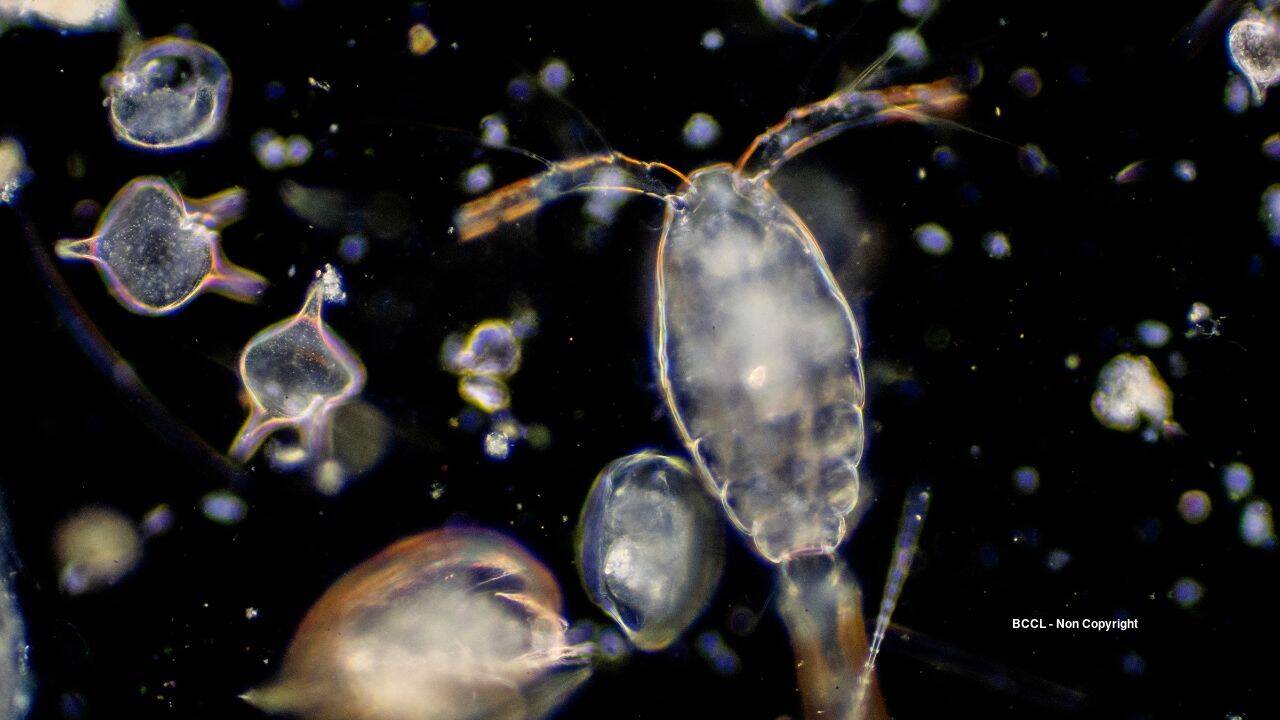
Plankton (representative image)
Why the Kerguelen Plateau matters
The Kerguelen Plateau was not a small eruption event. It was a massive volcanic province, and when it erupted, it sent carbon dioxide into the atmosphere on a scale large enough to alter ocean chemistry.
Once the oceans absorbed that CO2, pH levels dropped and carbonate ions became less available: a serious problem for shell-building organisms, as per he study.That matters because carbonate ions are the raw material for calcium carbonate shells. When those building blocks become scarce, organisms like foraminifera struggle to grow properly. The result can be smaller, weaker shells, slower growth and eventually extinction.The team argues that the chemistry of the fossil shells lines up neatly with the known biological stress recorded in the fossil record. That makes this one of the clearest ancient examples yet of how rising CO2 can change ocean chemistry and damage marine life.
A deep-sea clue from the Falkland Plateau
To investigate the extinction event, the researchers studied hundreds of fossil specimens collected from sediments on the Falkland Plateau in the South Atlantic.
Those samples were originally recovered in the 1980s from a Deep Sea Drilling Project site and later obtained through the Smithsonian Institution.Because the fossils are only about the size of a grain of sand, sorting them was painstaking work. Chen used a fine brush to separate planktic and benthic foraminifera and then selected pristine shell material for testing. The team also had to remove secondary calcium carbonate so the results reflected the original chemistry of the organisms, not later contamination.That careful approach helped the scientists measure the shells’ original isotopic makeup and build a more reliable picture of what happened during the extinction interval.
Surface waters took the biggest hit
One of the most interesting findings was that planktic and benthic foraminifera were affected differently. The surface-dwelling planktic species showed a dramatic increase in calcium isotope values, which points to a major slowdown in shell formation.By contrast, benthic foraminifera living on the seafloor showed only mild changes. That suggests the deeper ocean did acidify, but not as severely as the surface layers. The reason is tied to how the volcanic carbon entered the system: it first hit the atmosphere and then the upper ocean before circulating more widely.Brad Sageman explained that many large igneous provinces erupt underwater, but this one spewed into the air.
That meant surface waters absorbed the first and strongest chemical shock. Andrew Jacobson added that the excess alkalinity later moved through the water column, which may have reduced the impact on benthic species.
A pattern that repeats through deep time
This is not the first time Northwestern researchers have linked volcanic activity, ocean acidification and extinction. The new study is the fifth in a series led by Jacobson and Sageman, covering events from the Early Cretaceous to the Paleocene-Eocene Thermal Maximum and beyond.Across those different time periods, the same pattern keeps appearing: big volcanic eruptions release carbon dioxide, seawater becomes more acidic, shell-building organisms struggle, and extinction follows. The researchers say the calcium isotope signal is now strong enough to act as a geochemical marker for biological crisis in the rock record.That is a major step forward for paleontology and Earth science because it helps connect environmental change directly to biological outcomes, rather than relying only on indirect evidence like shell size or species decline.
Why this matters today
The ancient ocean may be long gone, but the warning is still relevant. Today, human activities are pushing more carbon dioxide into the atmosphere, and the oceans continue to absorb much of it. That process is already causing measurable ocean acidification.The new study suggests that surface-dwelling shell-builders may be especially vulnerable if ocean chemistry keeps shifting. That matters not just for foraminifera, but for the wider ecosystems that depend on them. Because these tiny organisms help regulate the carbon cycle, their decline could ripple far beyond their own species.For scientists, the fossils offer something rare: a natural experiment from deep time. By looking at what happened during ancient greenhouse episodes, researchers can better estimate what rising CO2 might do to the modern ocean.




















 English (US) ·
  French (CA) ·
  French (FR) ·