

PROTECT YOURSELF with Orgo-Life® QUANTUM TECHNOLOGY
Orgo-Life the new way to the future Advertising by Adpathway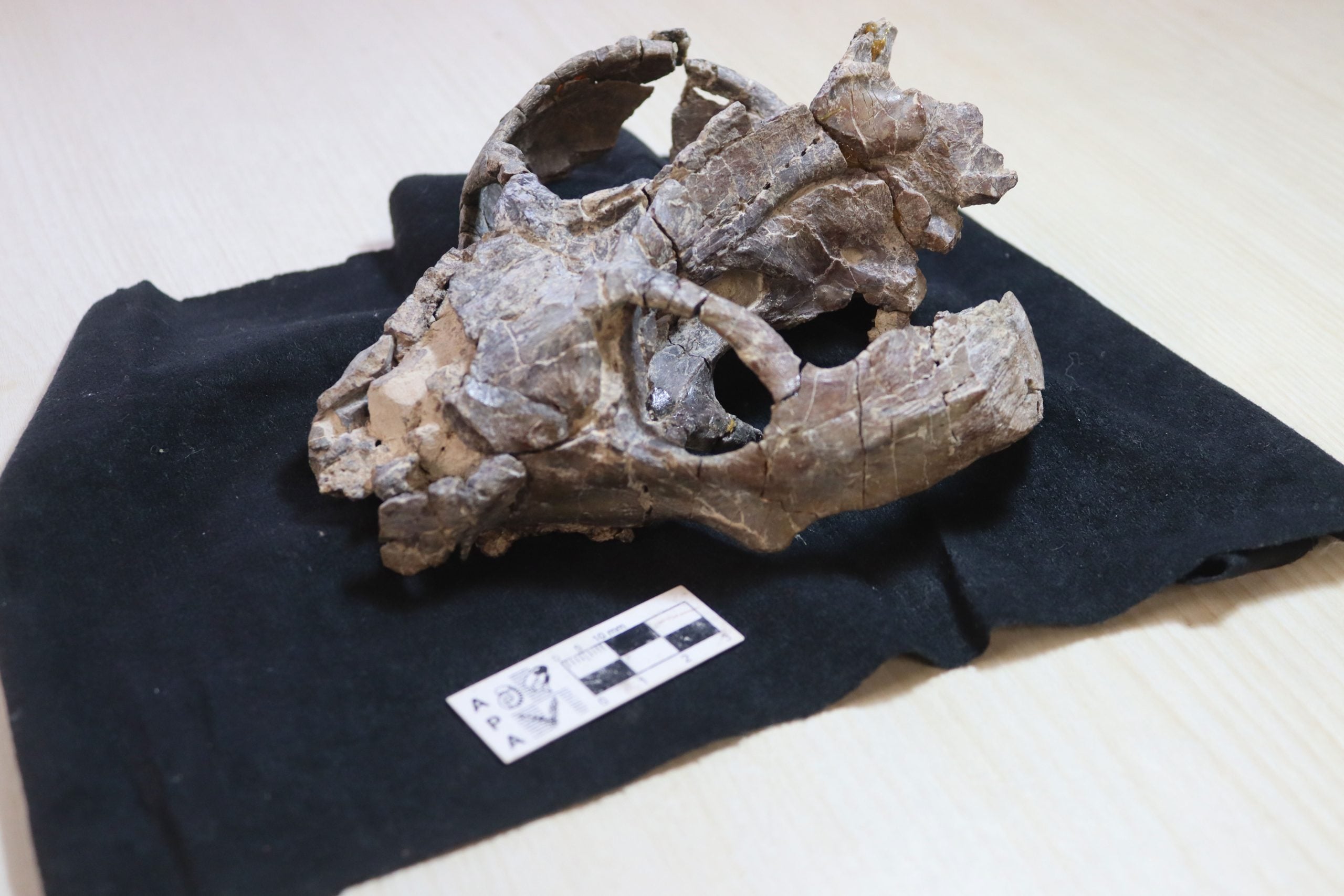 Skull of the Chiniquodon theotonicus individual that was used for this study. Credit: Leandro Gaetano
An unusual growth mark in an ancient bone may help resolve a longstanding mystery surrounding the origins of mammalian reproduction.
A microscopic growth mark preserved inside a 236 million-year-old fossil may help answer a longstanding question about how the ancestors of mammals reproduced. A study published in Frontiers in Mammal Science provides the first compelling evidence that the cynodont Chiniquodon theotonicus may have been viviparous, meaning it gave birth to live young rather than laying eggs.
“We show for the first time that live birth was present in at least one mammalian ancestor, Chiniquodon theotonicus, which lived approximately 236 million years ago,” said lead author Dr. Leandro Gaetano, a paleontologist at the National Scientific and Technical Research Council (CONICET) in Argentina. “This implies that viviparity among early cynodonts originated in the mammalian lineage at least 95 to 90 million years earlier than previously thought.”
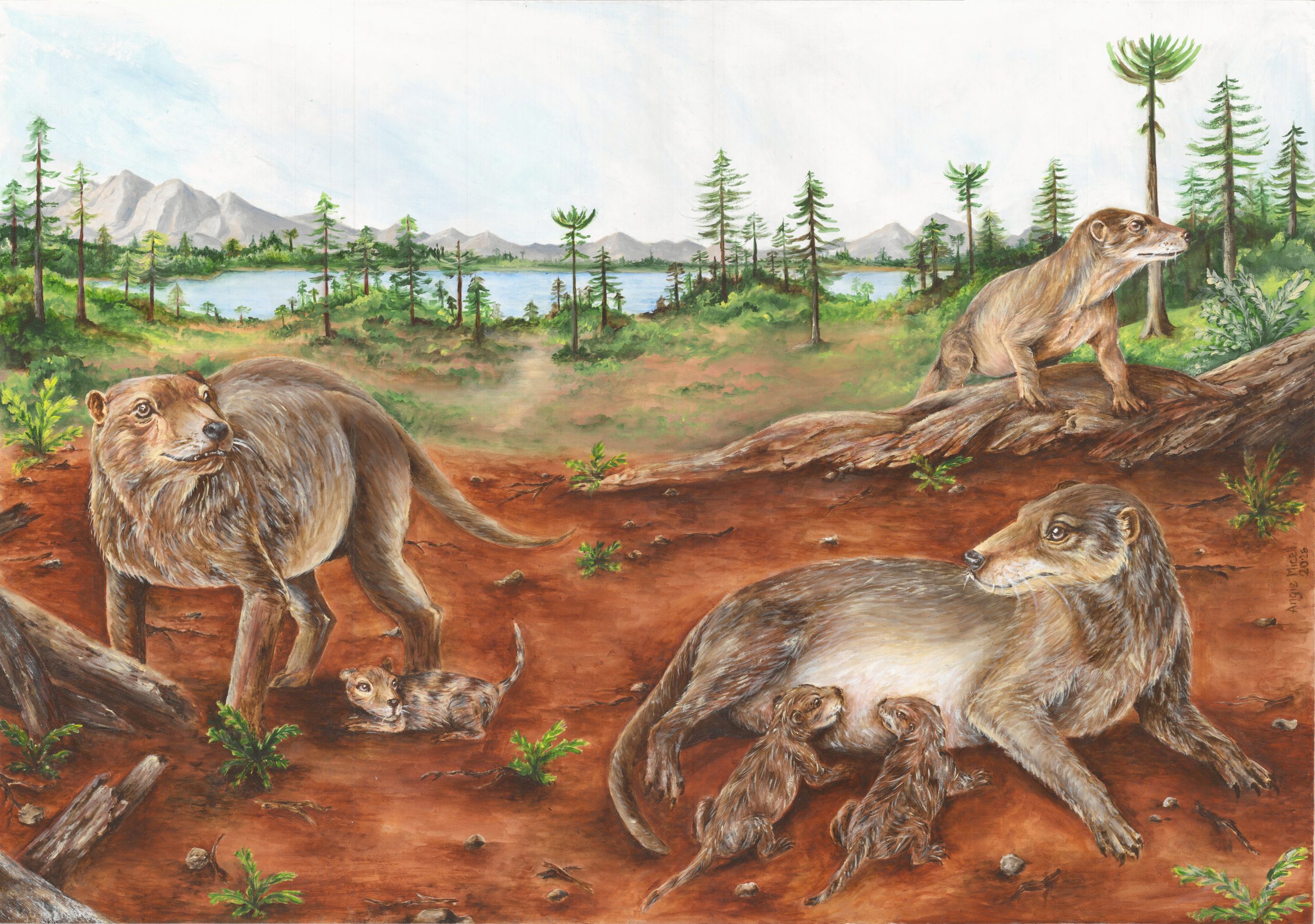 “Triassic Mothers,” a life reconstruction of a group of Chiniquodon theotonicus individuals, a pregnant female (left) as well as a female (right) breastfeeding a few, relatively large neonates. Credit: María de los Ángeles Miceli Baro
“Cynodonts thrived in the Triassic, a period of recovery and restructuring of ecosystems after one of the most devastating mass extinctions in life history,” explained senior author Adriana Mancuso, a researcher at CONICET who focuses on the evolution of terrestrial ecosystems. “This meant high competition for resources and strong predatory pressures. Combined with a trend toward aridity and strong seasonality, embryos of viviparous species would be better protected than those of egg-laying species.”
A neonatal line changes the picture
The investigation began during a postgraduate course, when researchers noticed an unusual growth mark within the microscopic bone structure of a fully grown C. theotonicus fossil from northwestern Argentina. Comparisons with living species indicated that the feature could be a neonatal line, a distinct growth ring in bone or teeth that forms when growth accelerates sharply soon after birth.
To test that interpretation, the researchers estimated how much the animal weighed as a newborn relative to its later body mass. They then compared this ratio with measurements from several thousand living mammals, non-avian reptiles, and birds.
“If mammalian ancestors were egg-laying or viviparous has been considered an inscrutable mystery,” said Gaetano. “We came up with a somewhat ingenious set of methods to get at something very difficult to analyze in the fossil record.”
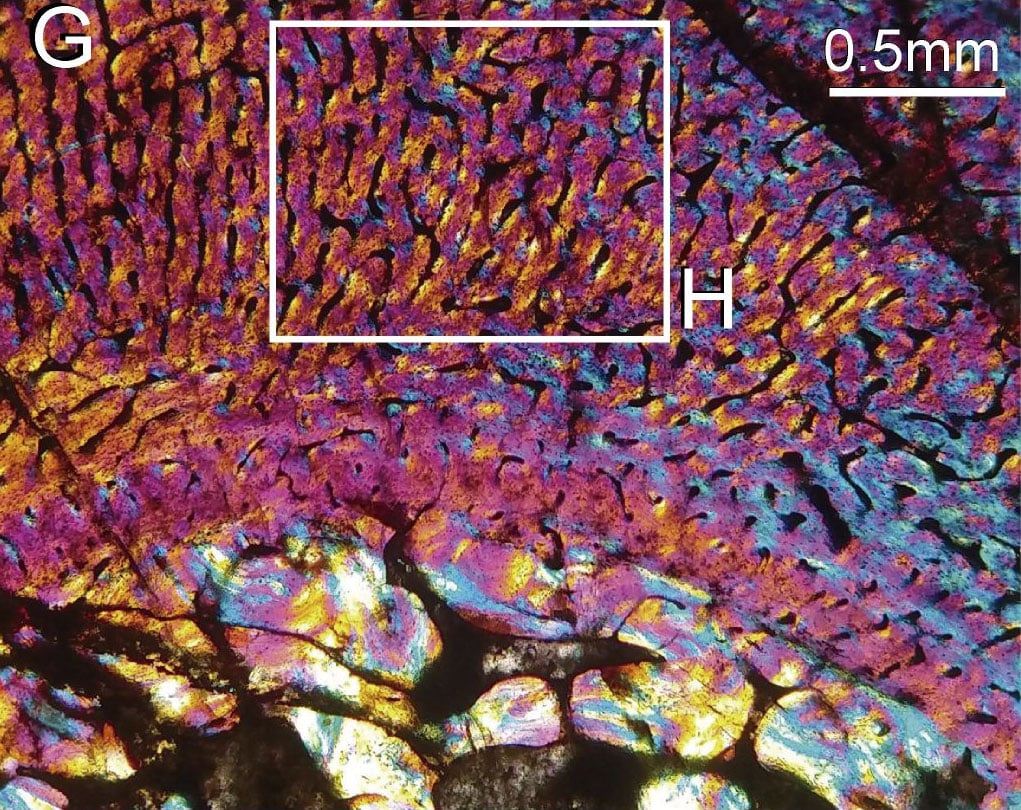 The neonatal line in Chiniquodon. Credit: Gaetano et al., 2026
Birth size matches living mammals
Measurements of the neonatal line and the bone’s outer surface allowed the researchers to estimate the size and weight of C. theotonicus at birth and at death. They calculated that the animal weighed about 1.7kg when born and around 12kg when it died. Its estimated birth mass was therefore approximately 14% of its mass at death.
That proportion differs sharply from many living reptiles. Turtles, snakes, and crocodilians weighing between 8kg and 14.5kg can produce hatchlings weighing only nine to 53g, giving neonate-adult mass ratios of approximately 0.1% to 0.6%. Some cranes, pelicans, and vultures weighing between 8kg and 21.5kg produce hatchlings between 110g and about 357g, corresponding to ratios of roughly 1.3% to 4.5%.
Living mammals of similar size, weighing between 8kg and 15kg, can give birth to newborns weighing from 35.5g to 1.87kg, with neonate adult mass ratios reaching 18.77%. One example is the bay duiker antelope, whose newborn young weigh about as much as the estimated newborn C. theotonicus. The analysis excluded non-placental mammals that lay eggs or harbor newborns in belly pouches and produce extremely small young.
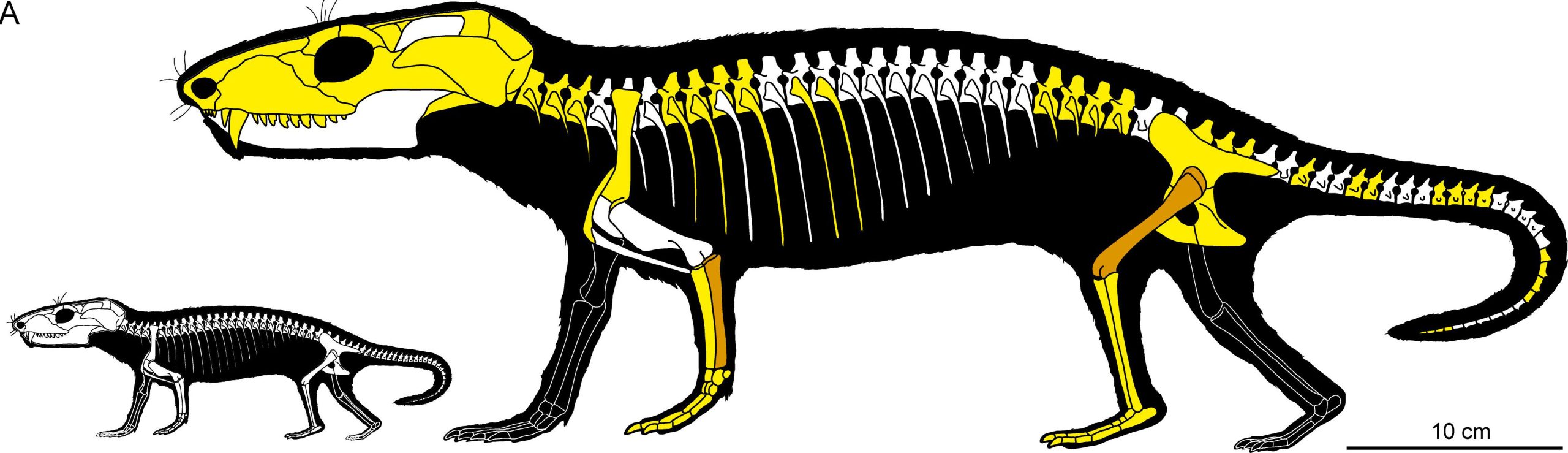 Representation of neonate and adult Chiniquodon theotonicus. Recovered (yellow) and histologically analyzed (orange) bones of specimen CRILAR PV109, the individual used in this study. Credit: Gaetano et al., 2026
The fossil clusters with placental mammals
“We were amazed to find that C. theotonicus grouped with extant placental mammals, being clearly distinct from other amniotes like reptiles or birds,” said Gaetano.
“In cynodonts, embryonic tissues were never observed before, let alone a neonatal line,” said co-author María Miceli Baro, a graduate student at the University of Buenos Aires. “Through its analysis, we found that a trait that is generally linked to evolutionary success was present in animals long before true mammals originated.”
Viviparity may have evolved far earlier
Live birth has generally been considered a comparatively recent evolutionary development within the mammalian lineage. The evidence from C. theotonicus raises the possibility that this reproductive strategy, along with potentially other mammal-like traits, appeared among cynodonts far earlier than previously recognized.
“It is very well possible that C. theotonicus does not represent an isolated case of viviparity among cynodonts. It could be evidence of the general switch from laying eggs to giving birth to live young early on in the mammalian lineage. But we need more evidence to test this hypothesis,” concluded Gaetano. “Still, it looks like some cynodonts were in fact very similar to present-day mammals.”
Reference: “Early origin of viviparity in the mammalian lineage” by Leandro Carlos Gaetano, María de los Ángeles Miceli Baro, Ignacio Alejandro Cerda and Adriana Cecilia Mancuso, 22 June 2026, Frontiers in Mammal Science.
DOI: 10.3389/fmamm.2026.1845319
Never miss a breakthrough: Join the SciTechDaily newsletter.
Follow us on Google and Google News.





















 English (US) ·
  French (CA) ·
  French (FR) ·