

PROTECT YOURSELF with Orgo-Life® QUANTUM TECHNOLOGY
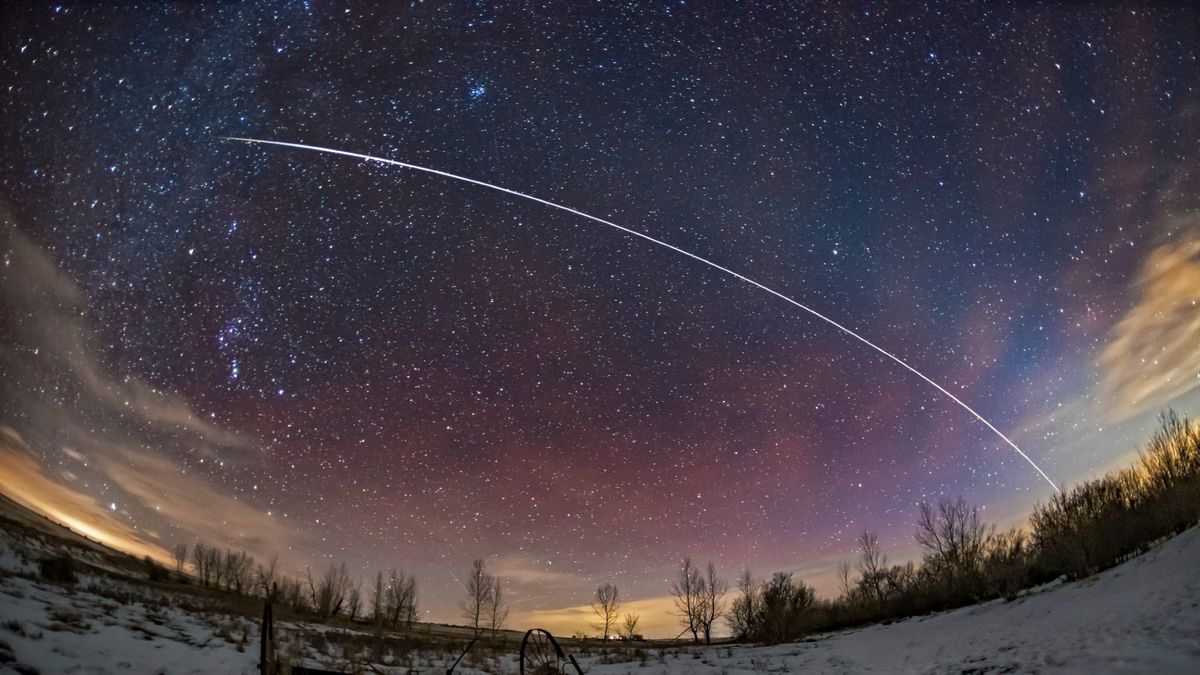
Orgo-Life the new way to the future Advertising by Adpathway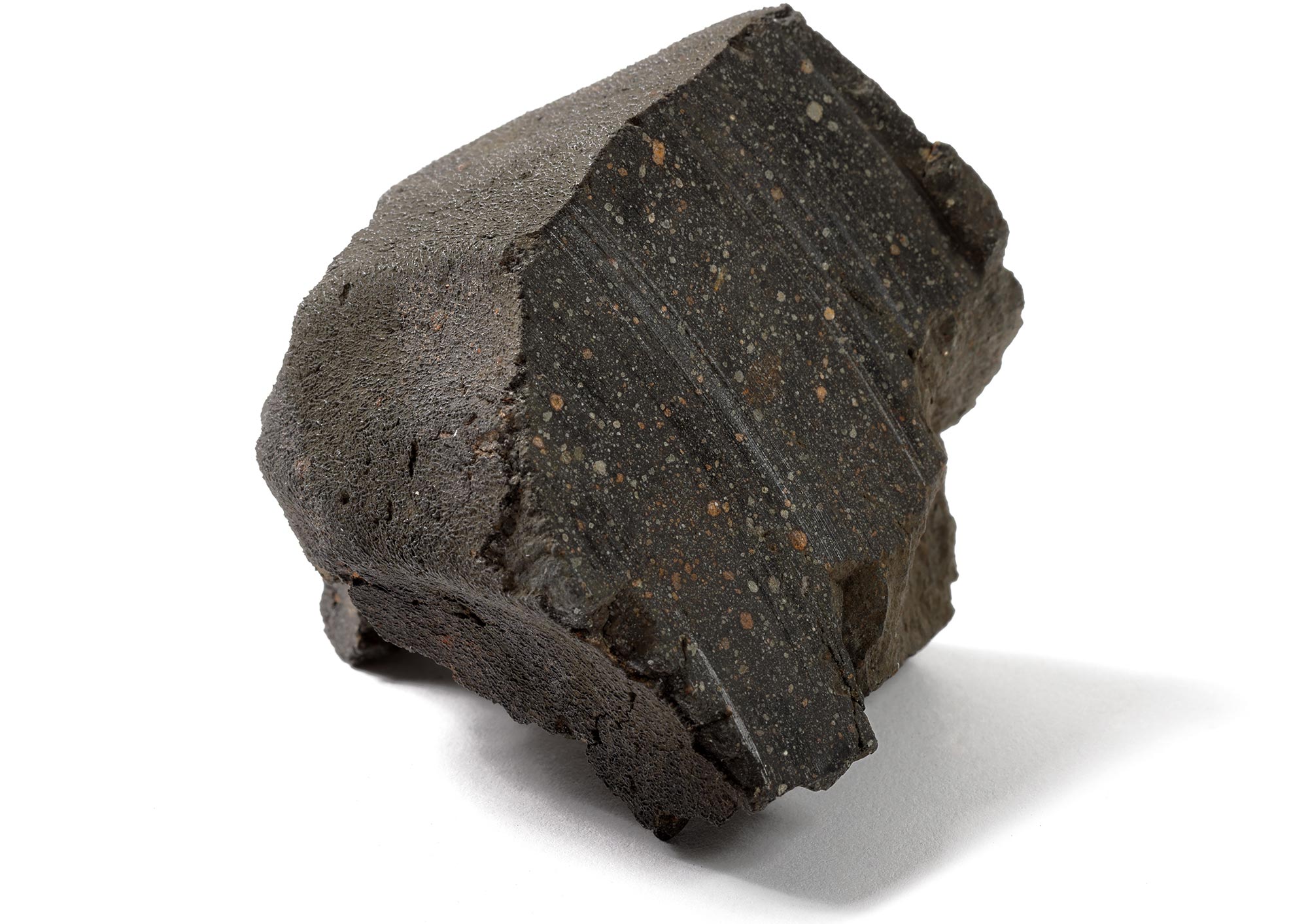 The Murchison meteorite fell in Australia in 1969, breaking into numerous fragments. It belongs to the carbonaceous chondrite group of meteorites. These meteorites are considered to be particularly pristine. Credit: MPS / T. Klawunn
ESA’s Rosalind Franklin rover will use MOMA to search for ancient Martian life by analyzing chiral organic molecules.
Billions of years ago, Mars likely looked very different from the cold, dry planet we see today. Scientists believe it was warmer, wetter, and surrounded by a much thicker atmosphere, creating conditions that may have supported simple microbial life. So far, however, no direct evidence has confirmed that life ever existed there. Although NASA’s rovers have detected organic molecules in Martian rocks, those compounds can also form through nonbiological processes.
In 2025, scientists photographed tiny dark markings on a rock in Jezero Crater that resemble leopard spots. Because these features could have either an organic or microbial origin, researchers collected a sample for further study. The material must be returned to Earth before scientists can determine whether it contains signs of ancient Martian life. However, because of funding issues, NASA removed the sample return mission from its plans (as of June 2026).
The European Space Agency’s (ESA) Rosalind Franklin rover, part of the ExoMars program, is taking a different approach in the search for life. Scheduled to arrive on Mars in 2030, the rover will investigate the clay-rich Oxia Planum region near the equator, where flowing water is thought to have existed long ago. Its primary mission includes searching for organic molecules that could point to ancient life.
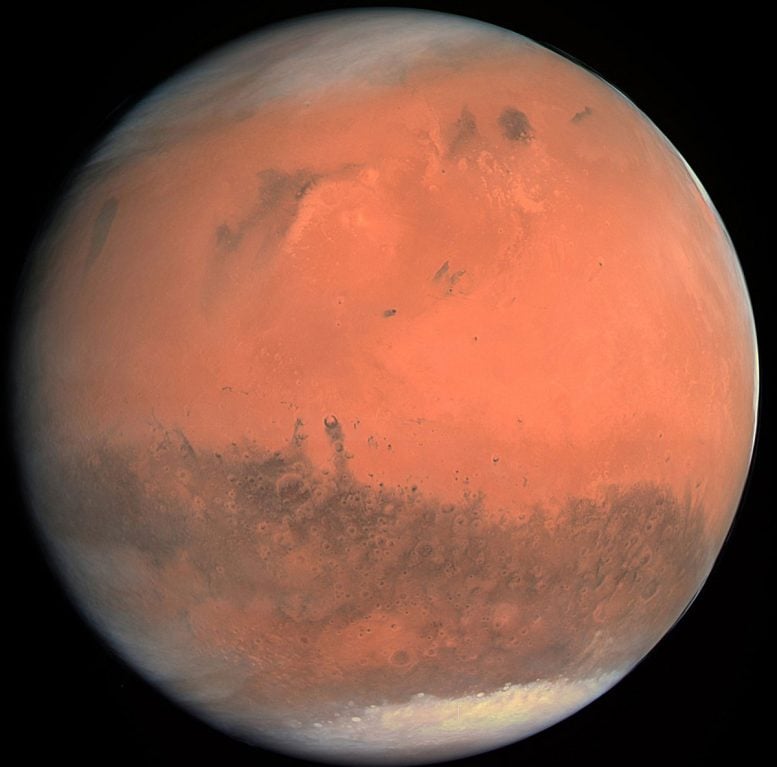 Today, Mars is a cold and dry desert planet. Billions of years ago, it likely offered significantly more life-friendly conditions. Credit: ESA & MPS for OSIRIS Team MPS/UPD/LAM/IAA/RSSD/INTA/UPM/DASP/IDA
ExoMars MOMA Instrument and Martian Biosignatures
Scientists from the Max Planck Institute for Solar System Research, the University of Göttingen, and the University of Côte d’Azur in Nice (France) have been refining the techniques used by the Mars Organic Molecule Analyzer (MOMA). The instrument was developed under the leadership of the Max Planck Institute in Göttingen and will fly aboard the Rosalind Franklin rover. The team recently validated its measurement method using a Martian meteorite.
Even with advanced technology, proving that life once existed on Mars is extremely challenging. Researchers must determine whether ancient organic molecules were produced by living organisms or by natural chemical processes.
To answer that question, the team is focusing on two stable hydrocarbons, pristane (C19H40) and phytane (C20H42). On Earth, both compounds originate from living organisms and are commonly found in petroleum, making them promising candidates for detecting ancient biological activity.
“If life once existed on Mars, then molecules like pristane and phytane represent important molecular biosignatures that could have survived to this day,” said MPS scientist Guillaume Leseigneur, lead author of the new study.
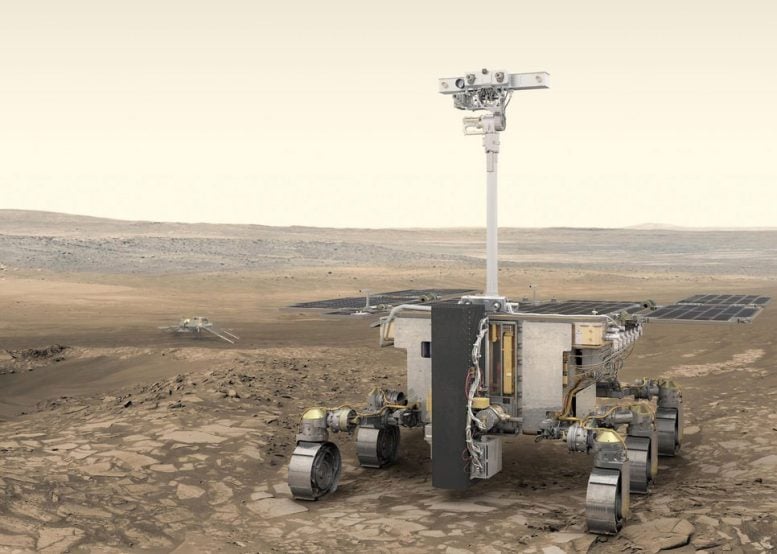 Starting in 2030, the ESA rover Rosalind Franklin is set to search for traces of life on Mars. Credit: ESA/ATG medialab
Chirality as Evidence of Extraterrestrial Life
Pristane and phytane have another feature that makes them especially valuable in the search for life. Like many organic molecules, they are chiral, meaning they exist in two mirror image forms called enantiomers. The difference is similar to the relationship between a person’s left and right hands, which have the same parts but opposite arrangements. “Chirality is a valuable tool in the search for past extraterrestrial life,” said co-author Uwe Meierhenrich of Côte d’Azur University.
In living organisms, chiral molecules are found almost entirely in just one of these mirror image forms. Scientists expect the same pattern would appear in any life beyond Earth because of the way living organisms reproduce. By contrast, molecules produced through nonbiological processes should contain both mirror forms in roughly equal amounts.
How MOMA Detects Organic Molecules on Mars
The Rosalind Franklin rover can distinguish between molecules with different chiral forms using the Mars Organic Molecule Analyzer (MOMA). The instrument combines a gas chromatograph, a mass spectrometer, small furnaces, and an excitation laser. Rock samples are heated in the furnaces, allowing the gas chromatograph and mass spectrometer to analyze the released volatile compounds.
The resulting gases then travel through specially coated capillary tubes. Because each mirror image form interacts differently with the coating, the molecules move through the tubes at different speeds, allowing MOMA to separate and identify them.
In the latest tests, the team used replicas of MOMA’s tubes to separate pristane and phytane for the first time. Both compounds are highly resistant to chemical reactions, making the achievement especially difficult. “Chiral separation of pristane and phytane requires high instrument sensitivity and measurement accuracy, both of which we show MOMA can achieve,” explained co-author and MOMA team member Fatma Yesil Sahan from the MPS.
To stand in for Martian rock, the researchers analyzed pieces of the Murchison meteorite, which landed in Australia in 1969. Like many meteorites, it contains a wide range of organic molecules. Some are part of the meteorite’s original makeup, while others came from later biological contamination, such as material picked up where it was found. The team expected pristane and phytane to fall into the contamination category.
Meteorite Contamination Alters Organic Molecules
The measurements produced an unexpected result. In the Murchison meteorite, all chiral forms of pristane and phytane appeared in equal amounts, unlike what would be expected from biomass at the discovery site. The researchers concluded that the contamination likely happened as the meteorite passed through Earth’s atmosphere and came into contact with aerosols from burning fossil fuels.
That explanation is supported by comparison tests on pristane and phytane preserved in oil shales, sedimentary rocks that contain a precursor to petroleum. “Petroleum forms in these rocks over millions of years at great depths under the influence of heat and pressure,” said co-author Manuel Reinhardt from the University of Göttingen. Those conditions erase the usual chiral imbalance, which could explain why all chiral forms of pristane and phytane appeared in equal proportions in the Murchison meteorite.
The team sees the experiment as more than a successful test for MOMA’s future work on Mars. The findings also raise new questions about where organic molecules in meteorites come from and how rising petroleum contamination in Earth’s atmosphere may affect them.
Reference: “Racemic isoprenoids in the Murchison meteorite derive from petroleum-based aerosol pollutants” by Guillaume Leseigneur, Manuel Reinhardt, Fatma Yesil Sahan and Uwe Meierhenrich, 29 May 2026, Earth and Planetary Science Letters.
DOI: 10.1016/j.epsl.2026.120141
Never miss a breakthrough: Join the SciTechDaily newsletter.
Follow us on Google and Google News.




















 English (US) ·
  French (CA) ·
  French (FR) ·