

 1 hour ago
4
1 hour ago
4
PROTECT YOURSELF with Orgo-Life® QUANTUM TECHNOLOGY
Orgo-Life the new way to the future Advertising by AdpathwayBENGALURU, India, October 15 (IPS) - When the Taliban took control of Afghanistan in August 2021, Zahra Nader was pursuing a doctorate in Women and Gender studies at York University in Canada. Nader had planned to return to Afghanistan to continue her research, possibly teach at Kabul University, and continue exploring Afghan women’s role in political history.
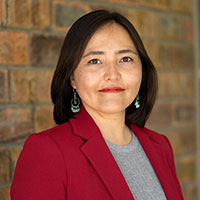 Zahra Nader, Editor-in-Chief, Zan Times
Then came the Taliban.
Seeing the freedoms and opportunities that women had enjoyed being stripped away, Nader could not help but do something. A journalist with experience in Afghan newsrooms as well as with The New York Times in Kabul, she knew how dangerous life could be for women journalists under Taliban control.
“I knew who the Taliban are, what they will do if they took over. So I had no illusion about Taliban 2.0 and how the Taliban has changed. We knew they have not changed. And so we started Zan Times,” says Nader. Set up in 2022, Zan Times, is a news agency run by women who investigate human rights abuses under the Taliban government. Operating out of exile, the news agency works in collaboration with journalists operating within Afghanistan, most of them working under pseudonyms to remain anonymous.
“I was here in Canada, safe, my rights are protected, but the rights that I grew up with, the opportunities that I had in Afghanistan, going to school, going to university, are now being denied to millions of women,” Nader says.
According to this report by the United Nations, five years since the Taliban have seized power, women and girls in Afghanistan have been systematically stripped of their rights. De facto authorities have issued more than 100 decrees curbing “education, including one that’s left 2.4 milion girls excluded from secondary education, work and freedom of movement – restrictions now compounded by deep cuts to aid on the ground”. The report states that the unprecedented restrictions have triggered a mental health crisis.
“The results are devastating,” the agency added, stressing that shorter life expectancy, higher risks of maternal death, child marriage and gender-based violence alongside the loss of education, work and freedom of movement have also triggered a mental health crisis.”The systemic erasure of women from public life, including their exclusion from higher education and employment, also removes the visible role models that show what is possible and narrows what Afghan women and girls can imagine for their own futures, this report adds.
For Nader, these are examples of efforts to strip women of their presence in the world around them. Nader refutes the assumption that it is the Afghan culture itself that stops women from getting involved in public affairs and activities. She mentions her personal experience of how she was encouraged by her family to get educated and work as a journalist. “What I really want the world to know about us is that our culture does not prevent Afghan women from joining public life and social activities.” The marginalization of women is not an inevitable or predestined cultural process; it is something that is being imposed on them through specific policies.
One of the groups most visible to suffer from these measures has been women journalists. “Since taking over Afghanistan five years ago, the Taliban have made Afghanistan one of the world’s hardest places for journalists to report,” says this statement by the Committee to protect Journalists. “Women in the media face particularly severe and escalating discrimination. Taliban authorities have banned women’s voices from radio and TV in Helmand, prevented them from attending press conferences, and mandated that they cover their faces when appearing on TV.”
Limitations imposed on women’s dress code and activities have diminished the opportunities for women journalists to perform their duties even more. Taliban’s 2024 Law on the Promotion of Virtue and Prevention of Vice includes additional limitations regarding the voice of Afghan women in public space.
Women journalists also encounter limitations on freedom of movement by having to travel with a male guardian in most places. Investigating topics like the education of girls and the wellbeing of women exposes journalists to intimidation and questioning.
Insecurity of income is another problem that women journalists face. Nader argues that women journalists have claimed being offered unpaid jobs, exclusion from staff positions since their presence would make them vulnerable to questioning by Taliban officials, and sexual abuse in job hunting.
Journalists who opt to continue working under such conditions also expose themselves to danger. In the case of Zan Times, journalists working in Afghanistan do so clandestinely, using pseudonyms.
Despite all the restrictions, Afghan women keep finding ways of resisting their marginalization.
Women teachers turn their own homes, bedrooms, and even basements into informal schools, where girls could still get education. Other women organize online classes and educational programs, but the lack of Internet connection and funds is preventing many people from participating.
Women also create private literary clubs, exchange books, and attend meetings of poets. These places enable them to communicate, share knowledge, and stay in touch despite the prohibition of public gatherings.
Nader considers such actions to be strong examples of women’s resistance. The work of women journalists who document cases of violation belongs to this form of struggle since through their activity, Afghan women manage to keep their stories visible in public sphere.Their work is especially important because not only they observe the restrictions imposed on women, but they experience them too.
Nader appeals for increased efforts from the international community in protecting Afghan refugees from any kind of forced return.
Moreover, there should be support for Afghan women, particularly in matters such as education and resettlement. There should also be increased protection for journalists under threat. Accountability is equally significant. Through international legal proceedings, there is a possibility of those who perpetrate persecution being taken to book in the future.
At the end of the day, the situation in Afghanistan, along with that of women’s rights and of press freedom, is that of peace. In order to have peace, you need to have half the country educated and involved into public life. You need to have the other half able to earn money on its own without being afraid of demanding anything. Even if the Taliban managed to establish control over Afghanistan, this is not the same thing as peace.
Afghanistan has been unable to give its women peace because its system relies on their complete isolation from the process of development of the country, their participation, dignity and freedom. Without the establishment of justice and rights for all the citizens, there is no peace. The Afghan women who are still fighting and educating, organising and reporting under extremely tough conditions prove that peace should not be confused as absence of war.
To Nader, the crisis in Afghanistan is an indicator of the vulnerability of women’s rights throughout the world.
“Failure to hear from Afghanistan does not mean that all is well and peaceful. Failure to hear from Afghanistan means that we don’t know what is happening,” Nader says.
Sania Farooqui is an independent journalist and host of The Peace Brief, a platform dedicated to amplifying the voices of women in peacebuilding and human rights.
IPS UN Bureau



© Inter Press Service (20261015173948) — All Rights Reserved. Original source: Inter Press Service















 English (US) ·
  French (CA) ·
  French (FR) ·