

 1 week ago
4
1 week ago
4

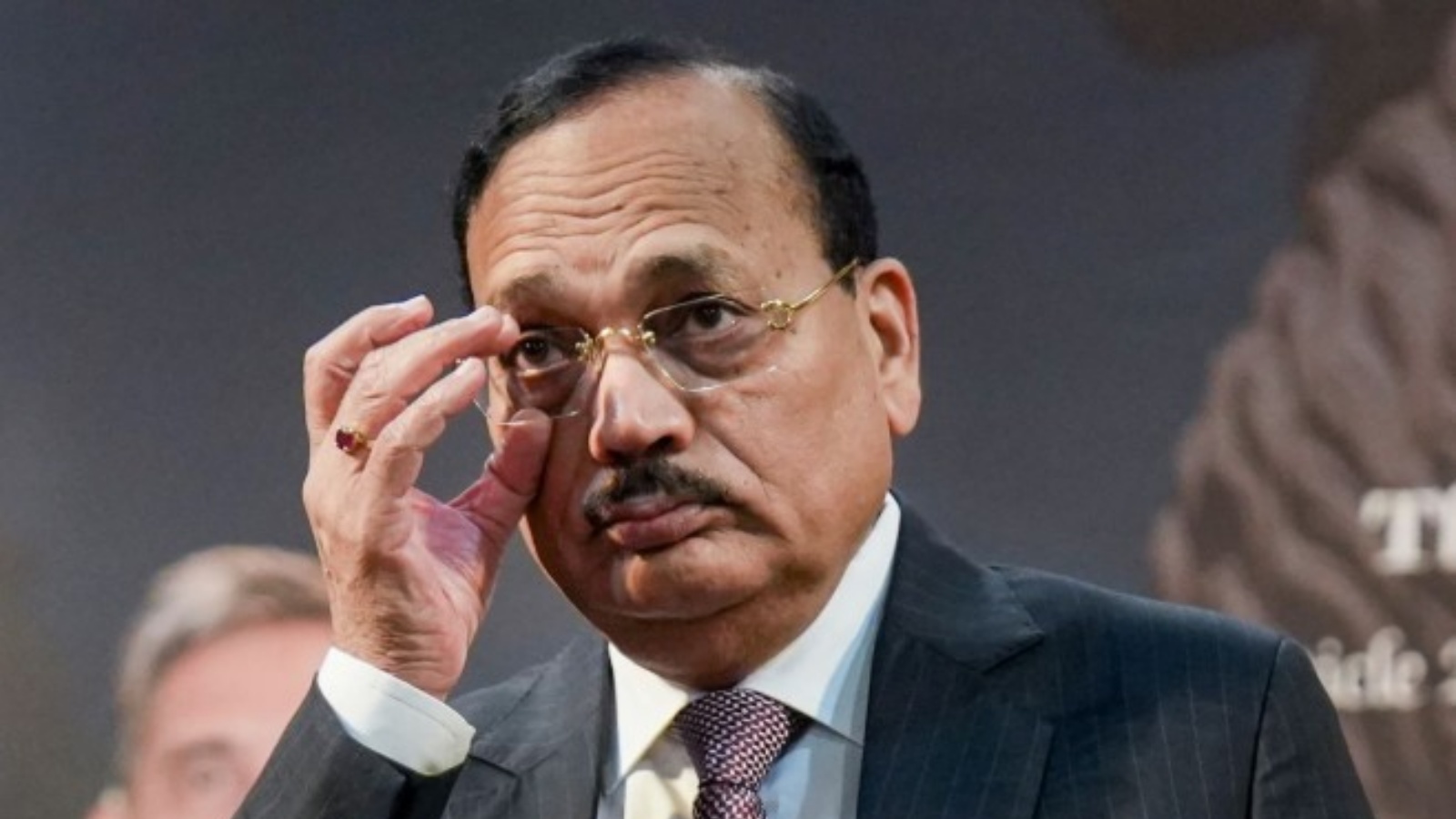
Chennai-headquartered Agnikul Cosmos, a private launch vehicle company has onboarded Somanath. S, former chairman of the Indian Space Research Organisation (ISRO), as an Observer in its Board of Directors. The appointment comes as Agnikul prepares for Mission 02, a flight that will attempt, for the first time on Indian soil, the recovery of an orbital-class rocket booster and the extension of a rocket’s upper stage into an on-orbit platform.
“Mr. Somanath’s career is, in many ways, the story of Indian rocketry. He led ISRO through some of its most defining missions, LVM3, SSLV & RLV, Gaganyaan-Test Vehicle, Chandrayaan-3, Aditya-L1, and has spent decades thinking about what it takes to build launch systems that go the distance. Having him as an observer on our board as we attempt Mission 02 means we have, at the table, someone who has personally navigated the complexity of booster design, stage recovery, and on-orbit operations at the highest level. For us, this is not a ceremonial appointment — it is a serious working relationship at a serious moment”, said Srinath Ravichandran, Co-Founder and CEO, Agnikul Cosmos.
“What Mission 02 demands from us is a step-change in engineering discipline. Booster recovery requires precision at every layer, propulsion, guidance, structural, avionics, and the upper stage extension pushes us into territory that few teams globally have operated in. We have spent the last year hardening every one of these subsystems. Our Agnite booster engine, validated earlier this year, produces thrust at a scale that makes recovery trajectories tractable. Mr. Somanath’s experience in exactly these kinds of multi-system integration challenges will be invaluable,” said Moin SPM, Co-Founder and Chief Operating Officer, Agnikul Cosmos.
“I have watched Agnikul from close quarters for some time, and what strikes me most is not just the ambition of what they are attempting, but the quality of the engineering thinking behind it. Mission 02 is a genuine technical frontier, for India and, in several respects, for the world. The convertible upper stage concept, combined with indigenous semi-cryogenic propulsion and a 3D-printed engine that can be produced in days, is a coherent and defensible technical strategy,” said Mr. Somanath.
Mission 02 will fly a two-stage Agnibaan configuration in which the first-stage booster, after separation, will attempt a controlled descent and ocean recovery. Simultaneously, the upper stage will demonstrate extended on-orbit capability, converting itself into a functional platform rather than expending after payload release. Agnikul holds patents in India, the United States, and Europe covering this convertible upper-stage architecture, which allows the same vehicle hardware that delivers a satellite to then serve as an in-orbit asset.
“The strategic timing is not incidental. The global reusability race has accelerated dramatically: SpaceX has now conducted over 650 Falcon 9 booster flights with stage re-usability, with individual boosters accumulating up to 35 missions, driving the cost to orbit down to levels that expendable rockets cannot approach,” the company said. Blue Origin’s New Glenn and Rocket Lab’s upcoming Neutron are joining this field. The message from the market is unambiguous. Reusability is no longer a differentiator; it is a prerequisite, it added.
For India, which has long depended on ISRO’s workhorse vehicles and is now building a private launch ecosystem, Mission 02 represents the moment the country begins to close that gap on its own terms, through a homegrown startup, from a private launchpad, using a 3D-printed semi-cryogenic engine that can be manufactured in seven days. the company said.
















 English (US) ·
  French (CA) ·
  French (FR) ·