

 1 month ago
74
1 month ago
74
PROTECT YOURSELF with Orgo-Life® QUANTUM TECHNOLOGY
Orgo-Life the new way to the future Advertising by AdpathwayArgentina Aviation
Key Facts
—The order. Aerolíneas Argentinas will incorporate 20 new-generation aircraft between 2027 and 2031.
—The mix. The plan includes 6 Airbus A330neo, 8 Boeing 737 MAX 10, and 6 Boeing 737 MAX 8 jets.
—The financing. The entire programme is funded from the airline’s own operating surpluses, without government subsidies.
—The structure. Aircraft will arrive via operating leases with lessors including Avolon and Aviation Capital Group.
—The scale. The renewal covers roughly 25% of the total fleet and replaces about 60% of long-haul aircraft.
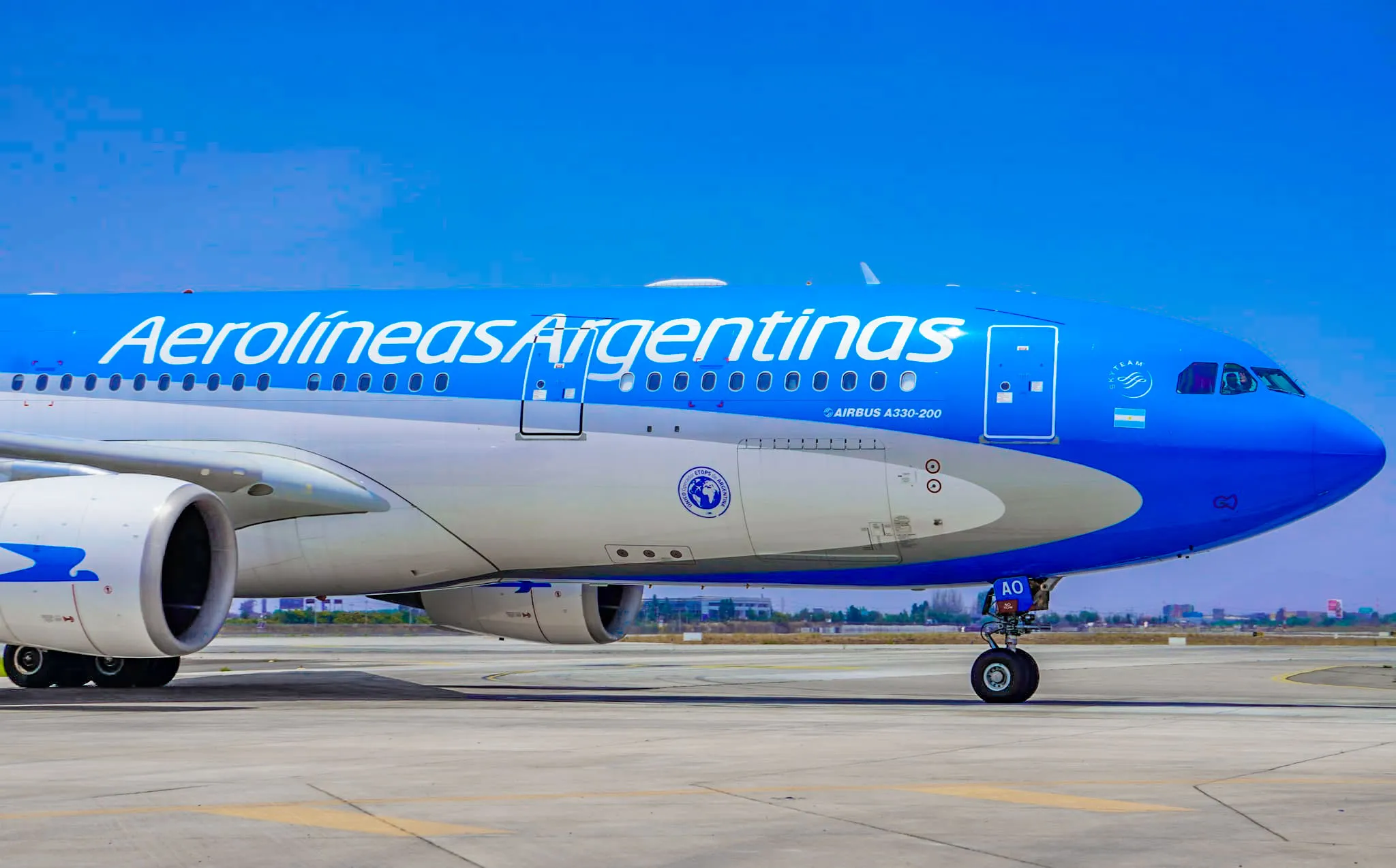
Aerolíneas Argentinas has unveiled its largest fleet renewal in a decade, ordering 20 Airbus and Boeing jets and financing the entire programme from its own operations for the first time since re-nationalisation.
One-stop reference
Company Intelligence
Every listed company in Latin America — financials, ownership and structure for 1,450+ companies across 26 exchanges, in one place.
A historic shift away from state dependence
Argentina’s flag carrier will take delivery of the 20 aircraft between 2027 and 2031. The airline confirmed the plan is backed entirely by operating surpluses and audited positive results, not by transfers from the national treasury.
This marks a structural break with the carrier’s post-renationalisation history. For years Aerolíneas relied on state subsidies to cover operational gaps and fleet investments, making this self-funded programme a significant financial milestone.
For a foreign reader, it helps to understand that Argentina re-nationalised the airline in 2008, bringing it back under full state control. In the years that followed, the carrier consistently required injections of public money to keep flying and to renew ageing aircraft.
Breaking that pattern is therefore about more than just balance-sheet arithmetic. It suggests that internal restructuring efforts are producing genuine, measurable change in how the company operates day to day.
Inside the Aerolíneas Argentinas fleet renewal: the aircraft mix
The order splits across three types. Six Airbus A330-900neo aircraft will serve long-haul routes, replacing older wide-body jets with more fuel-efficient models featuring new cabins and a three-class layout.
For domestic and regional operations, the airline selected eight high-density Boeing 737 MAX 10 jets and six smaller 737 MAX 8 aircraft. Together the new planes will renew about a quarter of the total fleet and roughly 60% of the long-haul segment.
In plain terms, the A330neo is a wide-body, twin-aisle aircraft built for flights of eight hours or more, such as Buenos Aires to Madrid or Miami. The “neo” stands for “new engine option,” which delivers a substantial reduction in fuel burn compared to the previous generation.
The 737 MAX family, meanwhile, is Boeing’s latest narrow-body workhorse, designed for shorter routes with lower per-seat costs. The MAX 10 is the largest variant of that family, seating more passengers, while the MAX 8 is a mid-size model suited to thinner domestic and regional corridors.
How the deal is structured and financed
The aircraft will arrive through operating lease agreements rather than outright purchases. Avolon will supply the A330neo jets, while Aviation Capital Group is providing part of the 737 MAX 10 fleet.
Contracts for 14 of the 20 aircraft were formally signed at the Farnborough Airshow in the United Kingdom. The remaining six MAX 8 and some MAX 10 units are still in the final contracting phase, though the full programme is confirmed as self-financed.
An operating lease works much like a long-term rental: the airline pays a monthly fee to use the aircraft for a set number of years, but the asset itself stays on the lessor’s books. This approach keeps upfront capital costs low and transfers the residual-value risk to the leasing company.
Avolon and Aviation Capital Group are two of the world’s largest aircraft lessors, and their willingness to place new-technology jets with Aerolíneas is itself a signal of confidence in the carrier’s credit profile.
Delivery timeline stretches to 2031
The first aircraft to arrive will be a Boeing 737 MAX 8, expected in the first quarter of 2027. Airbus A330neo deliveries begin in the first half of 2028 and continue through 2029 and 2030.
The largest delivery wave is concentrated around 2030, when multiple A330neo and 737 MAX 10 aircraft are scheduled to arrive. The final MAX 8 units will complete the programme around 2031.
A timeline this long is normal for new-generation aircraft orders. Global backlogs at both Airbus and Boeing mean that airlines placing firm orders today often wait several years for delivery slots.
The staggered arrival also gives Aerolíneas time to train crews, adjust maintenance programmes, and phase out older jets without disrupting its schedule.
What the Aerolíneas Argentinas fleet renewal means for investors and the region
For investors watching Argentina’s state-owned enterprises, the self-funded structure is the headline. It signals that operational restructuring is generating real cash flow, reducing contingent liabilities on the sovereign balance sheet.
The airline expects the new aircraft to cut unit costs, measured by cost per available seat kilometre, and increase total seat capacity by about 10%. Improved long-haul economics could strengthen Buenos Aires as a connecting hub for South American traffic.
For expats and frequent travellers, the renewal promises upgraded cabins, Wi-Fi connectivity, and a more consistent product across the network. The A330neo’s three-class configuration also suggests a renewed push for premium long-haul revenue.
Cost per available seat kilometre, or CASK, is the industry’s standard yardstick for efficiency. It simply divides total operating cost by the number of seats flown one kilometre.
A lower CASK means the airline can either price tickets more competitively or improve margins on existing fares. The projected 10% capacity increase, meanwhile, matters because it implies the new jets will not just replace old metal but also allow the airline to grow where demand supports it.
From an 18-jet plan to a 20-jet programme
The current announcement builds on an earlier self-funded plan for 18 aircraft with deliveries concentrated between 2026 and 2029. That earlier blueprint included four A330neo and fourteen 737 MAX variants.
The expanded 20-aircraft programme extends the timeline to 2031 and adds two more A330neo jets while adjusting the narrow-body mix. The core principle remains unchanged: no government money, no Treasury guarantees, just operating leases backed by the airline’s own results.
What to watch next is whether the airline can sustain the operating surpluses that underpin this plan through an Argentine economic cycle that has historically been volatile. Another open question is how the arrival of more fuel-efficient long-haul jets will affect route decisions, particularly whether Aerolíneas will open new destinations or deepen frequencies on existing trunk routes to Europe and North America.
Finally, the leasing structure raises a practical question: if market conditions shift, how much flexibility do the lease terms provide to adjust delivery pace without incurring penalties?
Frequently Asked Questions
Is the Argentine government paying for the new Aerolíneas Argentinas aircraft?
No. The airline has stated repeatedly that the entire 20-jet programme is financed from its own operating surpluses and audited positive results.
No transfers or subsidies from the Argentine government are being used, which represents a first for the carrier since it was re-nationalised.
When will the first new Aerolíneas Argentinas aircraft enter service?
The first delivery is a Boeing 737 MAX 8 scheduled for the first quarter of 2027. The Airbus A330neo jets will begin arriving in the first half of 2028, with deliveries continuing through 2031.
How much of the Aerolíneas Argentinas fleet is being replaced?
The 20 new aircraft will renew approximately 25% of the airline’s total fleet. On the long-haul side, the six A330neo jets will replace roughly 60% of the existing wide-body capacity, significantly modernising the carrier’s international product.
Sources: Aerolíneas Argentinas.




















 English (US) ·
  French (CA) ·
  French (FR) ·