

 2 months ago
91
2 months ago
91
PROTECT YOURSELF with Orgo-Life® QUANTUM TECHNOLOGY
Orgo-Life the new way to the future Advertising by AdpathwayPart trip recap and part route report, this short piece from Alba Xandri and Ricard Calmet chronicles a ride along the notoriously challenging Baja Divide, a missing puzzle piece in their multi-part bikepacking journey across the Americas. Find their story and an expansive gallery of colorful photos from the rugged desert and captivating coast here…
The 1,700-mile Baja Divide route had been on our minds for a long time. We even questioned at one point whether to do it all, since many cyclists don’t end up liking it, and some feel like it’s simply too difficult. For some, it’s not worth the hardship; for others, it’s all beaches and sunsets. In reality, it’s neither one nor the other. Our expectations weren’t particularly high, but we had an unfinished project: The Missing Dots.
In 2014, we cycled the entire length of South and Central America, finishing in Quintana Roo, Mexico. In 2016, we completed the Great Divide Mountain Bike Route (GDMBR) down to Antelope Wells, right at the Mexican border. So, riding the Baja Divide made perfect sense. It would allow us to connect the dots we had already traced across the Americas.
And so, last December, after crossing Utah and Arizona, we set off from San Diego feeling relatively fresh. We were more heavily loaded than we would have liked, and running slightly narrow tires (2.4”), but our motivation was completely intact. We knew the Baja Divide wouldn’t be a Sunday ride. We were ready and excited.

Right from the start, the Sierra de Juárez gave a glimpse of what Baja had in store without revealing everything. Solitude, rugged terrain, and above all, meaningful encounters. The stories shared by kind locals helped us better understand this complex country.
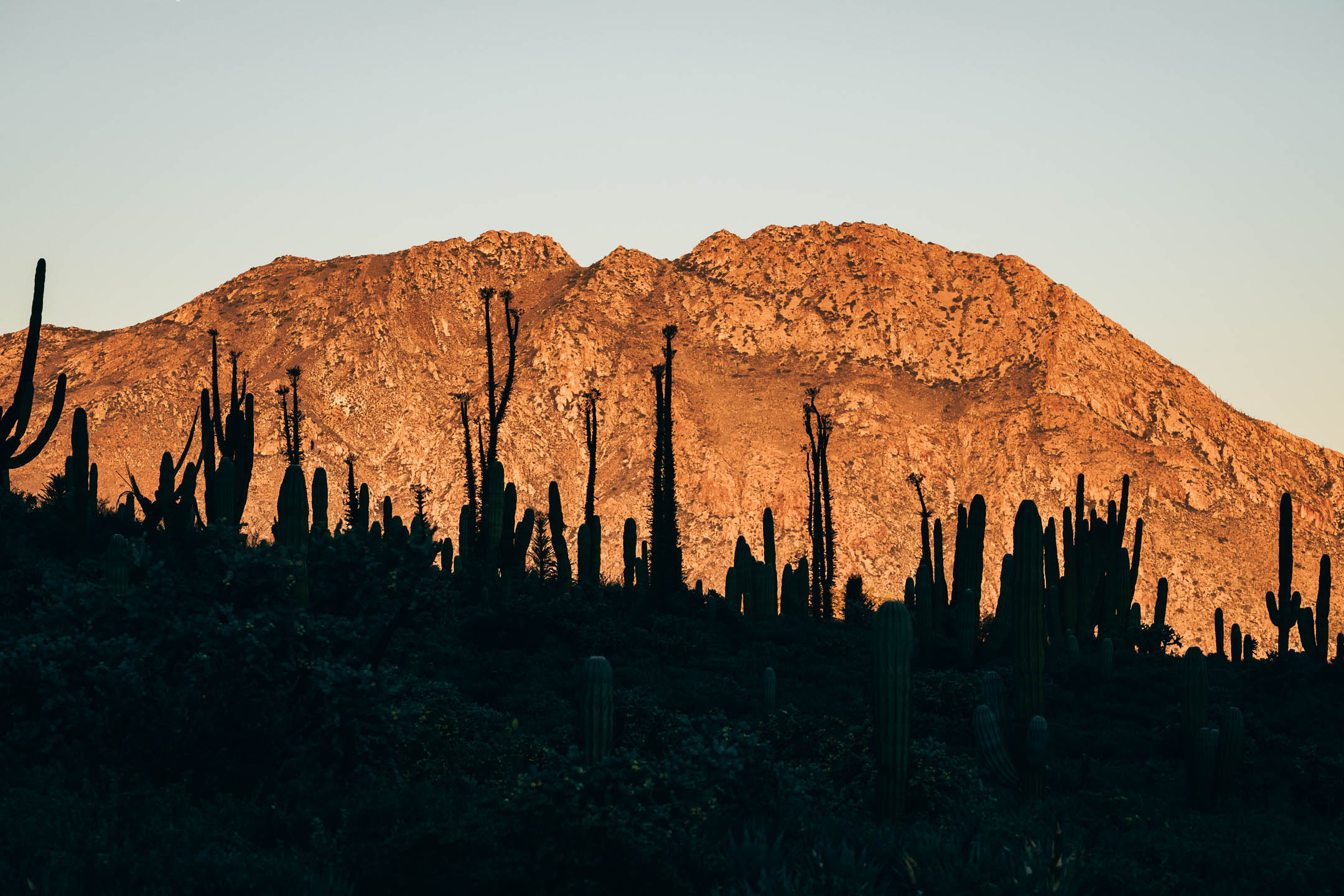
We slowly fell into the rhythm of Baja. Nothing comes easy here. There are no easy days. After rough, slow, leg-breaking kilometers usually came the rewards: silent, star-filled camps among giant cacti, stops at ranchos, and burritos and tacos. Life was reduced to riding, eating, and camping.

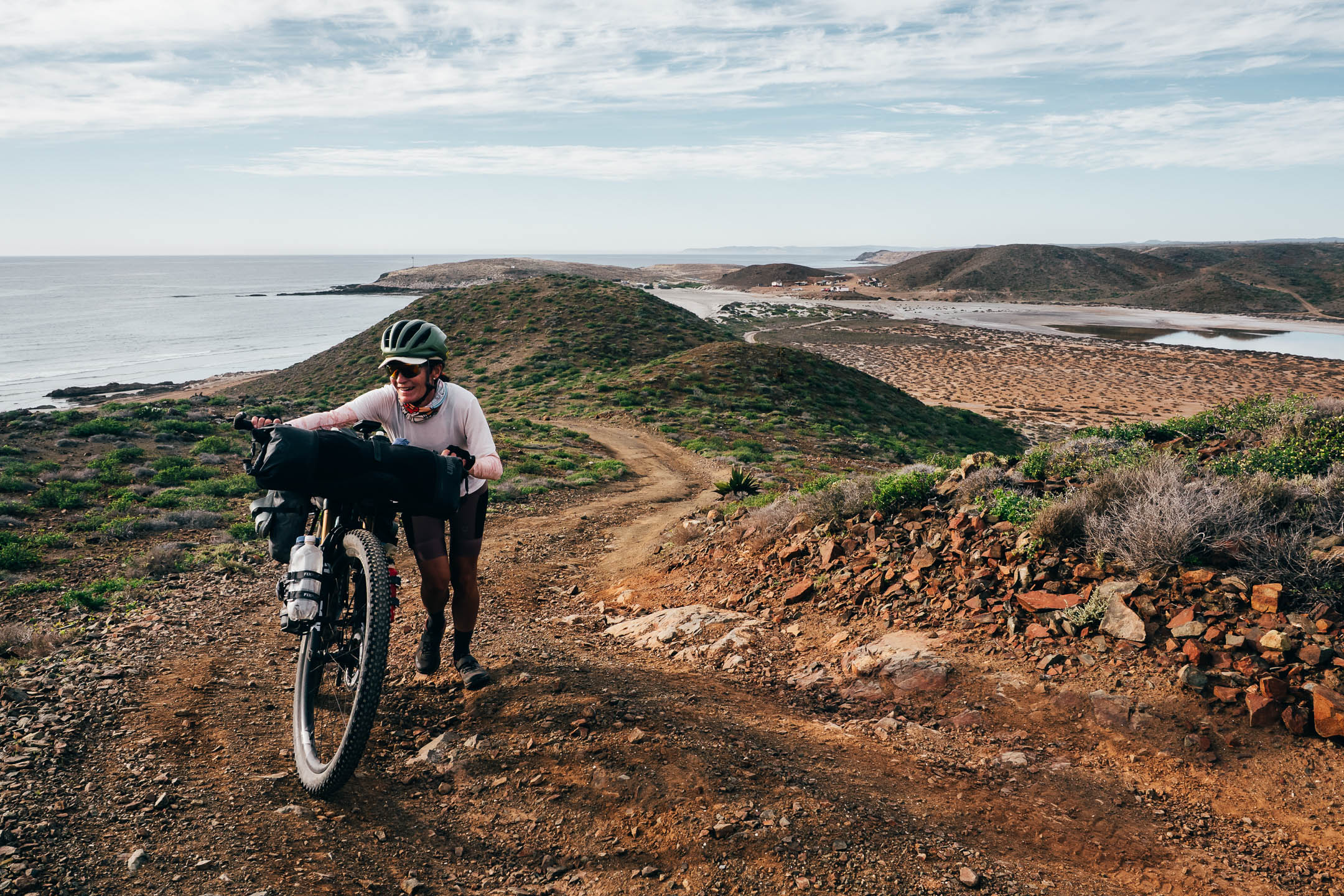
We had heard a lot about the 200-kilometer stretch with absolutely nothing (no water, no food) from Cataviña to Santa Rosalillita. It worried us, but in two days we reached Santa Rosalillita, victorious. What we weren’t mentally prepared for, however, was the section from San Rafael to Vizcaíno. Oh, my Gosh! Sand, sand, and more sand. Water started to run low, and thank goodness for the ranchos. Getting on and off the bike became as routine as pushing it. But as in life, everything comes to an end, and hot, dirty, thirsty, and hungry, we finally arrived in Vizcaíno. Some cyclists say the hardest part is over, that Baja becomes all downhill from here. That’s not entirely true, though perhaps you just get used to the terrain.

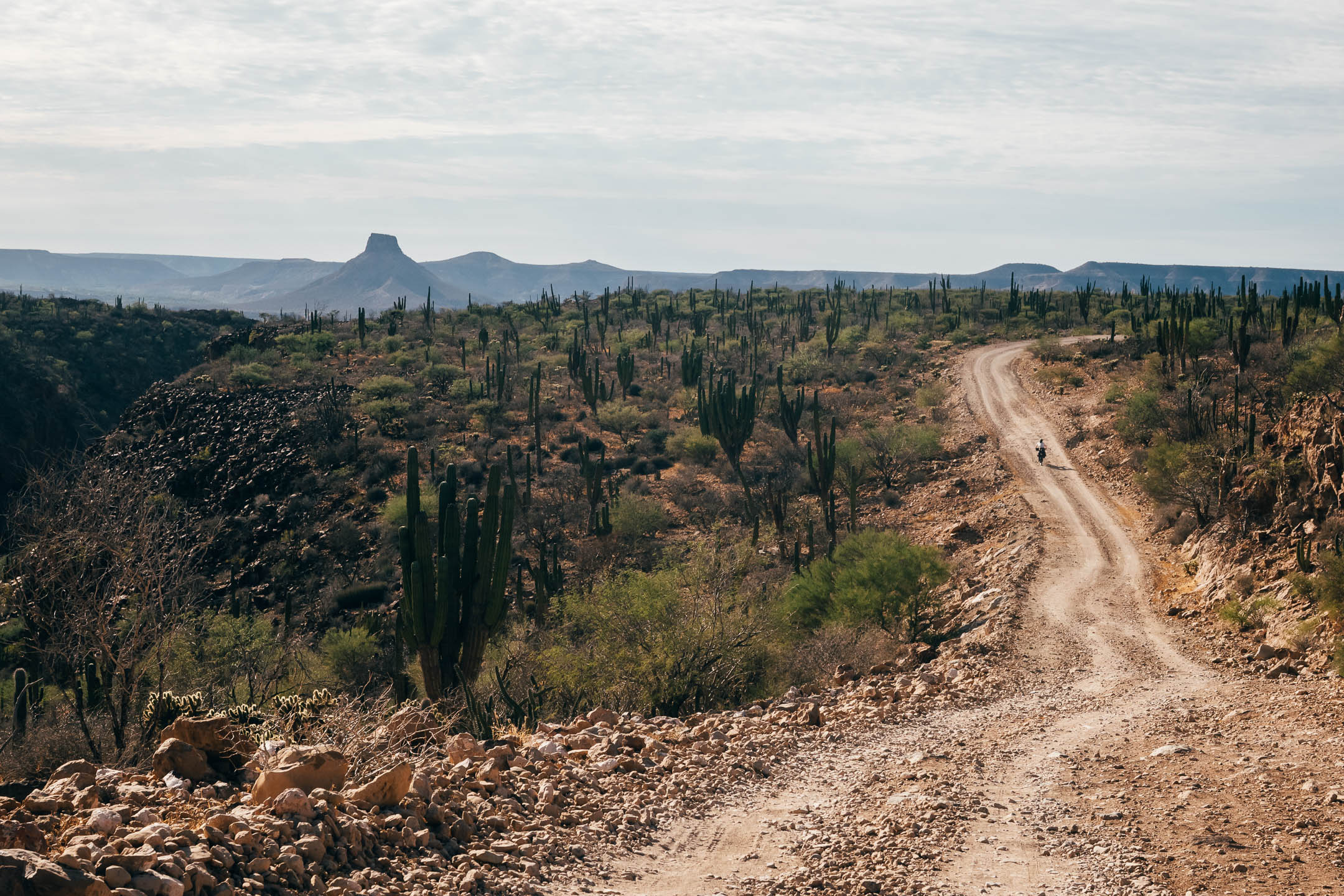
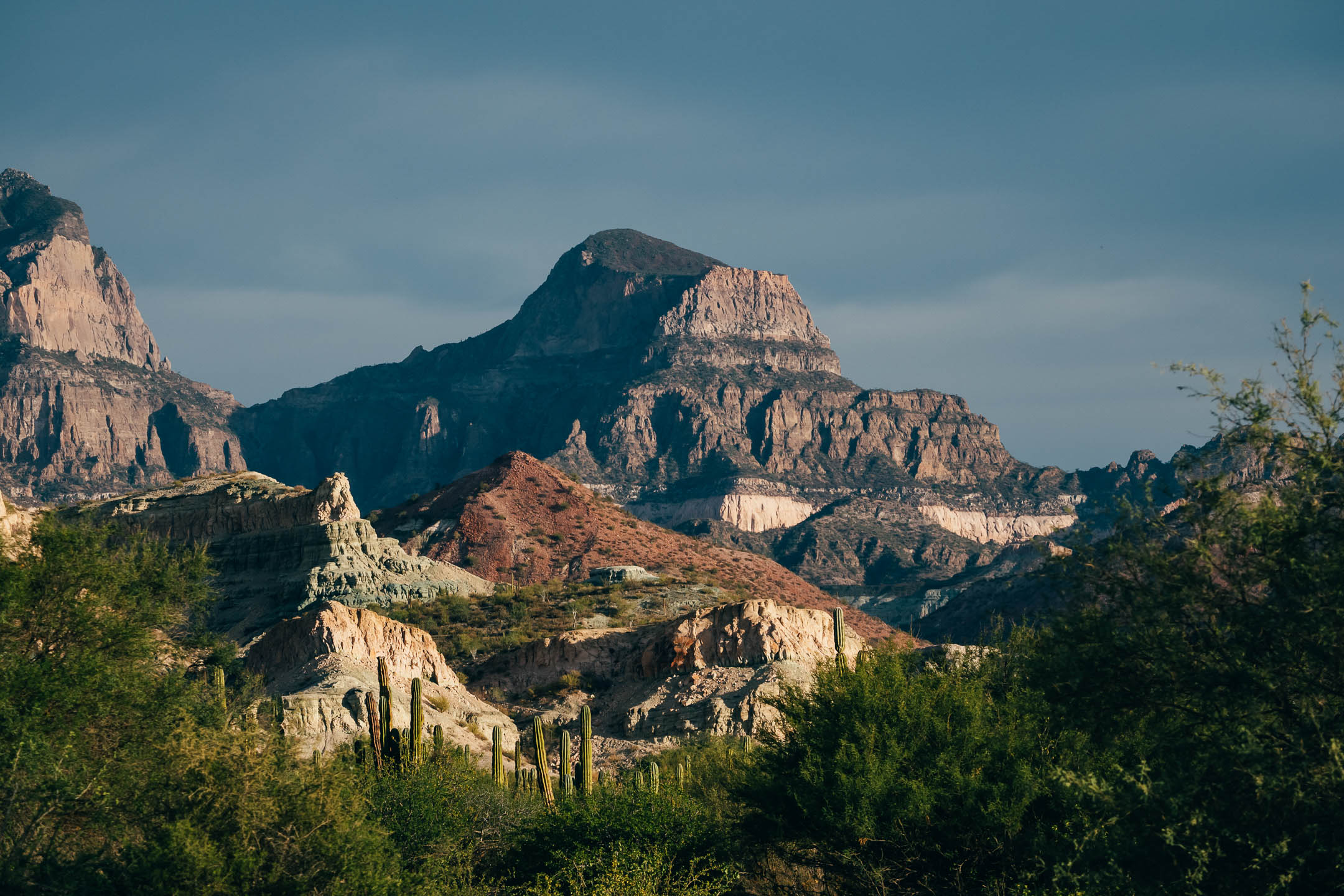
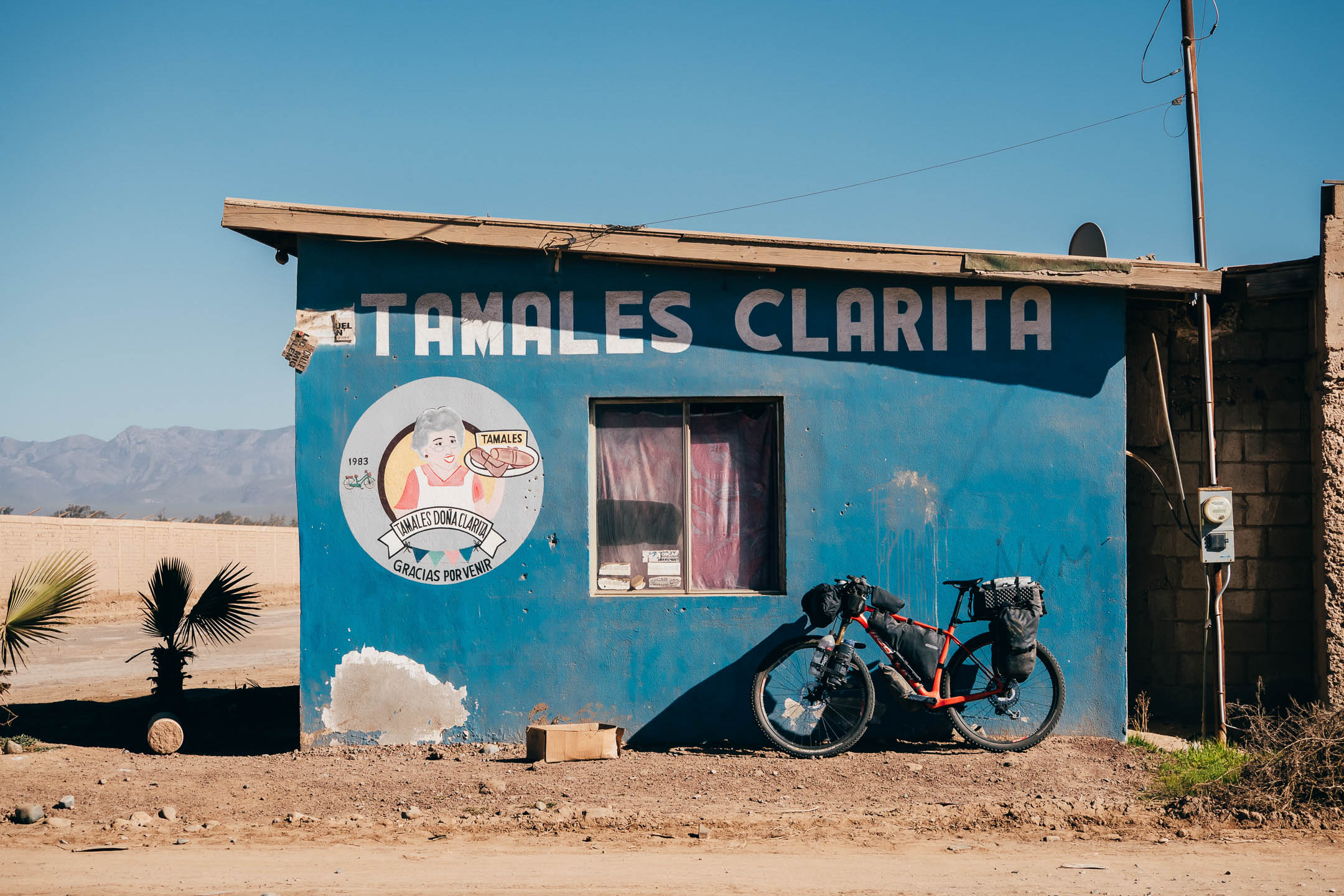




Further on, sand gave way to rocks, and for a couple of days, we bounced along the trail from El Dátil to Mulegé. I enjoyed the change from sand to rock. It’s all a matter of taste. During these days, we rode with two friendly Americans from New Mexico, Jamey and Henry. One night, we stayed together at Rancho La Rinconada with Carmelo, 83, and Rosalina, 67.
Under a flickering light, with a bottle of tequila on the table, Carmelo told us how the puma (“the lion,” as he calls it) is a problem because it kills his goats. He talked about livestock and trails, trying to convince us that traveling by mule, as he still does every day, was far better than by car; after all, a mule never gets a flat tire. Meanwhile, Rosalina never stopped moving, preparing us a hearty plate of machaca for dinner. They offered us a bed under the open sky and a bucket shower with warm water. What more could we ask for?
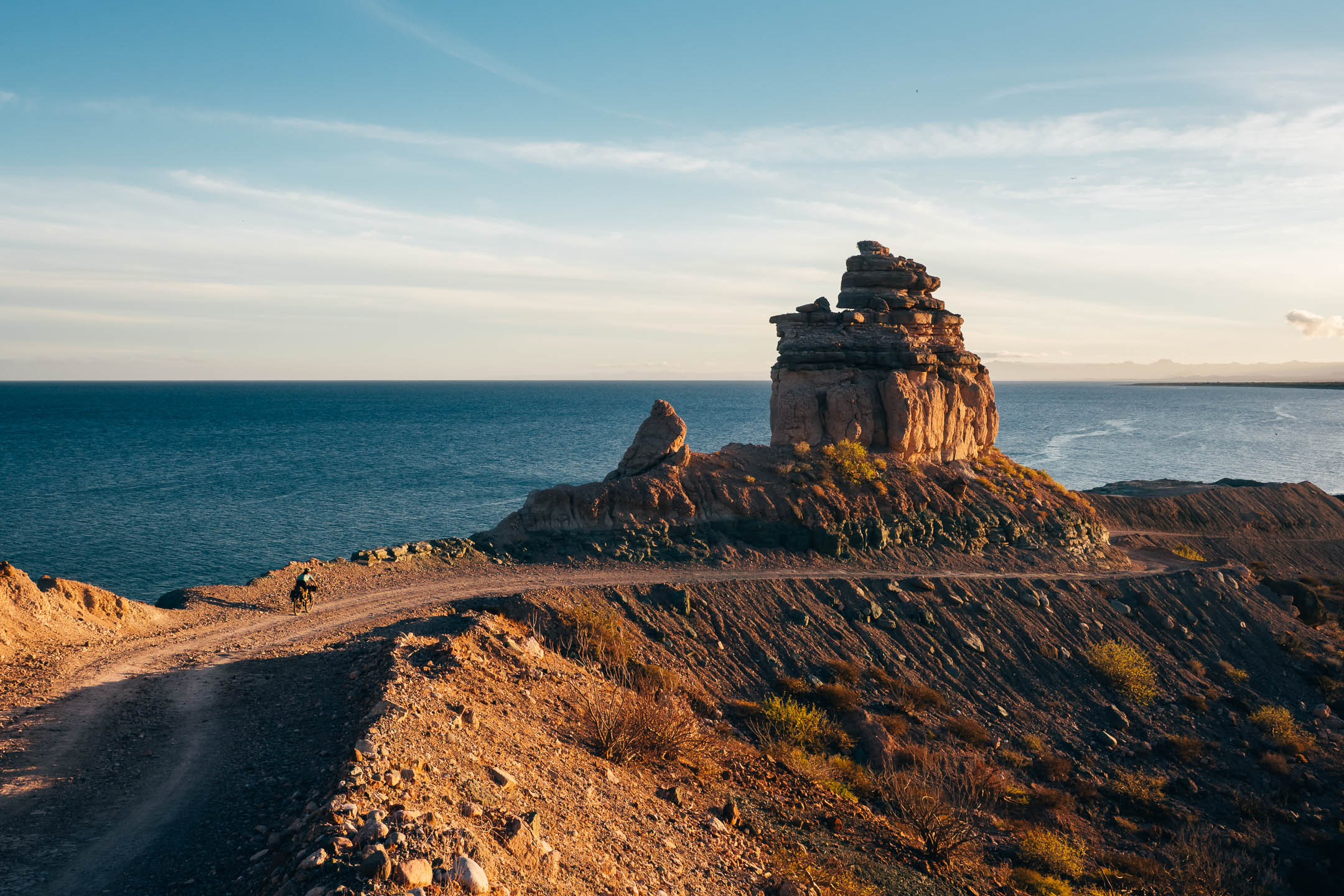
The next day, December 24th, we reached Mulegé. We celebrated Christmas to the sound of rancheras and karaoke, filling our stomachs as much as possible thanks to Jamey’s cooking skills. A couple of days later, somewhat recovered, we took a small boat across to the peninsula ahead of us and continued riding through paradise, accompanied by dozens of pelicans, and across rugged terrain, with the feeling that Baja still held many hours of riding, surprises, and silence.
Another encounter that moved us deeply took place at Rancho Las Higueritas with Silvina, Javier, and Lupita. They were an open book, sharing their hard lives with us. We spent the night there. They told us what a meteor shower looks like out there and, with genuine curiosity, asked us what an airport is like or how those self-driving lawnmowers work.
Javier, a skilled dowser, showed us how he finds water with a pendulum, while Silvina offered us everything we could need. We talked as she cooked us potatoes, eggs, beans, and tortillas. Her life with Javier and their daughter, Lupita, has not been easy. It breaks my heart, and at the same time, I admire her optimism.
We still had kilometers to go to complete Baja, but we were truly starting to feel it in our legs. A stop in San Evaristo led us to the village shop owner, and we chatted with her and a neighbor. In a very direct and honest way, they explained how the narcos operate in this country. Hearing it firsthand is always striking. Even so, the areas the Baja Divide passes through are among the safest in all of Mexico.
From La Paz, we continued on to San José del Cabo, already sensing the end was near. Crossing this incredible peninsula was becoming just another chapter in our lives. Here, language worked in our favor, and our similar cultures often turned new acquaintances into instant friendships. It’s as if our ancestors were closely connected, and the bonds quickly grow strong.
It’s hard to explain, but for us, the Baja Divide won’t just be those paradise beaches or endless sandy stretches; it will be Pedro, Rodolfo, Nídia, Carmelo, Lupita, Silvina, Rosalina, Amada, Javier, Sergio, Yany, and Carlos. It’s thanks to them that we could understand realities our naïve eyes would never have seen. Our interactions and their stories moved us more than any sunset ever could.
Further Reading
Make sure to dig into these related articles for more info...
Please keep the conversation civil, constructive, and inclusive, or your comment will be removed.












 English (US) ·
  French (CA) ·
  French (FR) ·