

.svg) 2 months ago
76
2 months ago
76
PROTECT YOURSELF with Orgo-Life® QUANTUM TECHNOLOGY
Orgo-Life the new way to the future Advertising by Adpathway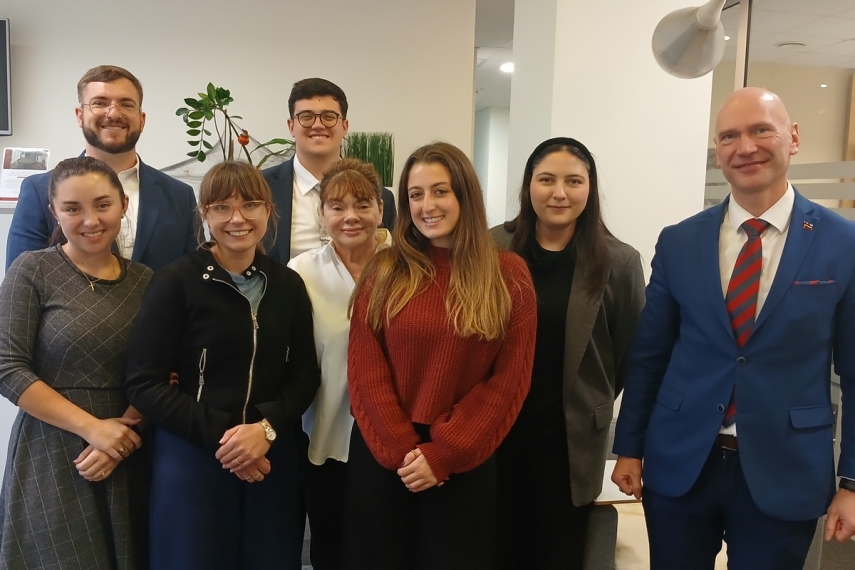
Photo: Hosting professor Dr.Gabriela M.Thornton and a group of students from the Bush School of Government and Public Service, Texas A&M University (U.S.) and Dr. Aleksandra Kuczyńska-Zonik from Institute of Central Europe (PolPoland) in BSF Office Fall 2025
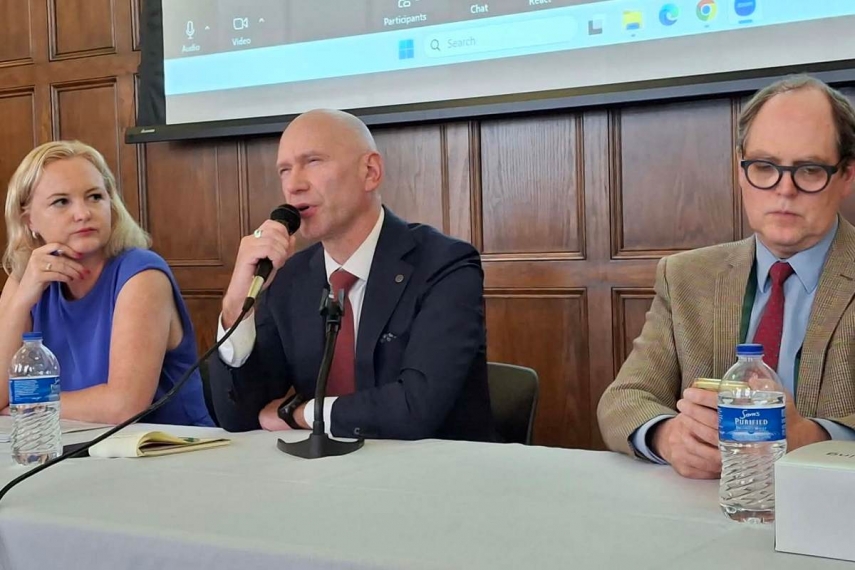
Photo: Olevs Nikers speaks at the high-level roundtable "A Changed Landscape: Perspectives on Foreign Policy, Migration, and Global Security" during AABS 2026 Conference at the University of Illinois Urbana-Champaign
Over the past year, the Baltic Security Foundation (BSF) has continued to expand its work as a Riga-based hub for Baltic and regional security research, education, and transatlantic policy engagement. BSF is broadening its institutional partnerships across the Baltic Sea region, the European Union, and North America. As the security environment around the Nordic-Baltic Eight continues to deteriorate, the Foundation's work has become both more demanding and more directly relevant to policymakers, financial institutions, and security practitioners on both sides of the Atlantic.
High-level transatlantic engagements
The past twelve months have seen the Foundation present at the venues where Baltic security is being shaped. BSF has been present at the academic conferences in the United States, ministerial-level forums in Europe, and Washington think-tank discussions. These forums influence the next phase of U.S. policy toward the region. Three engagements in particular illustrate the breadth of that work.
In May 2026, BSF President Olevs Nikers represented the Foundation in the high-level roundtable "A Changed Landscape: Perspectives on Foreign Policy, Migration, and Global Security" at the AABS 2026 Conference at the University of Illinois Urbana-Champaign. The panel addressed the restructuring of the Transatlantic alliance, the weaponization of migration by authoritarian states, the future of bipartisan U.S. leadership on global security, and the contested strategic and environmental space of the Baltic Sea. Nikers emphasized that deterrence remains cheaper than war. Also it has been stressed that the Baltic air defense gap must be closed operationally now rather than awaiting mid-term equipment deliveries. It is critically important that hosting a brigade-sized U.S. element repositioning from Germany to the Baltics is a concrete offer to Washington.
BSF Director Otto Tabuns was invited to participate in the 2026 Vevey Forum hosted by Pepperdine University in Switzerland. He joined political and civic leaders from the Americas, Europe, and Africa to discuss leadership in the Atlantic World. Fellow speakers included former Polish President Andrzej Duda, U.S. Ambassador to Switzerland and Liechtenstein Callista Gingrich, Uganda's Ambassador to the U.S. Robie Kakonge, Argentina's National Security Adviser Ricardo Ferrer Picado, and Beata Daszyńska-Muzyczka, President of the Three Seas Business Council. Discussions underlined the importance of enhanced Euro-American defense cooperation, as well as expansion of Europe's defense industrial base. Continued relevance of NATO, and the need for free and open economic corridors to reinforce transatlantic resilience, security, and prosperity remains among the highest priorities.
Beyond the traditional security policy audience, the Foundation has expanded its work into financial-sector and compliance forums, where the practical mechanics of sanctions enforcement, illicit finance, and cyber defense are now front-line elements of regional deterrence.
Bringing security analysis to the financial sector: the ACAMS Baltic Regional Conference
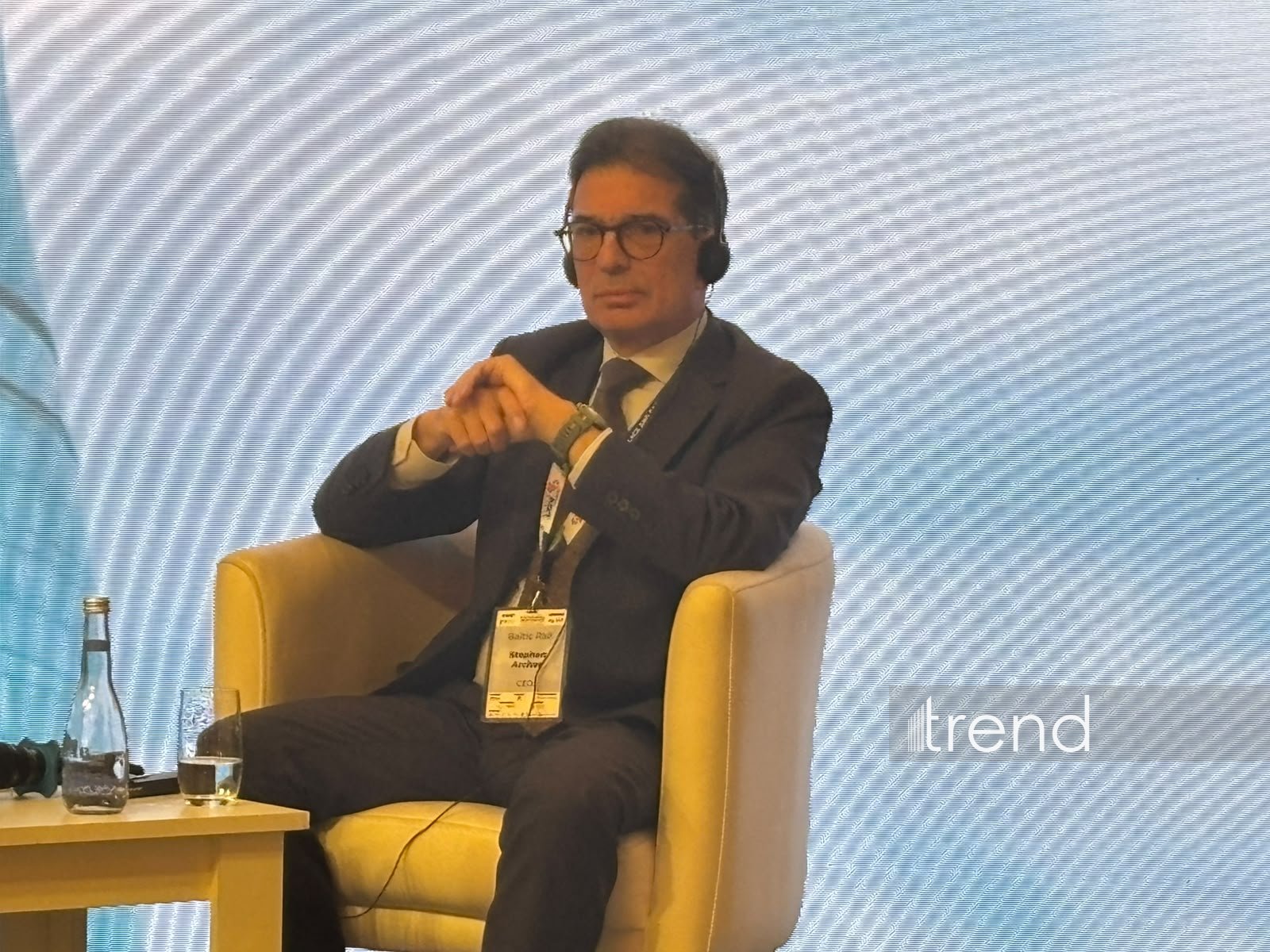
A particularly important addition to the Foundation's engagement portfolio has been the ACAMS Baltic Regional Conference: "Shields Up: Keeping Up with the Latest Baltic Security Threats." Speaking in the fireside chat format moderated by Sam Cousins, CGSS (Senior Manager, Sanctions, Ransomware and Risk, ACAMS), Olevs Nikers addressed the AML, sanctions, and cybersecurity professionals from Baltic banking and fintech institutions on two converging dimensions of the regional threat picture: illicit Russian financial flows that continue to fund the war in Ukraine, and the evolving cyber-threat architecture targeting Baltic financial institutions.
The discussion at ACAMS spanned both illicit finance and the cyber-threat architecture facing Baltic financial institutions. On illicit finance, the conversation traced how Russian sanctions evasion has evolved from oligarch wealth preservation to active war financing, with Russia generating approximately $16.4 billion in oil revenues in 2024. On cybersecurity, Olevs Nikers laid out the three-tier threat architecture as state-sponsored APT groups, state-directed hacktivist collectives, and financially motivated cybercrime ecosystems. These facilities are operating under de facto state protection, alongside a near-tripling of Russian hybrid attacks across Europe between 2023 and 2024.
CHANEBO: Mapping the socio-economic impact of the closed border
Among BSF's most significant cross-border research engagements has been its participation in CHANEBO: Challenges at EU's North-East External Borders. The Targeted Analysis project was conducted under the ESPON 2030 Programme in partnership with the Association of European Border Regions (AEBR) and regional partners from Finland, Estonia, Lithuania, Latvia. Other expert institutions included German and Finnish researchers. The BSF team representing the project includes Olevs Nikers, Lillian Mullins, and Ieva Remerte.
The Latgale regional profile, to which BSF contributed substantively, captures the socio-economic impact on Latvia's easternmost region. Latvia shares a 387-kilometre external border with Russia and Belarus (214 km with Russia and 173 km with Belarus). Latgale covers 22.5% of Latvia's territory and is shaped by structural vulnerabilities such as peripheral location, demographic decline and historic underdevelopment. These vulnerabilities have been intensified due to the closed border and the broader security context. The CHANEBO analysis has produced nine key publications. The top themes include a final report, four regional profiles, comparative analyses, and future scenarios. Policy recommendations are available through the ESPON portal. For Latgale specifically, the research has emphasized that the security and resilience challenge cannot be decoupled from the economic and demographic one. EU and national policy frameworks must address both dimensions with the same urgency.
The same conviction, that durable Baltic security depends on building enduring institutional and human relationships, not only short-term policy interventions, drives the Foundation's educational mission.
Transatlantic Security Exchange — Educating the next generation of Baltic security scholars
The Foundation continues to host visiting fellows and interns from leading universities in Europe and North America through the BSF Transatlantic Security Exchange programme. More information on the programme is available at www.balticsecurity.eu. Over the past year, the Foundation has hosted students from the University of Groningen, Riga Graduate School of Law (RGSL), the University of Glasgow, George Mason University, Tufts University, Stanford University, the University of Delaware, and Texas A&M University.
A particularly significant collaboration has developed with The Bush School of Government and Public Service at Texas A&M University. Here BSF has served as a client organization in the students' final Capstone projects, providing real-world research challenges in Baltic security. The next generation of American policy professionals are developing their direct, substantive expertise on the region. The Foundation extends its sincere gratitude to Professor Gabriela Marin Thornton of the Bush School for her leadership in building and sustaining this collaboration. Special thanks are also due to Irma Kalniņa, Kārina Pētersone, Dagmāra Beitnere-Le Galla, and to the Ministry of Defence and Ministry of Foreign Affairs of the Republic of Latvia for their support in making the programme possible.
Publications shaping the policy conversation
The Foundation's analytical voice continues to reach policy audiences through targeted contributions to two major publications in the past year.
The Institute of Central Europe (Lublin) published a report on the Baltic Defence Line initiative, examining the strategic, political, and social dimensions of the joint Estonia–Latvia–Lithuania defensive infrastructure project launched in January 2024. This report includes a contribution by Olevs Nikers on the Latvian dimension. The report assesses the initiative's role in strengthening the Baltic states' military border protection capabilities. The Baltic Defense Line is preventing rapid adversary operations in light of the deteriorating security situation in the Baltic Sea region following Russia's annexation of Crimea in 2014 and the full-scale invasion of Ukraine in 2022.
The Latvian Foreign and Security Policy Yearbook 2026, published by the Latvian Institute of International Affairs features an article by Olevs Nikers on U.S.–Latvia economic relations. Olevs Nikers underlines the strategic opportunity to advance bilateral defense industrial cooperation and to host a brigade-sized U.S. element in Latvia as part of the broader repositioning of American forces in Europe.
Looking ahead
The Baltic Sea region forms the external border of both NATO and the European Union, making it strategically important for allies as well as for states whose interests diverge from ours. This reality requires close cross-border cooperation to address challenges that affect several countries simultaneously.
A central theme of the Foundation’s work over the past year has been the strategic importance of defense industrial development for Baltic security. In an environment where allied procurement often delivers capabilities years after contracts are signed, the ability of domestic and regional industry to rapidly produce, adapt, and deploy equipment has become a key deterrence factor. This includes ammunition, drones, counter-drone systems, sensors, and dual-use technologies. Strong regional industry enhances national defense, strengthens the transatlantic industrial base, and returns defense spending to the regional economy through jobs, exports, and innovation.
Crisis preparedness and societal resilience are equally important. Effective decision-making under pressure is essential across the armed forces, government institutions, civil protection structures, and businesses. Modern hybrid threats do not respect institutional boundaries. A single incident may require military action, government coordination, business continuity measures, and public communication within hours. The effectiveness of a society’s response depends on the ability of decision-makers to act quickly and share information across sectors.
Innovation and artificial intelligence play an increasingly important role in this area. AI-enabled solutions are transforming autonomous systems, counter-drone capabilities, intelligence fusion, cyber defense, and crisis management. They increase the speed and scale at which Baltic states and their allies can detect threats, make decisions, and respond. To remain competitive, the region must continue investing in research, industry–academia cooperation, and workforce development rather than relying solely on technologies developed elsewhere.
The Foundation welcomes to contact us at [email protected] those who are interested in supporting our work or discuss potential engagement and partnership opportunities. Also we are looking forward to research and business/investment oriented collaboration in advancing Baltic regional security and defense.










 English (US) ·
  French (CA) ·
  French (FR) ·