

 1 month ago
28
1 month ago
28
PROTECT YOURSELF with Orgo-Life® QUANTUM TECHNOLOGY
Orgo-Life the new way to the future Advertising by AdpathwayThe Pulse | Diplomacy | South Asia
Bangladesh’s security lies not in becoming part of someone else’s strategic rivalry, but in becoming economically strong, diplomatically flexible, and internally legitimate.
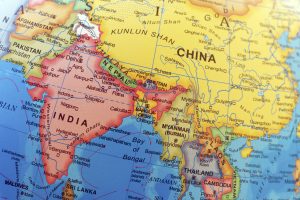
Bangladesh is entering a decisive phase in its political and economic evolution. After the upheavals that began with the fall of Sheikh Hasina’s government in August 2024, followed by a period of interim government rule under Muhammad Yunus, and then the formation of a new Bangladesh Nationalist Party (BNP)-led government under Tariq Rahman, Dhaka faces two urgent tasks. The first is domestic: to restore public confidence in governance and revive an economy damaged by the COVID-19 pandemic, political turmoil, and instability from the Iran war. The second is external: to manage relations with four nuclear powers — India, China, Pakistan, and the United States — without becoming subordinate to any one of them.
The most important priority for Bangladesh must be the economy. Foreign policy realignment may attract headlines, but for ordinary Bangladeshis, the central issues remain jobs, growth, inflation, exports, investment, and the fair distribution of public goods. The anger that brought down the previous order was not only about authoritarianism; it was also about a perception that the benefits of growth were distributed selectively. Young people, especially Gen Z, felt excluded from opportunity. Therefore, the new system cannot simply replace one political party and network with another. Its legitimacy will depend on whether it can convince citizens that the state serves the public rather than the ruling party.
Bangladesh’s recent growth figures show both vulnerability and resilience. In 2022, the economy grew at more than 7 percent, partly as a post-COVID recovery effect. Growth then fell to around 5.8 percent in 2023, dropped further in 2024, and declined to roughly 3.5 percent during the period of political uncertainty under the interim government. The first quarter of 2026, however, suggested a modest recovery, with growth rising to around 4.5 percent. This is encouraging, but not sufficient. For a developing economy with Bangladesh’s demographic pressures and aspirations, 4 to 5 percent growth is not enough. Dhaka needs to return to the 7 to 8 percent range if it wants to generate jobs, sustain export competitiveness, reduce poverty, and avoid renewed political dissatisfaction.
Foreign direct investment is another key indicator. Bangladesh’s annual FDI inflows have hovered around $1.2 billion to $1.7 billion in recent years. Interestingly, even during political turmoil, FDI did not collapse; in fact, during the Yunus interim period in 2025 Bangladesh got more FDI than in 2024. This suggests that international investors still see Bangladesh as a viable production platform, especially in garments and light manufacturing. But the numbers remain modest for a country of Bangladesh’s size and ambition. Dhaka must use political stabilization to attract larger, more diversified investment, not only in garments but also in energy, logistics, digital services, pharmaceuticals, agro-processing, and higher-value manufacturing.
The external challenge is equally complex. Under Hasina, Bangladesh enjoyed exceptionally close relations with India. Many border issues were resolved, security cooperation deepened, and economic ties expanded, though the Teesta water-sharing issue and migration disputes remained unresolved. The new government appears to be moving away from that India-centric posture. This partly reflects suspicion in Dhaka that New Delhi may have preferred the return of Hasina or at least remained emotionally invested in the old order. It also reflects a desire by Bangladesh’s new leadership to diversify its options and signal independence. While autonomy is good, given Bangladesh’s geographical as well as cultural ties to India, Bangladesh’s future is inextricably tied to India.
This shift has already produced visible consequences. Bangladesh is deepening ties with China, exploring symbolic and administrative cooperation with Pakistan, and expanding energy and trade relations with the United States. One striking example is the reported decision to send Bangladeshi civil servants for training in Lahore rather than in India’s Mussoorie. Substantively, this may not transform governance, since all three bureaucratic systems derive from the British colonial civil service tradition. Politically, however, it sends a strong message. It indicates that Bangladesh is no longer comfortable with India as the default administrative and strategic partner.
Yet Dhaka should be careful not to confuse symbolism with national interest. Bangladesh has outperformed Pakistan on many developmental indicators, including growth, gender empowerment, women’s participation in the economy, and per capita income. In many respects, Pakistan should be learning from Bangladesh, not the other way around. Improved Bangladesh-Pakistan ties may be useful for regional normalization, but they must be built on economic substance, not merely anti-India signaling. If mutual trade remains below $1 billion and investment remains negligible, then the relationship will remain more symbolic than strategic.
Bangladesh’s trade map is clear: China dominates with bilateral trade around $17.3 billion, India remains second but is declining, down to about $13.5 billion in FY2024–25. The U.S., which is already Bangladesh’s top export market with total goods trade around $11.8 billion, is rising and likely to grow further as a trade partner with new U.S. energy purchases. Trade with Pakistan remains small, below a billion dollars, with no major spike in bilateral trade.
Bangladesh’s overall trade since 2022 shows a persistent import-heavy deficit pattern: exports peaked around $59.3 billion in 2022, eased in 2023–24, then rose to about $44 billion in FY2024–25, while imports stayed much larger at about $64.3 billion in FY2024–25, leaving a trade deficit of roughly $20.4 billion even as export earnings improved.
Bangladesh’s trade with China is large and growing, and Beijing has stepped in where Indian trade restrictions or political tensions have created openings. If Bangladesh’s garment sector can no longer rely as easily on Indian raw materials, China and the U.S. have become alternative suppliers. This is where economics and geopolitics merge. The more Bangladesh depends on China for trade, infrastructure, and industrial inputs, the more Beijing gains influence at India’s expense. That does not mean Bangladesh should avoid China; it means Dhaka should engage China with discipline, transparency, and a clear debt-management strategy.
The United States is also becoming more important. Bangladesh exports heavily to the U.S., especially garments, and Washington now appears to be expanding its role as an energy supplier through LNG and LPG deals. This is significant. For decades, South Asia’s energy relationships were shaped mainly by geography and regional suppliers. Now the U.S. is positioning itself as a major energy actor in the region. If Bangladesh buys U.S. cotton, imports U.S. energy, and exports garments back to the U.S. under favorable tariff conditions, the economic relationship could deepen rapidly. This gives Dhaka leverage, but it also gives Washington more influence and once again, Delhi loses.
India should view these developments with seriousness, not panic. Bangladesh is not automatically “lost” to China or Pakistan. But India’s Bangladesh policy must change. Anti-Bangladeshi rhetoric in Indian domestic politics, especially around “illegal immigrants” and infiltrators, damages India’s strategic interests. When leaders of India’s ruling Bharatiya Janata Party use Bangladeshis as electoral targets in Assam, West Bengal, Mumbai, or elsewhere, they weaken India’s neighborhood diplomacy. New Delhi cannot expect goodwill in Dhaka while tolerating public humiliation of Bangladeshis in Indian political discourse. Respect is a strategic asset.
India also needs to restore and expand trade with Bangladesh. Strong trade relations stabilize political relations. The United States and China remain geopolitical rivals, but their massive trade relationship creates incentives to manage conflict. India and Bangladesh need a similar logic of interdependence. If India restricts trade or uses economic pressure, China will fill the gap. India’s loss will become China’s gain. Therefore, New Delhi should remove unnecessary restrictions, expand energy connectivity, resolve water disputes where possible, and treat Bangladesh as a sovereign partner rather than a junior neighbor.
For Bangladesh, the best strategy is not alignment but calibrated multivector diplomacy. With China, Dhaka should consolidate infrastructure and trade ties while avoiding excessive dependence. With the U.S., it should deepen export, energy, and investment links while preserving policy autonomy. With India, it should repair relations because geography makes India indispensable. With Pakistan, it should normalize relations cautiously, but avoid military or strategic moves that would permanently damage trust with India unless there is a compelling national security rationale.
The most dangerous temptation for Bangladesh would be to let geopolitics overshadow economics. Talk of buying Pakistani JF-17 fighter aircraft, for example, would be interpreted in India as a major strategic shift and could feed the narrative that India now faces a three-front challenge involving Pakistan, China, and Bangladesh. Dhaka must ask whether such a move would serve Bangladesh’s development priorities or merely deepen regional suspicion. Bangladesh’s security lies not in becoming part of someone else’s strategic rivalry, but in becoming economically strong, diplomatically flexible, and internally legitimate.
Ultimately, Bangladesh’s new government will be judged less by its geopolitical partnerships and more by whether it delivers growth, jobs, fairness, and stability. Its top five priorities should be economy, economy, economy, economy, and economy. Geopolitics matters, but only if it serves national development. Bangladesh has the advantage of a large labor force, a proven export sector, and multiple interested partners. The challenge is to convert great power competition into national opportunity without becoming trapped by it.












 English (US) ·
  French (CA) ·
  French (FR) ·