

 2 months ago
68
2 months ago
68
PROTECT YOURSELF with Orgo-Life® QUANTUM TECHNOLOGY
Orgo-Life the new way to the future Advertising by Adpathway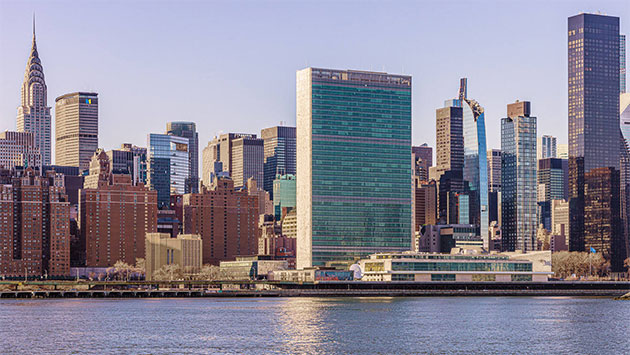
NEW YORK, July 3 (IPS) - At the Annual General Meeting of the United Nations Asia Network for Diversity and Inclusion (www.UN-ANDI.org) on 21 May 2026, I was invited to share my reflections on both the pre and post separation phases of my UN journey. This provided me with a valuable opportunity to critically examine my decision to leave the UN service after many years at the ICSC.
I recently closed one of the most defining chapters of my professional life, after more than 25 years serving the United Nations (UN) —including two decades at the International Civil Service Commission (ICSC). Importantly, my decision was made entirely on personal and professional grounds, independent of any budgetary or post-related considerations. As a jointly funded UN body, the ICSC is not affected by budget cuts or post reductions.
Why I Decided to Leave Early
My decision to leave under the UN’s Early Separation Programme was guided by reflection, self-respect, and a desire to preserve the enthusiasm and integrity that have always defined my work.
Leaving before the normal retirement age was not an impulsive choice—it was a deliberate act of self-preservation. Over time, I found that the institutional culture I had once admired had begun to erode the very principles it was meant to uphold. The UN’s mission remains noble, but its internal systems often fail to reflect that nobility.
My decision was shaped by several factors:
- Health and wellbeing: The relentless pace and stress of bureaucratic politics and petty backbiting were taking a toll. I wanted to reclaim balance and joy.
- Self-respect and dignity: When merit is overshadowed by favoritism, and integrity is compromised by internal politics, staying becomes a form of silent complicity.
- Desire to serve differently: I wanted to continue contributing to global governance—but from a space of independence, integrity, authenticity, and creativity.
Lessons Learned Before Leaving the UN
Before separation, I faced the same fears many colleagues quietly harbor: visa uncertainty, financial stability, and the daunting question of identity beyond the UN badge. The organization offers structure and prestige, but it can also create dependency. I learned that preparation—both practical and emotional—is essential.
- Plan early and thoroughly: Understand your entitlements, pension, and visa implications.
- Prioritize health and dignity: No professional title is worth sacrificing well-being.
- Seek clarity, not comfort: Reflect deeply on what you want to preserve and what you need to change.
- Build bridges before you leave: Relationships grounded in respect and trust endure beyond institutions.
Lessons After Leaving the UN
The months following my departure were both disorienting and illuminating. Freed from the constraints of bureaucracy, I rediscovered creativity, autonomy, and a renewed sense of purpose. I learned to shape my own rhythm, engage with global issues from a more independent perspective, and reawakened the joy of contributing without the shadow of ineffective bureaucracy.
- Structure your days: Routine restores stability and purpose.
- Embrace uncertainty: It is the space where reinvention begins.
- Stay connected: Continue engaging with colleagues and networks that share your values.
- Reclaim your voice: Independence allows you to speak truth without institutional filters.
Transforming the UN’s Culture
Overall, my time with the UN was a meaningful chapter in my life, offering a firsthand view of the power and potential of global governance and multilateralism in action. I continue to believe deeply in the ideals of the UN Charter—principles that remain both necessary and inspirational in an increasingly interconnected world.
At the same time, honest reflection requires acknowledging the institution’s shortcomings. While the mission of the UN is noble, the work itself is not inherently complex; too often, it is made unnecessarily difficult by people, entrenched cultures, bureaucratic practices, and systems that prioritize connections over competence. Environments that tolerate inequity and erode dignity rather than uphold it continue to undermine the organization’s credibility and effectiveness.
Ideals alone cannot sustain trust. When recruitment and promotion are shaped by back channels rather than merit, when accountability is applied selectively, and when organizational culture enables toxicity instead of transparency, the institution risks losing its moral authority. These are systemic challenges that demand introspection, accountability, and meaningful reform.
This was one reality of my journey, and I know I am not alone in recognizing it. These challenges tested me, but they also strengthened me—sharpening my sense of purpose, reinforcing the importance of competence, fairness, and integrity, and reminding me that institutions are judged not only by their ideals, but by the values they practice every day.
If the UN is to remain credible and effective in the decades ahead, it must confront its internal contradictions with honesty and urgency. Reform must go beyond structures and policies—it must also transform culture. Its strength lies in its people, and its future depends on creating an environment where they can thrive.
Key priorities include:
- Reinforce meritocracy: Recruitment and promotion must be based on competence and educational credentials, not connections. Transparent criteria and external oversight can help restore fairness.
- Empower accountability: Managers should be evaluated not only on outputs but also on conduct, how they treat staff, foster inclusion, and uphold dignity, as well as on the ethical stewardship of public funds and resources.
- Diversify leadership: Representation from all regions must be substantive, not symbolic. Talented and committed staff from developing countries deserve equal access to leadership pathways.
- Model integrity from the top: Ethical leadership must be visible, consistent, and enforced. Leaders should also meet clear minimum standards, including relevant educational credentials and demonstrated competence.
- Cultivate psychological safety: Encourage open dialogue, dissent, and innovation without fear of retaliation.
Practical Tips for Others Considering Separation
For those contemplating a similar transition, my advice is simple but vital:
- Prepare practically and emotionally: Plan your finances, entitlements, and visa matters early, while also preparing for the emotional shift of leaving a structured system. Practical readiness and emotional resilience go hand in hand.
- Develop skills beyond the UN system: The UN ecosystem is unique, and its experience does not always translate directly elsewhere. Build adaptability through new learning, volunteering, or personal pursuits that foster creativity, patience, and perspective.
- Expand your external network: Engage with academia, civil society, philanthropy, the private sector, and local community. Relationships beyond the UN can open doors to new opportunities and collaborations.
- Define your next purpose early: Clarify what motivates you and how you want to contribute next. A clear sense of direction brings meaning and stability during transition.
- Protect your integrity: Leave with professionalism, gratitude, grace, and honesty. How you exit shapes your legacy just as much as how you served the UN. Carry your professionalism and values into your next chapter.
- Transform experience into impact: Use what you learned to create something meaningful. Reinvention is not an ending—it is evolution.
Global service beyond the United Nations
Leaving the UN was both an ending and a beginning. It gave me the opportunity to step outside the system and rethink what global service could be—more inclusive, representative, and accountable. That vision led to the founding of Asia Global Forum, a nonprofit organization committed to addressing imbalances in global governance and ensuring that Asia’s diversity and perspectives are recognized as central to global progress—from governance and economic development to cultural dialogue—while strengthening collaboration with other regional communities.
I leave the UN with appreciation for what was good, respect for those who serve with integrity, and lessons from more difficult moments. At the same time, I leave with the conviction that meaningful transformation often begins outside established systems. Asia Global Forum is my way of continuing that service—building a movement that places representation, merit, and accountability at the center of a fairer global order.
Purpose does not end with an institution—it evolves beyond it.
Shihana Mohamed, a Sri Lankan national, is President of Asia Global Network (www.AsiaGlobalForum.org) and a US Public Voices Fellow with The OpEd Project and Equality Now on advancing the rights of women and girls. She is also a founding member and Coordinator of the United Nations Asia Network for Diversity and Inclusion (www.UN-ANDI.org). A dedicated human rights activist, she is a strong advocate for gender equality and the advancement of women. She served the United Nations for over 25 years.
IPS UN Bureau
© Inter Press Service (20260703062302) — All Rights Reserved. Original source: Inter Press Service















 English (US) ·
  French (CA) ·
  French (FR) ·