

 2 months ago
53
2 months ago
53
PROTECT YOURSELF with Orgo-Life® QUANTUM TECHNOLOGY
Orgo-Life the new way to the future Advertising by AdpathwayPolitics
Key Facts
—The filing. Senator Flávio Bolsonaro sent an eighty-six-page submission to the US trade office on July 1.
—The ask. He wants planned twenty-five percent tariffs on Brazilian goods held back for a hundred and eighty days.
—The logic. He argues past tariffs backfired by strengthening President Lula ahead of the vote.
—The candidate. Flávio is the right’s presidential contender against Lula on October 4.
—The hearing. A public session in Washington is set for July 6 and 7, and he plans to speak.
—The backlash. Lula called the move a surrender of Brazilian sovereignty.
A Brazilian presidential candidate is asking a foreign government to delay punishing his own country. The Bolsonaro tariff request has handed President Lula a ready-made line of attack.
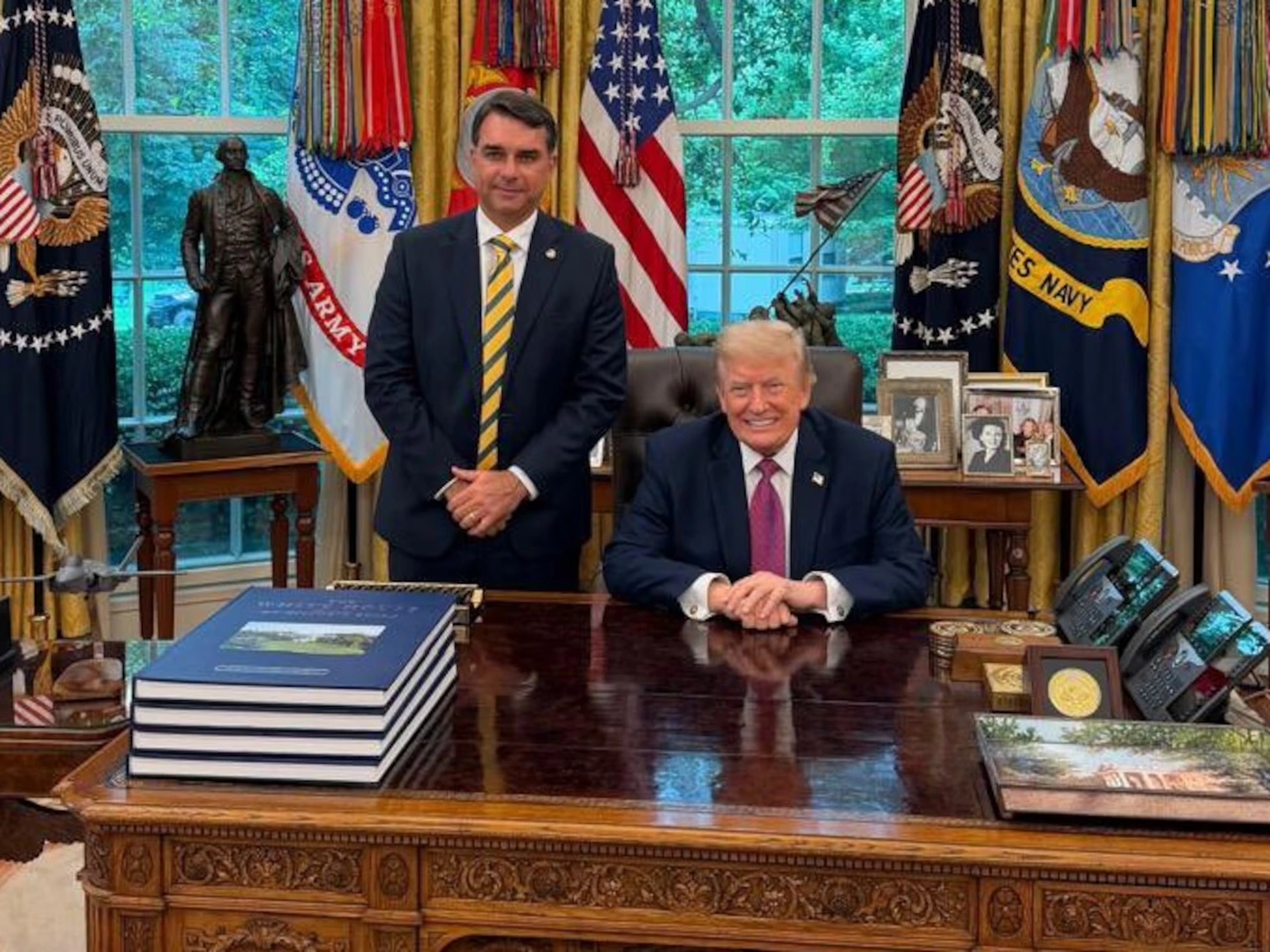
Senator Flávio Bolsonaro, the right’s candidate for the October election, filed an eighty-six-page submission with the United States trade office on July 1, later published in full. In it he asks Washington to postpone new tariffs on Brazilian exports rather than impose them now.
The request lands at a delicate moment. The United States is weighing a twenty-five percent tariff on a range of Brazilian goods, and a final decision could come within weeks.
What the Bolsonaro tariff request actually says
The core of the filing is a delay, not a cancellation. Flávio proposes suspending the tariffs for a hundred and eighty days, extendable by another ninety, while the two governments negotiate.
He frames it through a snapback mechanism. If Brazil does not bargain in good faith during that window, the tariffs would automatically return, giving Washington a lever without an immediate blow.
The timing argument is explicit. The senator asks the Americans to weigh Brazil’s election calendar, warning that acting weeks before the vote could look like an attempt to sway the result.
He met President Trump and Secretary of State Marco Rubio in recent weeks to press the case, and he is registered to speak at the trade office’s public hearing on July 6 and 7.
Why a candidate would ask for a Bolsonaro tariff delay
The reasoning is nakedly electoral. Flávio argues that last year’s tariffs did not change Brasilia’s behaviour and instead strengthened Lula, who cast himself as the defender of national sovereignty.
His filing cites polling to make the point. It says Lula’s standing improved precisely during the periods when American tariff pressure was most visible.
A fresh round of tariffs before October, on this logic, would hand the incumbent the same gift again. Delaying them until after the vote removes the campaign weapon.
The submission goes further on strategy. It suggests Brazil negotiate directly with Washington outside the rules of Mercosur, the South American trade bloc, and names Argentina’s Javier Milei as a model to study.
The political risk for the right
Lula pounced within hours. He accused the Bolsonaro family of surrendering the country’s interests to a foreign power, saying Brazil would always negotiate as an equal.
On the same day, his government filed its own response to the trade office, arguing the tariffs lack any basis in trade law and would hurt American consumers and companies too.
The exchange crystallises a strange dynamic. A tariff threat from Washington is a burden for exporters, yet it has become a political asset for the president and a liability for the challenger who is seen as courting it.
For investors, the read is about noise as much as trade. A contested election in Latin America’s largest economy is now entangled with an American trade decision, and each can move the other in unpredictable ways.
The next marker is close. The Washington hearing on July 6 and 7 will show whether the delay idea gains traction, or whether the tariffs land in the middle of the campaign after all.
What is the Bolsonaro tariff request?
On July 1, Senator Flávio Bolsonaro filed an eighty-six-page submission with the United States trade office asking it to delay planned twenty-five percent tariffs on Brazilian goods for a hundred and eighty days, rather than impose them before Brazil’s October election. He proposes a snapback under which the tariffs would return automatically if negotiations fail.
Why does he want the tariffs delayed?
He argues that earlier tariffs backfired politically, strengthening President Lula, who campaigned as the defender of Brazilian sovereignty. Flávio, the right’s presidential candidate, says acting again before the October 4 vote would hand the incumbent the same advantage.
How has Lula responded?
Lula accused the Bolsonaro family of surrendering Brazil’s interests to a foreign power and said the country would negotiate as an equal. His government filed a separate response to the US trade office arguing the tariffs lack a basis in trade law and would harm American consumers as well.




 English (US) ·
  French (CA) ·
  French (FR) ·