

 5 hours ago
10
5 hours ago
10
PROTECT YOURSELF with Orgo-Life® QUANTUM TECHNOLOGY
Orgo-Life the new way to the future Advertising by AdpathwayBRAZIL · ECONOMY
Key Facts
- —The country Brazil, Latin America’s largest economy, usually pays the rest of the world more for services and profits than it earns.
- —Why it matters In 2014 its total deficit with the world reached 4.5% of GDP, more than long-term foreign investment covered.
- —How it works The current account sums up trade, services, interest, profits and transfers between Brazil and the rest of the world.
- —What happened The central bank reported an August deficit of US$5.05 billion on 28 September, above the US$4.9 billion forecast.
- —The numbers Direct investment brought in US$7.4 billion in August and US$86.6 billion over 12 months, 3.39% of GDP.
- —What it means for you Long-term company capital covers the gap, and it is less likely to leave than stock or bond money.
- —Still open Firms with foreign owners owed US$37.1 billion in unpaid dividends at end-2025, and Brazil votes on 4 October.
Brazil foreign direct investment brought in US$7.4 billion in August, more than the country’s current-account deficit of US$5.05 billion. The Banco Central do Brasil, the country’s central bank, published the figures on the morning of Monday 28 September.
Free daily brief — no card needed
Get every Brazil story in one morning email
We build you a personalized brief around the topics you follow — free for 7 days. Love it? Your first month after that is US$1.
Yes, email me my free daily brief — I can unsubscribe any time.
The current account is the balance of everything Brazil earns from the rest of the world and everything it pays abroad. A deficit must be filled by money from abroad, and in August direct investment by foreign companies more than filled it.
One-stop reference
Company Intelligence
Every listed company in Latin America — financials, ownership and structure for 1,450+ companies across 26 exchanges, in one place.
What the current account measures
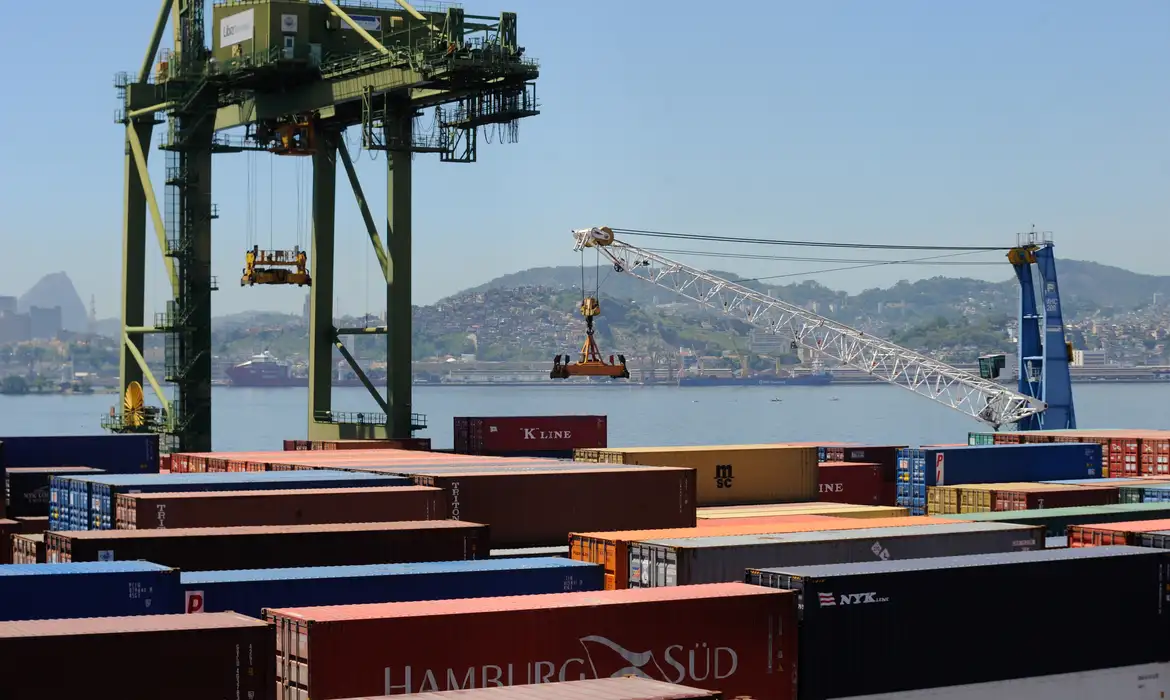
Think of it as a household budget for a whole country. Brazil earns from selling soybeans, oil and iron ore, and spends on imports, foreign services, interest and profits paid to foreign owners.
For years Brazil has sold more goods than it buys, but it pays out more for services and profits than it earns. That is why the country usually runs a current-account deficit, even in months with a large trade surplus.
What drove the August deficit
Brazil’s trade in goods produced a surplus of US$6.6 billion in August, up from US$5.3 billion a year earlier. Exports rose 12.1% to US$33.3 billion, while imports grew 9.4% to US$26.7 billion.
Services pulled the other way, with a deficit of US$5.3 billion, 28.2% more than in August 2025. Net spending on computing, telecommunications and information services more than doubled to US$1.3 billion, the central bank said.
Transport cost a net US$1.5 billion, equipment rental US$1.1 billion and royalties and licence fees US$1.0 billion. Brazilians’ net spending on foreign travel held at about US$1.0 billion, the same as a year earlier.
The largest deficit item was primary income, the net interest and profits due to foreign lenders and owners, at US$7.0 billion. Within it, net profits and dividends reached US$5.9 billion, against US$4.2 billion a year earlier, Poder360 and CNN Brasil reported.
Live Market IntelligenceBrazil — Live Market BoardInside: market breadth, the sector heatmap, currencies & rates, the Latin America scoreboard and the full instrument board.Rio Times · Live Market Intelligence
Brazil — Live Market Board
B3 · São Paulo
Sep 29, 2026 · 06:39
Ibovespa · benchmark
182,991.13
-0.26%
L 167,142day rangeH 168,310
+21.85% over 12 months
Market breadth · 15 names
47% advancing
7 ▲ advancing8 declining ▼
Currencies, rates & key inputs
Sector heatmap · average move today
Mining
+1.16%
VALE3, CSNA3, GGBR4
Industrials
+0.20%
WEGE3, RENT3
Financials
-0.10%
ITUB4, BBDC4, BBAS3, B3SA3
Energy
-0.12%
PETR4, PRIO3
Consumer Staples
-0.80%
ABEV3
Consumer Disc.
-2.63%
AZZA3
Latin America scoreboard
IndexLastTodayStrength
IbovespaBrazil
182,991.13
-0.26%
S&P/BMV IPCMexico
64,944.41
-0.07%
S&P IPSAChile
11,137.59
-1.06%
S&P MERVALArgentina
2,798,925
+0.00%
MSCI COLCAPColombia
2,579.33
-0.21%
BVL S&P PerúPeru
60,698.35
-0.79%
Full instrument board
| IBOV | 182,991.13 | -0.26% | +21.85% | 183,476.86 | 168,310 | 167,142 | — |
| USD/BRL | 5.16 | +0.01% | -5.13% | 5.16 | 5.18 | 5.14 | — |
| SELIC | 14.00% | — | — | — | — | — | |
| PETR4 | 41.64 | -0.05% | +35.19% | 41.66 | 41.97 | 41.15 | 41,499,400 |
| VALE3 | 72.97 | +0.83% | +30.75% | 72.37 | 73.54 | 72.66 | 17,658,000 |
| ITUB4 | 38.60 | -1.03% | +4.57% | 39.00 | 39.34 | 38.39 | 29,487,800 |
| BBDC4 | 16.85 | +0.36% | +3.50% | 16.79 | 16.90 | 16.67 | 19,416,900 |
| BBAS3 | 19.37 | +0.47% | +0.73% | 19.28 | 19.44 | 19.16 | 11,069,200 |
| B3SA3 | 14.26 | -0.21% | +12.73% | 14.29 | 14.47 | 14.11 | 33,037,800 |
| ABEV3 | 14.89 | -0.80% | +21.91% | 15.01 | 15.07 | 14.81 | 16,453,100 |
| WEGE3 | 47.59 | +0.49% | +29.99% | 47.36 | 48.08 | 47.36 | 3,364,600 |
| PRIO3 | 59.14 | -0.19% | +50.67% | 59.25 | 59.81 | 58.74 | 3,325,600 |
| SUZB3 | 41.33 | +2.35% | -23.55% | 40.38 | 41.48 | 40.35 | 3,914,900 |
| RENT3 | 34.68 | -0.09% | +0.84% | 34.71 | 34.96 | 34.35 | 7,979,100 |
| AZZA3 | 15.89 | -2.63% | -53.76% | 16.32 | 16.42 | 15.82 | 1,330,300 |
| CSNA3 | 4.30 | +0.47% | -42.65% | 4.28 | 4.41 | 4.26 | 10,076,100 |
| GGBR4 | 24.69 | +2.19% | +51.38% | 24.16 | 24.85 | 24.18 | 7,047,600 |
| ENEV3 | 24.21 | -1.38% | +70.49% | 24.55 | 24.64 | 23.99 | 9,297,000 |
Largest moves today
AZZA3
15.89
-2.63%
SUZB3
41.33
+2.35%
GGBR4
24.69
+2.19%
ENEV3
24.21
-1.38%
ITUB4
38.60
-1.03%
VALE3
72.97
+0.83%
ABEV3
14.89
-0.80%
WEGE3
47.59
+0.49%
The session read
The Ibovespa eased 0.26%, with breadth negative — 7 of 15 names higher. Materials led, while Consumer Disc. lagged.
From The Rio Times
Related coverage · 29 Sep 2026
Brazil Inflation Expectations for 2026 Rise to 4.99%, Above Target Range
Read →
Why direct investment is the steadier money
Direct investment is a foreign firm’s money in a Brazilian business, such as a factory, where it holds 10% or more. It tends to stay for years, unlike portfolio money in shares and bonds, which can leave within days.
Of August’s US$7.4 billion, US$5.7 billion was profit that foreign-owned companies earned in Brazil and chose to reinvest there. New capital added US$3.6 billion, and loans between related companies produced a net outflow of US$1.9 billion.
Reinvested profit is recorded twice in the statistics, once as income due to foreign owners and once as new investment. Part of the deficit and part of the inflow are therefore two sides of the same money.
Portfolio money moved the other way in August, with a net outflow of US$5.2 billion from Brazilian markets. Foreign investors pulled US$6.5 billion out of shares and investment funds, while putting US$1.3 billion into local bonds.
Over 12 months, portfolio flows into the domestic market were still positive at US$11.7 billion. Economists at Safra, a private bank, wrote in May that direct investment has a “lower propensity to abrupt reversals” than portfolio flows.
How this compares with past cycles
In the 12 months to August, the deficit was US$63.0 billion, or 2.47% of GDP. Brazil foreign direct investment reached US$86.6 billion, or 3.39% of GDP, about 1.4 times the gap.
A year earlier the margin was thinner, with a 12-month deficit of 3.53% of GDP against investment of 3.64%. In the first eight months of 2026 the deficit was US$43.5 billion, below US$47.9 billion a year earlier.
The contrast with 2014 is sharper, when the deficit reached 4.5% of GDP and direct investment about 3.6%. The rest of that gap had to be financed with portfolio flows, loans or reserves.
In May, Safra’s economists described the external sector as in a “process of adjustment, and not of acute deterioration”. They expected a 2026 deficit of 2.3% of GDP, the same share the central bank now projects.
Revisions, forecasts and the market consensus
Monday’s release also carried the central bank’s annual revision, based partly on its census of foreign capital in Brazil. It raised July’s deficit to US$9.37 billion from US$8.11 billion.
It also cut July’s direct investment to US$6.97 billion from US$7.46 billion. The 2025 deficit rose to US$67.4 billion, or 2.96% of GDP, from US$66.7 billion, Revista Oeste reported.
Direct investment for 2025 now stands at US$85.0 billion, up from US$74.1 billion in 2024. That total includes US$13.1 billion from international corporate restructurings, which involve no actual transfer of money, and other late-reported deals.
Economists polled by Broadcast, the financial news service of the Estadão group, had expected an August deficit of US$4.9 billion. Their median forecast for direct investment was US$6.95 billion, so the inflow beat expectations while the deficit came in slightly wider.
In its Monetary Policy Report of 24 September, the central bank raised its 2026 deficit forecast to US$60 billion from US$56 billion. It expects US$75 billion of direct investment, below the US$80 billion median in its latest weekly survey of market economists.
The dividend backlog behind the numbers
Behind the numbers sits a 2025 tax law, Law 15.270, which changed how dividends are taxed in Brazil. The central bank says it also let companies defer paying out profits booked in 2025 until 2028.
Firms with foreign owners declared US$84.7 billion in dividends payable for 2025, more than the US$72.6 billion they actually earned. They paid out US$55.1 billion, and unpaid dividends rose to US$37.1 billion from US$7.4 billion a year before.
That backlog can be paid out to foreign owners until 2028, adding to profit remittances. When it is, the reinvested profit counted as direct investment falls by the same amount if earnings are unchanged.
What it means for the real and for residents
Brazil’s international reserves rose by US$2.9 billion in August to US$372.6 billion, Agência Brasil reported. That is almost six times the 12-month deficit, even after the central bank sold US$1.0 billion in the spot currency market.
The real stood at about 5.21 reais to the dollar on Tuesday 29 September. For residents paid in dollars or euros, the figures describe a currency backed by long-term inflows rather than short-term money.
They do not predict where the real goes next, which depends as much on interest rates and politics. August’s US$6.5 billion exit from Brazilian shares shows how quickly portfolio money can move.
Brazil elects a president, Congress and state governors on Sunday 4 October, with a possible runoff on 25 October. Vice-President Geraldo Alckmin predicted in November 2025 that direct investment would beat the 2024 total, Brasil 247 reported.
Economists quoted in July by Gazeta do Povo, a conservative daily, said foreign investors still miss predictable rules and simpler taxes. Jucélia Souza of the consultancy Siegen saw “stability” in the inflows but said that without “a structural change” they would not grow.
What comes next, and what this does not mean
September figures are due after the first round of voting. Monthly numbers swing widely, as July’s revised deficit of US$9.37 billion showed.
A deficit covered by direct investment does not mean Brazil’s external accounts are in surplus or that the real will rise. It also does not mean every dollar is fresh money, since most of August’s inflow was reinvested profit.
The wider August deficit is no sign of crisis, as the 12-month gap remains far below 2014’s 4.5% of GDP. The risks are larger profit remittances, weaker export prices or portfolio money leaving after the vote.
For now the numbers show a country that spends more abroad than it earns, but pays for the difference with long-term capital. The next test comes when the dividend backlog and the election result meet the data.
Frequently Asked Questions
What is Brazil’s current account deficit?
It is the amount by which Brazil’s payments to the rest of the world exceed its earnings from it. It was US$5.05 billion in August 2026 and US$63.0 billion over 12 months, 2.47% of GDP.
Why does foreign direct investment matter for Brazil?
Brazil foreign direct investment is long-term money in companies and factories, so it is less likely to leave suddenly than share or bond flows. When it exceeds the current-account deficit, Brazil does not need short-term money to pay its bills abroad.
Does the 4 October election change these figures?
Not directly, because the August data describe flows that have already happened. Portfolio money can react quickly to politics, while direct investment usually follows longer business plans.
How large are Brazil’s foreign-currency reserves?
US$372.6 billion at the end of August 2026, according to the central bank. That is almost six times the 12-month current-account deficit.
This article was produced by The Rio Times’ automated newsroom system. How we use AI · Report an error
The Rio Times · Power Map
See who really holds power in Latin America
Click to open the Power Map →






















 English (US) ·
  French (CA) ·
  French (FR) ·