

.png) 2 days ago
4
2 days ago
4
PROTECT YOURSELF with Orgo-Life® QUANTUM TECHNOLOGY
Orgo-Life the new way to the future Advertising by AdpathwayThe Brics endorsement of a proposal to set up a Grain Exchange could help challenge the dominance of large European and US-based grain trading firms, but the initiative could face significant operational and implementation hurdles, experts said.
The Brics Grain Exchange, proposed in 2023 as a digital platform, is being championed by Russia, one of the world’s largest grain producers.
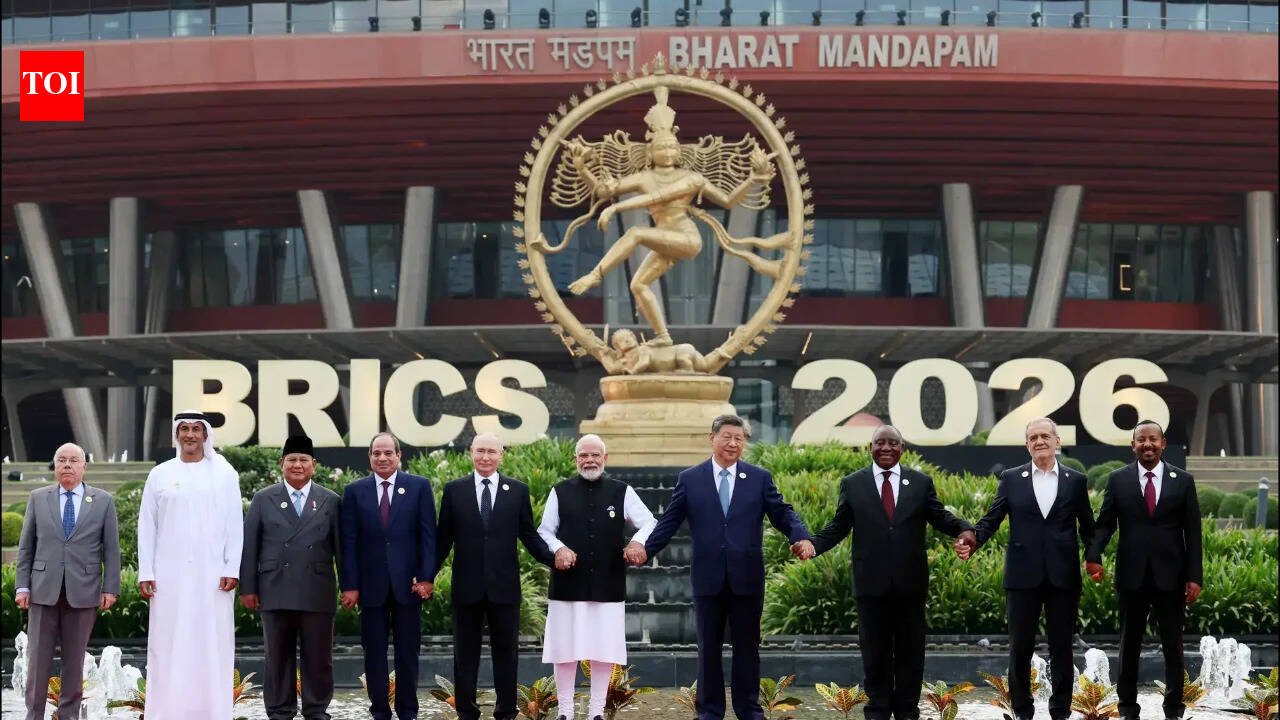
On Saturday, the New Delhi Declaration of Brics reiterated support for the proposal and mooted expanding it to include other agricultural products and commodities over time.
Brics nations account for 44 per cent of global grain production and more than 25 per cent of consumption, according to estimates.
Much of global grain trade — estimated at 70-90 per cent — is controlled by a handful of European and US-based trading firms, with nearly half of their offices located in one European city.
“Certainly, it makes sense (to have a Brics grain trading platform). The thing is that the European grain trade is actually dominated by the big grain traders. They would obviously look at their own interests. This is something that developing countries have been talking about for a long time. It is an old story about the commodity terms of trade: if you do not have control over the market, you are going to be short-changed. So, if this happens, there will at least be a semblance of control,” Professor Biswajit Dhar, distinguished professor, Council for Social Development, told Business Standard.
Dhar said the idea was still at a developmental stage and needed greater clarity, but made sense given the presence of Brics countries in international markets and their interest in deriving greater benefits from trade.
“If we are looking at feeding the developing world, Brics is suddenly a grouping that represents much of the developing world. We are part of what is now commonly referred to as the Global South. From that perspective, such a platform is also very important,” Dhar said.
He said the Brics Grain Exchange could provide a counterbalance to the large European and American grain firms and give Brics countries a greater say in price-setting in global markets.
Gopal Krishan Sood, senior consultant at New Delhi-based policy think tank Arcus Policy Research, said the proposed exchange could face major hurdles over the choice of settlement currency, regulatory framework and limited participation by member countries, potentially making it less relevant for India.
“If this (Grains Exchange) is a futures exchange, the first requirement is participation from other countries. India's participation in global grain trade is very limited because rice is not included in the global definition of grains,” Sood said.
Major globally traded grains include wheat, maize, sorghum and soybeans, among others. While India is a significant producer and trader of some agricultural commodities, its participation in several of these commodities in global trade remains limited, he said.
Sood said the composition of Brics also raised questions about the exchange’s potential participation.
Russia is a major wheat and rapeseed exporter, while Brazil is a large agricultural exporter. South Africa is an important maize producer, whereas China and Egypt are structural importers of wheat, he said.
A more fundamental issue, however, would be the currency in which contracts would be denominated and settled.
Using the Russian or Chinese currency could raise concerns over currency manipulation, while Brazil’s currency is relatively volatile and does not have the international role required of a major settlement currency, he said.
Sood also pointed to regulatory challenges. Unlike an international body, the exchange would ultimately have to be regulated by the country where it is located. “Which country would you trust to ensure that there is no political influence over the regulator?” he asked.
For India, participation would be further constrained by existing foreign-exchange regulations. He also questioned whether the proposed exchange could emerge as an independent global benchmark given the dominance of the Chicago Board of Trade.
“All these limitations make it unlikely that the proposed exchange will see the light of day. And even if it does, it is unlikely to be particularly relevant for India,” Sood said.
















 English (US) ·
  French (CA) ·
  French (FR) ·