

.png) 2 days ago
4
2 days ago
4
PROTECT YOURSELF with Orgo-Life® QUANTUM TECHNOLOGY
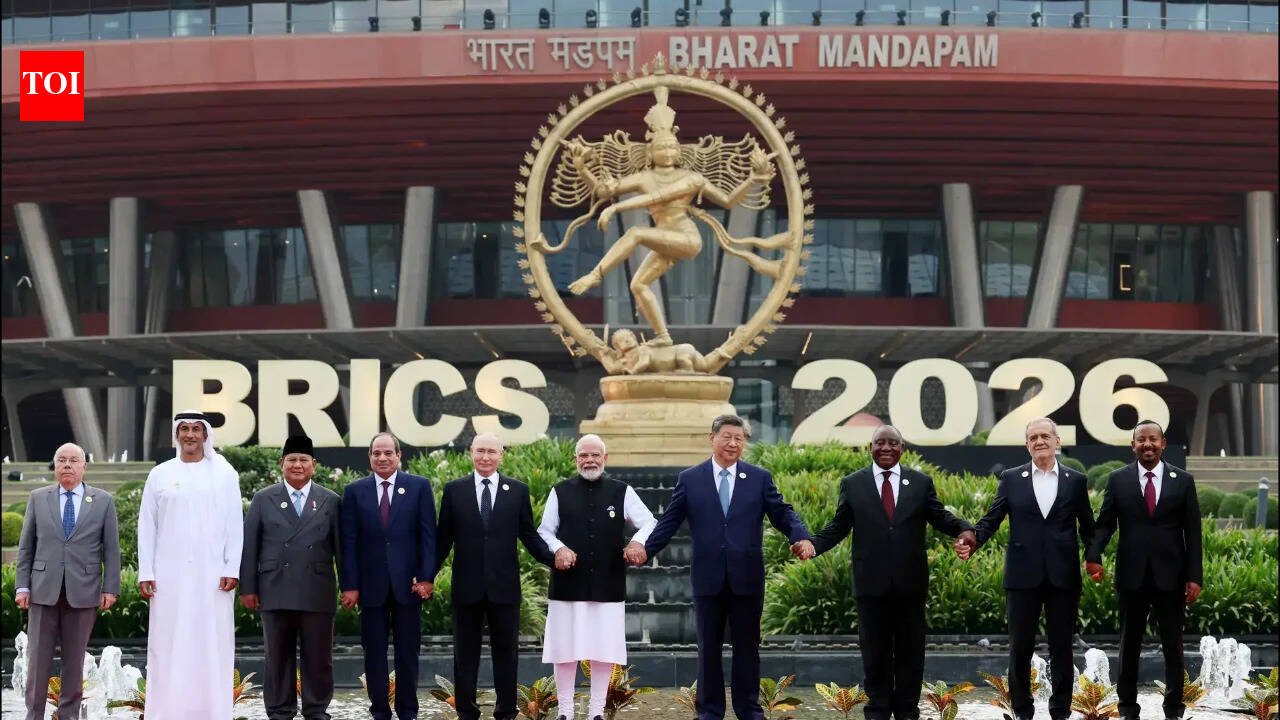
Orgo-Life the new way to the future Advertising by AdpathwayA day after Prime Minister Narendra Modi and Chinese President Xi Jinping met on the sidelines of the 18th Brics Summit in New Delhi, analysts expressed mixed feelings about this high-profile event.
Holding the meeting itself was a positive sign. India-China relations had frozen after border clashes in 2020 and have slowly improved since 2024. But the way forward could still be tough with structural issues unresolved, as well as indications from the official language used by the Chinese side. The leaders’ last sit-down bilateral meeting was on August 31, 2025, when Modi visited China for the Shanghai Cooperation Organization summit.
The Indian and the Chinese sides mentioned different perspectives in their respective readouts of Saturday’s meeting, said Srikanth Kondapalli, professor, China studies at Jawaharlal Nehru University.
While it may appear to be largely similar, a closer reading shows the differences.
After Saturday’s meet, the Ministry of External Affairs media statement said the leaders welcomed the steady progress in India-China relations and reaffirmed that both countries should take a strategic and long-term perspective of their ties. Modi emphasised that peace and tranquillity in the border areas remain an essential basis for the continued development of relations, and underlined the need for both sides to observe existing agreements and understandings on border-related issues. The leaders expressed “commitment to a fair, reasonable, and mutually acceptable resolution of the boundary question” in the future.
The media statement from China’s Ministry of Foreign Affairs said the leaders had a sincere and in-depth exchange of views and reached the consensus that China and India should be partners. Xi said China always approaches and develops its India relations from a strategic and long-term perspective, and that he met Modi twice over the past two years, guiding the bilateral relations from starting afresh to making further improvements. “This situation has not come easily and needs to be cherished. China and India have different national realities,” Xi said.
Xi also made four observations to improve ties. One is to “calibrate the direction with an objective and rational strategic perception.” China and India are partners rather than rivals, he said. “This is a strategic judgment made based on the development stage and international environment of the two countries.”
Here, national realities or development stages imply that China is a $19 trillion economy and India a $4 trillion economy, Kondapalli said. “Xi is conveying that China is a preeminent power, and India should modulate its actions or approaches accordingly.”
The term strategic judgement was used for the first time by China in a bilateral dialogue with India, he said, which signifies a tone, as the leading power in Asia.
Xi also said, “Remove irritants with the political wisdom of mutual respect and mutual understanding.” The two sides should stay committed to advancing bilateral relations and resolving the boundary question, seek parallel, mutually reinforcing progress, and maintain peace and tranquillity in the border areas, according to the statement. In July, new border tension emerged, this time in Arunachal Pradesh, where locals spotted Chinese soldiers or graffiti in a non-demarcated part.
B R Deepak, China expert and JNU professor, said Saturday’s meet suggested a possible pragmatic shift in relations, from competition to managed cooperation, not full-fledged cooperation. “For India, the border issue is primary, but the meeting also showed there is a willingness to reduce other strategic and economic risks.”
The talks covered the border, trade, market access and supply-chain issues in general.
Although contrary to media reports earlier, Xi was not accompanied by a large delegation to India, two high officials — Cai Qi, the fifth-ranking member of the seven-member Communist Party of China standing committee, the country’s highest decision-making body, and Chinese Foreign Minister Wang Yi – did accompany him.














 English (US) ·
  French (CA) ·
  French (FR) ·