

.png) 2 weeks ago
7
PROTECT YOURSELF with Orgo-Life® QUANTUM TECHNOLOGY
Orgo-Life the new way to the future Advertising by AdpathwayAhead of the peak crop residue burning season, the Centre on Tuesday asked Madhya Pradesh, Rajasthan, Punjab, Haryana and Delhi-NCR governments to work in "mission mode" to prevent stubble burning.
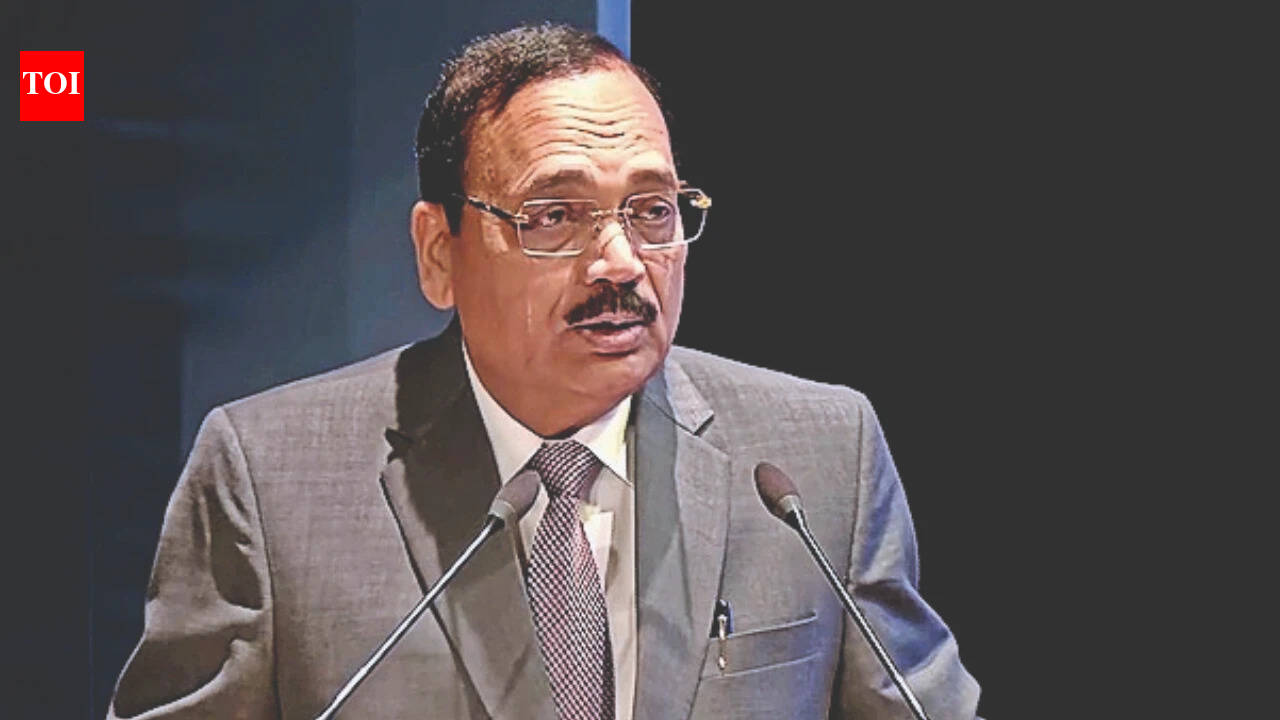
A high-level inter-ministerial meeting, chaired by Agriculture Minister Shivraj Singh Chouhan and Environment Minister Bhupender Yadav, reviewed stubble management with state agriculture ministers and officials.
"Very little time remains between the harvesting of the current crop and the sowing of the rabi crop. Therefore, the administrative machinery must step away from paperwork and work directly on the ground on a war footing," the two ministers said.
States have been asked to hold immediate meetings with district magistrates to ensure strict monitoring and practical solutions, an agriculture ministry statement said.
Mixed picture
Reviewing data for September 15 to October 12, Chouhan noted a significant fall in burning incidents over the previous year: 53.3 per cent in Haryana and about 32 per cent in Uttar Pradesh. Punjab also recorded a decline.
However, he termed the rise in Madhya Pradesh (55 to 277 cases, up 452 per cent) and Rajasthan (20 to 60, up 200 per cent) "extremely concerning".
He directed both states to identify affected districts and villages and put a special action plan in place immediately.
With a large part of the harvest still to come, states with fewer incidents must not become complacent, he said.
Farmers get only 20–25 days between paddy harvest and wheat sowing, and burning remains the quickest and cheapest way to clear fields, despite damaging soil nutrients and organisms and worsening air pollution in Delhi-NCR.
The real test will come in the mid-October to mid-November peak, when harvesting overlaps with the wheat sowing window.
"Simply telling farmers not to burn stubble is insufficient; we must provide them with easy, accessible and affordable alternatives," Chouhan said.
Residue incorporated into the soil becomes organic manure, while residue removed from fields can earn farmers extra income through bio-CNG, bio-ethanol, electricity and fodder, he said.
The aim, he added, is to build a system where farmers don't feel the need to burn and can also gain from eco-friendly practices such as carbon credits.
Idle machines
The Centre has so far supplied over 3.54 lakh crop residue management machines to states, including 26,109 new machines in the current financial year.
But a central survey found about 40 per cent of old machines in Punjab and 48 per cent in Haryana idle or non-functional.
Chouhan directed that old machines be repaired immediately alongside the distribution of new ones, failing which shortages would arise.
He also asked states to activate custom hiring centres and ensure small and marginal farmers get machinery at affordable rates.
Funds
The Centre has released Rs 4,266.47 crore to states under the Crop Residue Management scheme between 2018-19 and 2025-26. This includes Rs 2,056.50 crore to Punjab, Rs 1,171.71 crore to Haryana, Rs 868.67 crore to Uttar Pradesh and Rs 59 crore to Madhya Pradesh.
For 2026-27, Rs 592.57 crore has been allocated, of which Rs 430.87 crore has been released. Chouhan expressed concern over slow utilisation and urged Punjab in particular to submit utilisation certificates for earlier releases so the next instalment can be cleared without delay.
Fodder, industry linkages
Chouhan asked drought-hit regions to store stubble safely as fodder for livestock.
He also called for direct supply chains linking farmers to thermal power plants (for co-firing of stubble pellets), compressed biogas plants and 2G bio-ethanol plants, and asked states to implement approved supply projects without delay.
He also advocated short-duration, improved varieties such as Pusa 2090 and PR126 over long-duration ones like Pusa-44, to leave enough time to clear fields after harvest.
While implementation primarily rests with states, the Centre stands with states and farmers on technical, administrative and financial fronts, Chouhan said, urging partner ministries, Krishi Vigyan Kendras and district administrations to work with a "shared national resolve".
Watch the post-3 PM gap
Yadav called for intensified ground-level monitoring and enforcement.
He sought special monitoring in key districts of Punjab (Sangrur, Tarn Taran, Amritsar, Patiala and Gurdaspur) and Haryana (Kaithal, Karnal, Kurukshetra, Ambala and Fatehabad) to track harvesting trends and anticipate burning events.
He stressed integrating stubble burning data with the Commission for Air Quality Management and the Central Pollution Control Board, and said forecasting harvest timing and tracking weather conditions affecting NCR air quality were crucial.
Monitoring should not depend on satellite data alone, Yadav said.
District collectors must carry out ground assessments, and enforcement should include patrolling and flying squads, especially after 3 pm, when satellites do not pass over.























 English (US) ·
 French (CA) ·
 French (FR) ·