

 2 months ago
53
2 months ago
53
PROTECT YOURSELF with Orgo-Life® QUANTUM TECHNOLOGY
Orgo-Life the new way to the future Advertising by AdpathwayEcuador · TRADE
Key Facts
—Agency: China’s GACC lifted the suspension effective August 14, 2026.
—Wave: Plants suspended from October 2025 and January 2026 were reinstated.
—Reason: White spot virus and sodium metabisulfite residues in frozen shrimp.
—Status: Six Ecuadorian shrimp plants remain suspended as of mid-August 2026.
—Inflation: July 2026 monthly rate -0.09%; annual rate 1.39%.
—Basket: New Canasta Familiar Básica de Consumo cost US$825.17 in July 2026.
China’s customs agency restored export eligibility for eight Ecuadorian shrimp plants on August 14, 2026. Six plants remain suspended. Ecuador’s July inflation came in at 1.39% year-on-year.
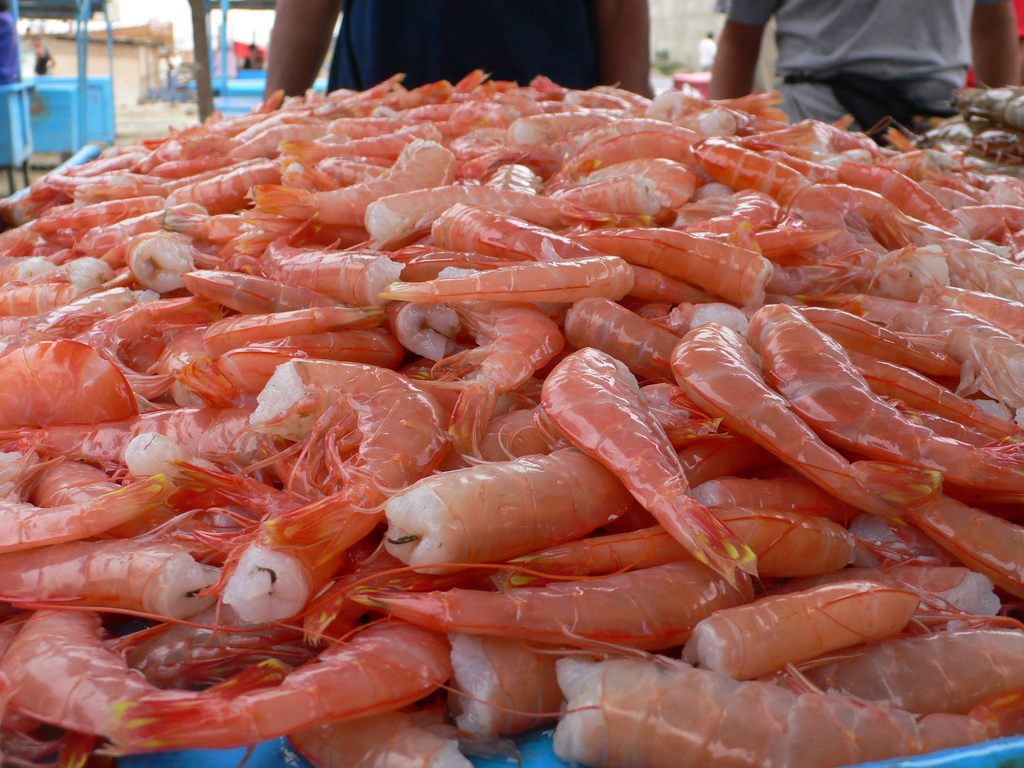
China’s General Administration of Customs (GACC) restored export eligibility for eight Ecuadorian shrimp plants on August 14, 2026, lifting a suspension that had hit the sector for months. Ecuador’s shrimp chamber, Cámara Nacional de Acuacultura (CNA), said the decision followed months of joint technical work between the affected companies, the chamber, and national authorities.
One-stop reference
Company Intelligence
Every listed company in Latin America — financials, ownership and structure for 1,450+ companies across 26 exchanges, in one place.
Why China suspended the shrimp plants
China’s GACC suspended some Ecuadorian shrimp plants from October 2025 and others from January 2026, according to the CNA. A further six companies, operating seven plants, were suspended from June 30, 2026, over alleged excess sodium metabisulfite and white spot virus.
Ecuador’s Subsecretaría de Calidad e Inocuidad notified the suspension of sanitary certificates from June 30, 2026, after detections of white spot virus and sodium metabisulfite residues in frozen shrimp. Exporters and authorities attribute the rise in observations to changes in China’s testing methodology, particularly testing shrimp without shells.
The GACC reinstated the eight plants effective August 14, 2026, a decision communicated to the CNA by Ecuador’s Foreign Ministry the same evening. The reinstated plants include Expalsa, Omarsa, Friolandia/Supremo, Expotuna, Ceaexport, Total Seafood, Oceantreasure, and Limbopack, each with its GACC establishment number.
Six Ecuadorian shrimp-exporting establishments still remain suspended from exporting to China, according to the CNA. The CNA credited the lifting to several months of joint technical work between the affected companies, the chamber, and national authorities.
Shrimp export values and volumes
CNA executive president Jose Antonio Camposano reported that 2025 shrimp exports reached about US$8.401 billion and 1.4 million tonnes, up 20.2 percent in value and 15.3 percent in volume. China was the leading destination at close to 49.6 percent of that total.
For 2026, Camposano said shrimp export revenue reached US$3.523 billion through May, with 51.24 percent of it from China, about US$1.8 billion. These dollar figures and the tonnage cover all destinations, not China alone.
The CNA earlier estimated the impact of the restrictions at around US$45 million in 2026, as of July 13, 2026. This is an estimate of economic losses for the year to that date, not gross export revenue.
Ecuador’s July 2026 inflation: -0.09% monthly, 1.39% annual
Ecuador’s monthly inflation rate in July 2026 was -0.09%, meaning prices of goods and services fell slightly from June, when the monthly rate was 0.79%. The annual inflation rate for July 2026 stood at 1.39%, compared to 1.65% in June and 0.72% in July 2025.
These figures come from the Índice de Precios al Consumidor (CPI) report published by the Instituto Nacional de Estadística y Censos (INEC) on August 17, 2026. They measure the month-on-month and year-on-year percentage changes in the national headline CPI.
The new Canasta Familiar Básica de Consumo at US$825.17
The cost of the Canasta Familiar Básica de Consumo (CFBC) in July 2026 was US$825.17 at the national level. This is the first month of INEC’s rebased CPI, with a new basket replacing the one in force since 1982.
INEC warns that data from July are not comparable with previous months. The earlier figure of US$824.85 came from the old basket, so there is no valid month-on-month comparison.
The CFBC is an indicator derived from the CPI that measures the monthly spending needed for a representative household of four people. The basket contains 98 articles: 37 food items and 61 non-food items.
Food and beverages cost US$355.27, housing and basic services US$278.29, clothing US$72.34, personal care and health US$70.44, education US$26.56, and cleaning and maintenance products US$22.25. INEC has discontinued the average family income figure it previously published beside the basket.
Under the last published series, June 2026, the ingreso familiar mensual was US$899.73 for a household of four with 1.6 earners on the unified basic wage. That income covered the basket, leaving a surplus of US$74.88, or 9.08 percent of the basket’s cost.
Why the US dollar matters for these numbers
Ecuador adopted the US dollar as its legal tender in January 2000, replacing the sucre at a fixed rate of 25,000 sucres per US dollar. The announcement came on 9 January 2000, the enabling law took effect in March 2000, and the sucre stopped circulating in September 2000.
Dollarization ended the local currency, so all official statistics, including the CPI and CFBC, are already in US dollars. For the reader, this means no currency conversion is needed to interpret Ecuadorian prices or export values.
Frequently Asked Questions
Which Chinese agency lifted the suspension on Ecuadorian shrimp plants?
China’s General Administration of Customs (GACC) lifted the suspension. It is the national customs authority that manages the listing and suspension of foreign shrimp plants.
How many Ecuadorian shrimp plants remain suspended?
Six Ecuadorian shrimp-exporting establishments remain suspended from exporting to China as of mid-August 2026. The GACC reinstated eight plants that had been suspended since October 2025 and January 2026.
What was Ecuador’s inflation rate in July 2026?
Ecuador’s monthly inflation rate in July 2026 was -0.09%, and the annual rate was 1.39%. These figures come from the consumer price index (CPI) report published by INEC on August 17, 2026.
What does the Canasta Familiar Básica de Consumo include?
The Canasta Familiar Básica de Consumo is an indicator derived from the CPI. It measures the monthly spending needed for a representative household of four people to buy 98 essential goods and services, and it cost US$825.17 in July 2026.
Sources
- www.elcomercio.com
- www.eluniverso.com
- www.seafoodnews.com
- noticiassin.com
- elmercuriomanta.ec
- www.expreso.ec
- www.elcomercio.com
- themoderatevoice.com
This article was produced by The Rio Times’ automated newsroom system. How we use AI · Report an error
The Rio Times · Power Map
See who really holds power in Latin America
Click to open the Power Map →



















 English (US) ·
  French (CA) ·
  French (FR) ·