

 7 hours ago
5
7 hours ago
5
PROTECT YOURSELF with Orgo-Life® QUANTUM TECHNOLOGY
Orgo-Life the new way to the future Advertising by AdpathwayColombia · GOVERNMENT
Key Facts
- —What happened The liquidator abolished all five deputy-minister posts at the Ministry of Equality and Equity.
- —How big The government claims annual savings of 1.5 billion pesos (US$475,000) from those posts.
- —The catch A Constitutional Court ruling forced the closure. Petro’s government ordered it by decree in June, before De la Espriella took office.
- —Who it hits Deputy ministers for women, youth, ethnic peoples, excluded populations, and diversities lose posts.
- —What comes next The liquidation period lasts one year, extendable, with a 15-day handover deadline.
Colombia’s Ministry of Equality and Equity is being wound up. The liquidator has abolished all five deputy-minister posts, and the government says the closure is already saving money.

One-stop reference
Company Intelligence
Every listed company in Latin America — financials, ownership and structure for 1,450+ companies across 26 exchanges, in one place.
The liquidation of Colombia’s Ministry of Equality is moving fast. All five deputy-minister posts are gone, and the government says the closure is already saving money.
The Liquidation Order
The Ministry of Equality and Equity was created by Law 2281 of 2023. Vice President Francia Márquez served as its first minister.
The Constitutional Court declared that law unconstitutional in 2024, citing procedural defects. It gave Congress two legislative terms to fix them, a deadline that lapsed on 20 June 2026.
The government under President Gustavo Petro then issued Decree 0626 of 19 June 2026, ordering the liquidation. This was before President Abelardo De la Espriella took office on 7 August 2026.
Legal Name Change
The decree changed the ministry’s legal name to Ministry of Equality and Equity in Liquidation. The ministry remains legally in existence but is winding down operations.
Under the liquidation regime, the ministry cannot start new mission-related activities. It can only issue acts necessary for its closure.
The Constitutional Court’s Role
Multiple outlets, including Infobae, Portafolio and El Tiempo, confirmed the Constitutional Court’s role. The court ruled Law 2281 of 2023 unconstitutional over procedural defects.
Judges gave Congress and the government two legislative terms to fix the defects. That grace period lapsed on 20 June 2026, forcing the ministry’s closure.
Semana first reported the court-ordered deadline, in an analysis on 30 August 2026. Its account is corroborated by several other outlets, not a single, unconfirmed claim.
From Minister to Liquidator
President Petro appointed Luis Alfredo Acosta as equality minister on 21 January 2026. Acosta, an indigenous leader from Cauca, had replaced Juan Carlos Florián.
When Decree 0626 took effect, Acosta became the ministry’s first liquidating agent. He held that role from 19 June until 7 August 2026.
President De la Espriella then replaced him with John Milton Rodríguez. The government has since accused Acosta of failing to complete the handover.
The Liquidator’s Role
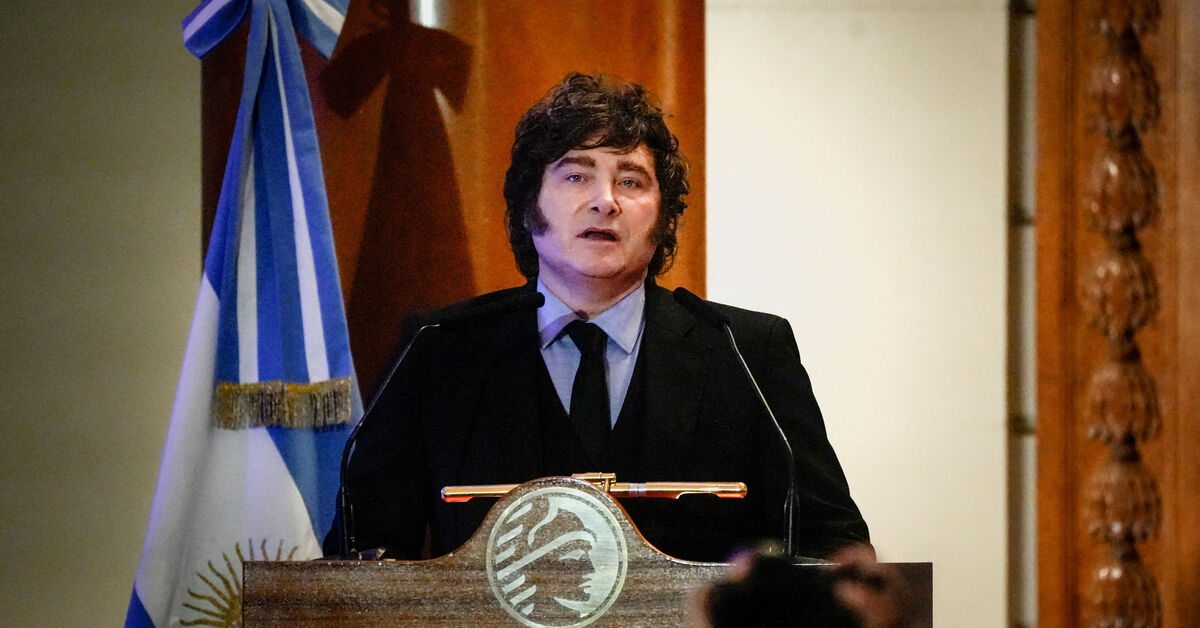
The liquidator is John Milton Rodríguez, a pastor and former senator. President De la Espriella appointed him to manage the process.
On 1 September 2026, Rodríguez issued a resolution abolishing all five deputy-minister posts. These covered women, youth, ethnic and rural peoples, excluded populations and territories, and diversities.
Accusations Against the Former Minister
The government says Acosta has not handed over keys to warehouses holding goods worth 16.8 billion pesos (US$5.33 million). Spokesperson Miller Soto raised the claim publicly.
Officials also flagged more than 60 contracts signed at the end of Petro’s term, worth about 469 billion pesos (US$148.7 million). One company reportedly received over 171 billion pesos (US$54.2 million) of that total.
The government has filed 13 formal complaints over the findings. These include six criminal, five disciplinary and two fiscal actions.
Handover Deadline
The resolution gives the former deputy ministers 15 days to deliver files and credentials. This includes documents, access credentials, and institutional information.
The liquidator also adopted a contracting regulation. It restricts contracting to activities strictly necessary for closing the entity.
What the Vice-Ministries Did
Each vice-ministry had focused on one group within the ministry’s mandate. That mandate covered women, ethnic and rural peoples, youth, and other historically excluded groups.
The diversities vice-ministry addressed policy for LGBTQ+ Colombians. The excluded populations and territories vice-ministry covered migrants, disabled people and street inhabitants.
The women’s vice-ministry led gender-equality policy across government. The youth vice-ministry worked on programs for young Colombians, and the ethnic and rural peoples vice-ministry covered indigenous, Afro-Colombian and rural communities.
Where the Ministry’s Programs Go
The government had planned to transfer programs to the Interior Ministry and the Department for Social Prosperity. That transfer decree had not been issued as of early September 2026, according to El Espectador.
SALVIA, a gender-violence response system covering all 32 departments, is among the programs in limbo. It handled 12,291 violence cases and 12,298 femicide-risk assessments between November 2024 and June 2026.
SALVIA’s funding is confirmed only until 15 October 2026. Its coordinator said no transition has yet taken place.
Staff Impact and Protests
The ministry employed around 700 staff before liquidation began, according to El País. More than 600 face losing their jobs, reporters at the scene found.
Workers protested outside the presidential administrative building in Bogotá. Some said they were barred from their offices without warning.
Government Savings Claims
In an address on 3 September 2026, the government said it recovered more than 20 billion pesos (US$6.34 million) in ten days. That figure is annualized, according to the government.
The government also claimed annual savings of 1.5 billion pesos (US$475,000) from abolishing the five deputy-minister posts. It plans to eliminate more than 40 senior posts, saving a further 12 billion pesos (US$3.80 million) a year.
A government spokesperson, Miller Soto, said: “We eliminated five deputy ministries, saving 1.5 billion pesos (US$475,000) a year.” These figures use a rate of about 3,155 pesos per US dollar and are unverified government claims.
Budget Execution Under Petro
Semana reported that under President Gustavo Petro, the ministry executed no more than 6 percent of its budget. The magazine described a chaotic administrative situation.
Semana also reported that the ministry had about 707 programs needing review. It cited a parallel payroll in the fund worth 21.6 billion pesos (US$6.85 million).
Forbes Colombia reported the ministry received about 2 trillion pesos (US$633.9 million) in total budget since 2023. Execution rates were 5 percent in its first full year and under 10 percent in its final cycle.
Liquidation Period
Decree 0626 set an initial one-year period to complete the liquidation. This period is extendable by a reasoned act.
The ministry is prohibited from assuming new mission-related activities. It cannot initiate new recruitment processes or sign new investment agreements.
Political Context
President De la Espriella took office on 7 August 2026, a month and a half after the decree. His administration continues to manage the liquidation process.
The ministry had been a central institutional project of the Petro government. It aimed to reduce economic, social and political inequalities.
Francia Márquez has not publicly commented on the liquidation, according to available reporting. No opposition figures have been quoted defending the ministry either.
Reactions and Reporting
El Colombiano and Infobae Colombia reported the resolution on 1 September 2026. They detailed the abolition of the deputy-minister posts.
The government’s official YouTube channel broadcast the 3 September address. It presented the savings figures.
Frequently Asked Questions
What is the equality ministry liquidation?
It is the formal winding down of Colombia’s Ministry of Equality and Equity. The process was ordered by Decree 0626 of 19 June 2026.
Who ordered the liquidation?
The Constitutional Court ruled the ministry’s founding law unconstitutional, prompting the Petro government’s decree of 19 June 2026. President Abelardo De la Espriella took office over a month later, on 7 August 2026.
What happened to the deputy ministers?
All five deputy-minister posts were abolished by the liquidator. The posts covered women, youth, ethnic peoples, excluded populations, and diversities.
How much money will the liquidation save?
The government claims annual savings of 1.5 billion pesos (US$475,000) from the deputy posts. It also plans to eliminate more than 40 senior posts, saving 12 billion pesos (US$3.80 million) annually.
Sources: El Colombiano; Infobae Colombia; Semana; Portafolio; El Tiempo; Government of Colombia YouTube channel.












 English (US) ·
  French (CA) ·
  French (FR) ·