

 11 hours ago
13
PROTECT YOURSELF with Orgo-Life® QUANTUM TECHNOLOGY
Orgo-Life the new way to the future Advertising by AdpathwayThe past few weeks have been a tough test the world’s most important tech firm, Nvidia. Its co-founder Jensen Huang stepped down as CEO after a controversy linked to his affair with an alleged Chinese spy. Huang’s departure sparked worries about Nvidia’s future as a top investor and the world’s dominant chip provider – so much so that Nvidia reinstalled him as CEO less than two weeks later.
Beyond the controversy itself, the episode exposes deeper contradictions in U.S. technology strategy. One important question is what Beijing will gain from the U.S. response to the Nvidia scandal.
As a close associate of U.S. President Donald Trump, Huang has held an influential position in U.S. technology policy toward China. He has repeatedly argued that restricting Chinese access to U.S. chips would cede a substantial market to competitors while encouraging Beijing to develop domestic alternatives. He had been the biggest advocate for selling chips to China, which he argued helps the United States maintain its market dominance.
The scandal that enveloped Huang thus takes on geopolitical significance. Even with his reinstatement at CEO, his political standing has taken a hit.
Bipartisan efforts to tighten semiconductor controls are expected to significantly advance. The competing view on export controls argues that Washington needs to secure strategic advantage through technological restrictions. The proposed MATCH Act and Remote Access Security Act (RASA), for instance, reflect the expanding scope of this debate. Already, the Trump administration has announced new restrictions on chips sales to third countries and Chinese access to data centers abroad that use U.S. technology.
Another tech transfer route that features prominently in the debates among U.S. policymakers is open-weight models. Huang was one of Silicon Valley’s most powerful champions of open models, where Chinese firms have concentrated their bets. He defended distillation, which means training one model on the output of another. Washington is actively weighing transparency rules and targeted bans aimed specifically at Chinese open-weight models. Huang’s diminished standing will strengthen those advocating for proprietary systems, who fear that cheaper Chinese models could undermine their profitability.
Bipartisan score settling in the United States adds to the existing uncertainty over AI regulation, open-source development, and the commercial interests of U.S. technology companies. This could create strategic openings for Beijing to exploit.
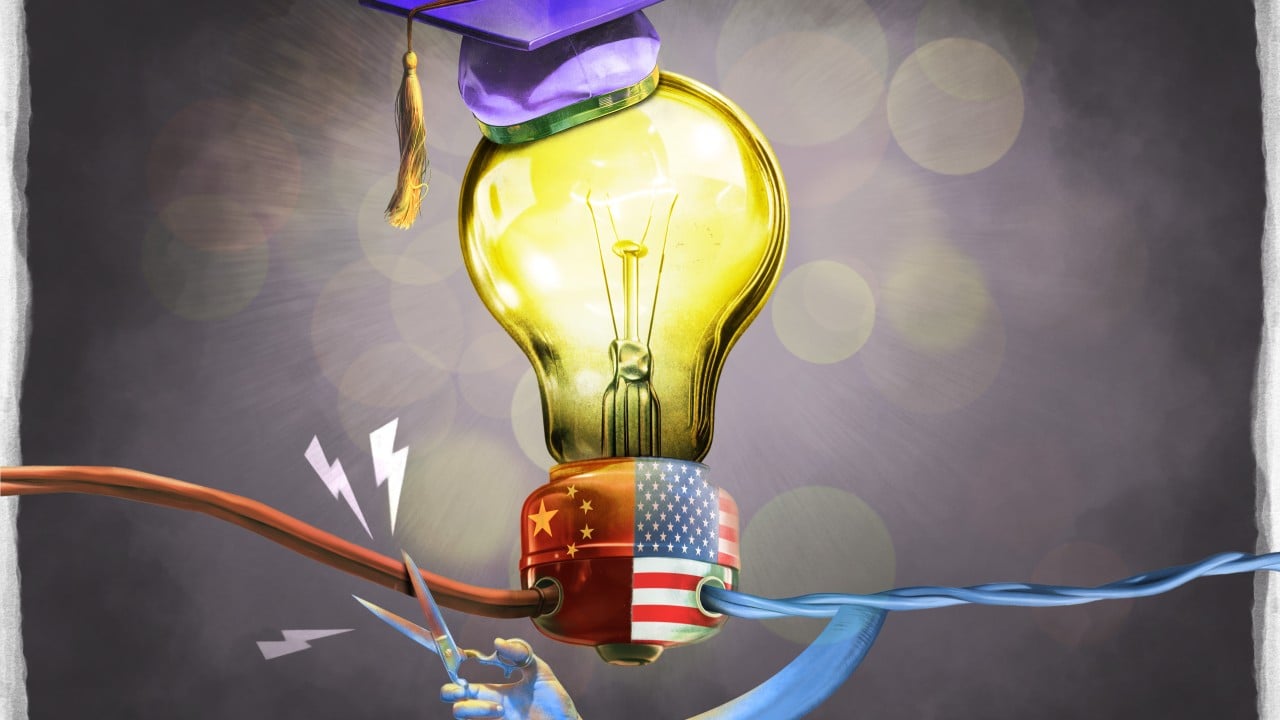
On one hand, tighter restrictions could further strengthen China’s resolve to innovate independently. As Washington’s restrictions on exports to Chinese vendors grow, the immediate beneficiaries would be Chinese semiconductor manufacturers and domestic suppliers seeking to capture demand previously directed toward Nvidia. More importantly, restrictions could create a larger and more predictable domestic market for these firms. Chinese AI developers would have stronger incentives to optimize models for domestic processors, collaborate with local chipmakers, and invest in alternative computing architectures.
Herein, Huawei and Alibaba could be direct beneficiaries. Experts and industry specialists have argued that Washington’s earlier restrictions on semiconductor exports reinforced Beijing’s determination to build a more self-sufficient industrial ecosystem. A further tightening of controls following the Huang controversy could accelerate this trajectory.
On the other hand, Huang’s scandal – and Nvidia’s revamped compliance structures – could remove a critical commercial link between China and the United States. This would directly dampen China’s access to Nvidia chips, which remain the world’s most advanced. More importantly, building self-sufficiency in Graphics Processing Units (GPUs) does not reduce China’s reliance on U.S. technology. Nvidia’s most critical technology is the software, Compute Unified Device Architecture (CUDA), which Chinese models significantly rely on. Most models cannot run CUDA without compatible Nvidia chips.
The uncertainty in the U.S. tech industry leaves Asian suppliers bracing for what comes next. Since the first export control measures were implemented, Chinese chipmakers have been increasingly relying on third-party cloud firms and shell companies in East Asian countries. Alice Huang, with whom Huang is alleged to have an affair, earlier served as an executive of a Singapore-based data center firm, Megaspeed, which has been accused of helping Chinese firms access Nvidia chips.
Control over data centers in Southeast Asia is set to become a new dimension in China-U.S. technology competition. More precisely, regulating data centers in a third country may become a priority in U.S. AI policy. It could also put a dent in long-term ties between East Asia and U.S. technology ecosystems. Huang’s scandal has attracted immense attention to the role of Southeast Asian firms, in particular, in export controls. That will make it harder for Southeast Asian companies to access U.S. advanced chips, even for domestic use.
As the U.S. tech ecosystem becomes unpredictable and grows more restrictive to other countries, it creates more space for China to diversify its technology partnerships, especially in Southeast Asian countries. China can present itself as a proponent of technological cooperation, with its low-cost, open-source models, and could gain greater influence in developing countries. This may provide a window of opportunity for China to close the gap with the United States in computing capacity.
As for China, it is accustomed to U.S. accusations of espionage and technological theft. This scandal will not fundamentally transform a rivalry already driven by competing national security and economic ambitions. Whether Alice Huang proves to be a spy or not, the political damage to Jensen Huang has already been done and will significantly define the new directions in U.S. tech policy toward China. China may have a real opportunity in the medium term; however, success or failure hinges on whether China can turn these windows of opportunity into real capabilities
There are significant implications for U.S. technology policy as well. If this controversy eventually redirects U.S. AI policymaking, it could result in the creation of some unreasonable laws, with new loopholes. If the loss of Huang’s influential lobbying in U.S. technology policy coincides with advances in China’s affordable, widely accessible AI technology, history may ultimately view Jensen Huang’s scandals as a pivotal moment in an unexpected shift in the global balance of technological power.












 English (US) ·
 French (CA) ·
 French (FR) ·