

 19 hours ago
2
PROTECT YOURSELF with Orgo-Life® QUANTUM TECHNOLOGY
Orgo-Life the new way to the future Advertising by AdpathwayIntroduction: Crypto 'scammers on overdrive' as Binance customers pull billions from accounts after $6.3bn hack
Good morning, and welcome to our rolling coverage of business, the financial markets, and the world economy.
Crypto scammers are now in “overdrive”, the founder of crypto exchange Binance has warned, as customers pull billions in funds from the platform as it recovers from a record hack.
The platform was hit by a $6.3bn theft on Thursday, which has since been described as the biggest heist in history. Experts identified North Korea as the probable culprit.
Binance initially froze withdrawals as it investigated the breach but on Sunday announced it had begun a phased reopening.
By Sunday afternoon, the platform had processed $4.6bn in withdrawals and $1bn in deposits, resulting in a net outflow of about $3.6bn – 2.1% of its $171bn in total assets under management. (Those numbers were confirmed by the company in its latest proof of reserves snapshot – a full report is expected today.)
Changpeng Zhao, the founder of the platform and commonly known as CZ, has warned that scammers are now targeting those that are trying to pull their money from the platform. He wrote on X:
Scammers on over drive now. Be careful.
His post was in response to a post which said:
Some of you may have seen posts and screenshots circulating recently. Please be aware that these screenshots are fake and the information in them is false. For accurate and up-to-date information, always refer to our official channels and announcements.
The hack has spooked the market, with investors also pulling out funds from Bitcoin ETFs in the US, according to Nick Forster, chief executive of Derive.xyz, a crypto platform. He said:
US spot Bitcoin ETFs recorded $643 million in net outflows on Friday, their first trading session following the hack.
BlackRock’s IBIT saw $233.7 million in outflows, while Fidelity’s FBTC lost $201 million, ARKB $129.5 million, GBTC $53.3 million and BITB $25.7 million. No fund recorded net inflows.
….We’re seeing a similar shift in options trading on Derive.xyz. In the first 12 hours following the hack, put options accounted for 68% of Bitcoin options premiums traded, compared with 43% in the preceding five days.
Trading activity also remained elevated, with approximately $55 million in daily Bitcoin options volume since the hack, compared with $34 million the day prior.
Traders have been moving quickly to protect themselves against further losses, with downside protection taking a much larger share of options activity.
He added that the odds of Bitcoin hitting the $100,000 level by the end of the year were now just 3.5%.
Last Wednesday, Derive options were pricing a 6% probability of Bitcoin exceeding $100K by Christmas. That has now fallen to just 3.5%, or roughly a one-in-30 chance.
…Before the hack, our options market was pricing a 75% probability of Bitcoin finishing above $80,000 at Friday’s expiry. Instead, Bitcoin settled at $77,786.
The agenda
-
6am GMT: Ryanair half-year results
-
9am GMT: Eurozone manufacturing PMI
-
9.30am GMT: UK manufacturing PMI
-
3pm GMT: US manufacturing PMI
-
10pm GMT: Apple Q4 earnings
Key events
European supermarket freezers suddenly overheat in suspected hack
Freezers at Belgian and Swedish supermarkets have suddenly overheated, just weeks after French grocers were targeted in a cyber attack.
Local media are reporting that Ica and Coop shops in Sweden hit as high as 55C on Monday. Ahold Delhaize supermarkets were also affected in Belgium. Delhaize has described it as an “IT incident” to Dutch paper HLN and Flemish TV network VTM Nieuws.
It comes just weeks after forced the temperature of many French supermarket fridges up to 50C overnight, in a cyber-attack affecting several hundred stores across the country, with fires and food losses reported.
The Paris prosecutor’s office said the large-scale attack was “affecting connected refrigerators in several major food retailers across France”.
Gas prices are also falling this morning as hopes grow around negotiations in the Middle East, which could ease the strain on supply from the region.
The Dutch front-month contract – the benchmark for Europe – was down €3.84 at €100.06 per megawatt hour (MWh).
Meanwhile the British front-month contract was down 9.22 pence to 248.38 pence per therm.
Oil falls below $110 a barrel
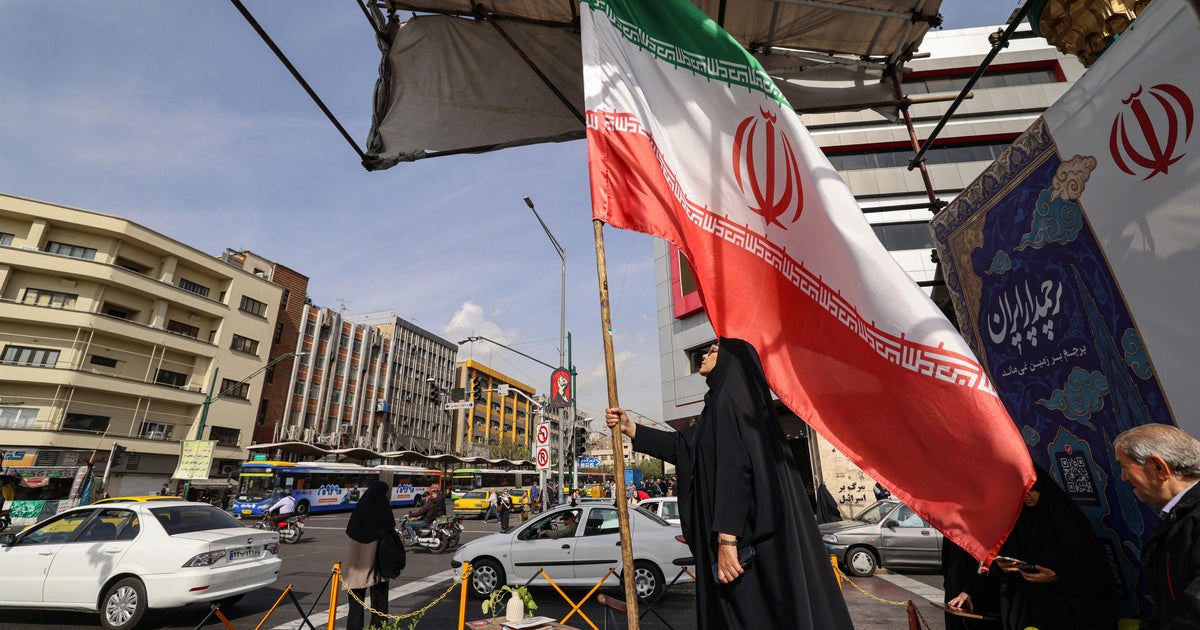
Oil has now slipped below $110 a barrel, as investors digest reports of talks between Iranian and Qatari officials to end the US-Israeli war on Iran.
Reuters has reported that Iranian negotiators left Doha talks on Sunday, but not due to difficulties in negotiations.
Axios reported on Sunday that US president Donald Trump told the Israeli prime minister Benjamin Netanyahu that he wants to let negotiations with Iran play out before potentially launching strikes against the country after midterm elections on Tuesday.
Brent crude, the international benchmark for oil prices, is trading at $108.65 a barrel.
UK manufacturing growth hits five-month high in October
UK manufacturing growth hit a five-month high in October, according to the latest purchasing managers’ index from S&P Global.
The index rose to 52.8 in October, up from 51.9 in September and in line with estimates.
Rob Dobson, director at S&P Global Market Intelligence, said that manufacturing had shown resilience in the lead up to the autumn budget last week. He said:
Rates of growth in output and new orders both gathered pace in October, as companies responded to signs of improving demand in both domestic and overseas markets, including new work received from mainland China, the EU and the US.
Concerns about possible policy changes filtered through to the labour market, however, with the upturn in employee numbers halting following a six-month sequence of increased hirings. The remainder of 2026 will see if the confirmed rise in the minimum wage for next year will continue to weigh on employment trends.
Rising labour costs are also coming at a time when the cost environment is already generally high. As well as higher wage costs, manufacturers are being buffeted by rising fuel, energy and transportation costs as supply chain shocks and delays continued to drive up inflationary pressures. Input prices consequently rose to one of the greatest extents in the past four years in October which, alongside the signs of resilience in the manufacturing sector, will further shorten the odds of interest rate hikes to come from the Bank of England.
However the survey also found that business optimism rose to an eight-month high in October. Manufacturers said that they were optimistic as they planned for business expansions and spending on capital equipment and AI, including data centres.
Ryanair considers pay freezes and reducing crew on flights as fuel costs soar

Mark Sweney
Ryanair is considering cost-cutting measures including implementing pay freezes, reducing crew on flights and increasing the use of AI to offset soaring fuel costs from the impact of the Middle East conflict.
Europe’s biggest low-cost carrier said on Monday that it expects European airlines to raise their ticket prices by as much as 20%, as it anticipates its jet-fuel costs will increase by around €2bn in its next financial year that ends in March 2028.
Michael O’Leary, chief executive of Ryanair, said:
Unless there is a swift resolution of the Middle East conflict we expect jet-fuel prices to remain elevated well into 2027.
While we believe European short haul fares will increase materially to reflect these much higher jet-fuel prices and competitor capacity reductions, this is unlikely to provide a full offset for an estimated €2bn increase in our fuel bill.”
Ryanair said that it expects European short haul fares will “increase materially” next year as a result, as the oil hedging deals taken out by airlines to reduce costs come to an end.
O’Leary said:
To help address this, we’re reviewing all costs across group airlines with a particular focus on airport churn negotiations, maturing labour agreements (which may require temporary pay freezes), lower crew ratios and increased use of AI.
Binance co-founder: 'Our top priority is to ensure the environment is secure'
Yi He, co-founder of Binance, has said that its top priority is to “ensure the environment is secure, after which users can withdraw their funds and Binance can resume operations.”
She rejected comparisons with collapsed rival FTX, writing on X:
Every action has a motive. Look at some fraudulent exchanges that absconded, P2P platforms, and commercial banks: their ledgers are opaque; once the website is shut down, they simply abscond with the funds, the company is liquidated or goes bankrupt, and all they need to do is give you an arbitrary excuse. As for how much money was actually in the account and where it went, there is no way to know.
These kinds of closures happen without any warning—they just disappear. There is no real operation, no one comes out to explain what happened, and it is even less possible for withdrawals to be opened.
More gloom in France this morning as shares in the Paris-listed train maker Alstom are tanking, down by 28%.
The company has cut its profit and cash flow forecasts for the second time since April. It also announced a plan to cuts its debt by €2bn, as it grapples with delays to a series of key German projects.
Its shares are down 28% to €11.42. The company has now lost more than half of its market value this year.
Eurozone manufacturing grows in October - despite tariffs, conflicts and higher energy bills
Eurozone manufacturing continued to grow in October, according to the latest purchasing managers’ survey data from S&P Global.
The pace of growth did however slow, with the index dipping to 52.7 last month from 52.9 in September (which was the highest reading sine May 2022). Any reading above 50 signals growth.
It suggests that European factories are holding up well in the face of trade tariffs, conflicts and surging energy csots.
Chris Williamson, chief business economist at S&P Global Market Intelligence, said:
Another solid PMI reading extends the eurozone’s best growth spell for manufacturing for over four years. The sustained growth recorded since February paints an encouraging picture of resilience for the manufacturing sector, which has been buffeted by the headwinds of tariffs and conflicts in the Middle East and Ukraine, and in particular the surge in costs and supply difficulties that these have caused.
Instead, increased defence spending, precautionary inventory building, diversification and changing trade patterns due to US tariffs have created growth opportunities for many producers.
However, he adds, growth is not broad-based – manufacturers in France and Italy have struggled, with the former suffering the “additional stress of domestic political uncertainty”.
In France, the index fell from a reading of 50.6 in September to 49.5 in October. Anything below 50 signals a decline. Williamson added:
Furthermore, with input cost inflation surging sharply higher again in October, climbing to one of the highest rates seen over the past four years thanks to higher energy prices and supply bottlenecks, the latest PMI data add to pressure on the [European Central Bank] to hike rates further in the coming months, providing another headwind to businesses.”
Scammers target Binance customers with fake compensation claims
Scammers appear to be targeting people affected by the Binance hack by offering them fake compensation rewards.
There are screenshots circulating online that promise $150 in free compensation for withdrawal suspensions. Binance has confirmed that it is false information and the screenshots are digitally altered.
It comes after a warning from Binance founder CZ that scammers are in “overdrive” following the $6.3bn hack last week.
Binance says withdrawals now available in US dollars
Binance has confirmed that customers can now withdraw cash in US dollars as it restores its systems after the biggest crypto theft in history last week.
Euro, yen and some other fiat currency withdrawals were already restored. The exchange said on X that it will continue to share further updates today.
European stock markets have opened lower this morning, with the UK’s blue chip FTSE 100 down 0.3%.
Its worst performers are Endeavour Mining and BP which are both down by about 1.7%.
The Stoxx Europe 600, which tracks the biggest companies on the continent, is down 0.3%.
Oil falls 2.6% after reports Trump will give diplomacy with Iran more time
Elsewhere this morning: oil prices have retreated after reports that US president Donald Trump wants to give diplomacy with Iran more time before possibly restarting strikes after the midterm election result.
Brent crude, the international benchmark for oil prices, is down 2.6% to about $110 a barrel.
Trump told Israeli prime minister Benjamin Netanyahu that he wants to let negotiations with Iran play out before potentially restarting strikes after the midterm elections on Tuesday, according to a report by Axios, which cited unnamed sources.
Financial regulators around the world are meeting with crypto exchanges to discuss their cybersecurity measures.
South Korea’s financial regulator held an emergency meeting on Monday to inspect local exchanges’ cybersecurity, according to Reuters. It ordered various measures that could be implemented immediately, including constant transaction monitoring and operating response systems to detect and report irregular access attempts.
Other measures include raising the ratio of cold wallets, which secure cryptocurrency private keys offline, and increasing their reserve deposits.
And in Hong Kong, the Securities and Futures Commission is expected to step up guidance to the crypto industry soon via new circulars. Executive director for intermediaries Eric Yip said at Hong Kong’s FinTech week forum said that new guidance will be coming in the last two months of the year, Reuters reported.
And in case you missed it: rival trading platform Chainalysis said on Friday it had also been the target of a cyber attack, although it found no evidence of unauthorised access to “investigation content, authentication credentials, or session tokens.”
It said in a statement:
Our team is working with leading cybersecurity experts to investigate this activity and harden our systems. We’ve proactively notified all of our customers and will keep them updated as our work progresses. This security incident is not related to the recent crypto theft at Binance.
Introduction: Crypto 'scammers on overdrive' as Binance customers pull billions from accounts after $6.3bn hack
Good morning, and welcome to our rolling coverage of business, the financial markets, and the world economy.
Crypto scammers are now in “overdrive”, the founder of crypto exchange Binance has warned, as customers pull billions in funds from the platform as it recovers from a record hack.
The platform was hit by a $6.3bn theft on Thursday, which has since been described as the biggest heist in history. Experts identified North Korea as the probable culprit.
Binance initially froze withdrawals as it investigated the breach but on Sunday announced it had begun a phased reopening.
By Sunday afternoon, the platform had processed $4.6bn in withdrawals and $1bn in deposits, resulting in a net outflow of about $3.6bn – 2.1% of its $171bn in total assets under management. (Those numbers were confirmed by the company in its latest proof of reserves snapshot – a full report is expected today.)
Changpeng Zhao, the founder of the platform and commonly known as CZ, has warned that scammers are now targeting those that are trying to pull their money from the platform. He wrote on X:
Scammers on over drive now. Be careful.
His post was in response to a post which said:
Some of you may have seen posts and screenshots circulating recently. Please be aware that these screenshots are fake and the information in them is false. For accurate and up-to-date information, always refer to our official channels and announcements.
The hack has spooked the market, with investors also pulling out funds from Bitcoin ETFs in the US, according to Nick Forster, chief executive of Derive.xyz, a crypto platform. He said:
US spot Bitcoin ETFs recorded $643 million in net outflows on Friday, their first trading session following the hack.
BlackRock’s IBIT saw $233.7 million in outflows, while Fidelity’s FBTC lost $201 million, ARKB $129.5 million, GBTC $53.3 million and BITB $25.7 million. No fund recorded net inflows.
….We’re seeing a similar shift in options trading on Derive.xyz. In the first 12 hours following the hack, put options accounted for 68% of Bitcoin options premiums traded, compared with 43% in the preceding five days.
Trading activity also remained elevated, with approximately $55 million in daily Bitcoin options volume since the hack, compared with $34 million the day prior.
Traders have been moving quickly to protect themselves against further losses, with downside protection taking a much larger share of options activity.
He added that the odds of Bitcoin hitting the $100,000 level by the end of the year were now just 3.5%.
Last Wednesday, Derive options were pricing a 6% probability of Bitcoin exceeding $100K by Christmas. That has now fallen to just 3.5%, or roughly a one-in-30 chance.
…Before the hack, our options market was pricing a 75% probability of Bitcoin finishing above $80,000 at Friday’s expiry. Instead, Bitcoin settled at $77,786.
The agenda
-
6am GMT: Ryanair half-year results
-
9am GMT: Eurozone manufacturing PMI
-
9.30am GMT: UK manufacturing PMI
-
3pm GMT: US manufacturing PMI
-
10pm GMT: Apple Q4 earnings















 English (US) ·
 French (CA) ·
 French (FR) ·