

 1 day ago
3
PROTECT YOURSELF with Orgo-Life® QUANTUM TECHNOLOGY
Orgo-Life the new way to the future Advertising by AdpathwayArticle content
According to a University of Calgary School of Public Policy paper by Ted Morton, 11 upgrading projects were either underway or in active development prior to the 2008 global financial crisis.
Article content
Representing over $100 billion in investment, these initiatives would have boosted upgrading capacity by three million barrels per day — more than tripling the existing output.
Article content
Morton noted that because of this expected growth, the region east of Edmonton was nicknamed “Upgrader Alley” in anticipation of becoming a major refining hub similar to Houston’s refinery row.
Article content
The 2008 financial crisis killed that model, and when the dust settled only one project, North West, was still standing.
Article content
Rather than let it go, Ed Stelmach’s government took on a much bigger role. Under a “take or pay” deal, the province agreed to keep ownership of the bitumen, pay the refinery a toll to process it for 30 years, and sell the finished products itself, even if prices fell below cost.
Article content
Then, costs soared. As four premiers and six energy ministers cycled through Edmonton, a $6.5-billion cap on the province’s exposure to construction costs disappeared, and the final bill reached roughly $10 billion.
Article content
Advertisement 3
Article content
In his paper, Morton called the project “a multi-billion-dollar boondoggle.” The refinery began commercial operations in 2020, years behind schedule, and the province took a 50 per cent ownership stake the following year.
Article content
These days, running a refinery is far more profitable, with margins that are “incredible,” O’Rourke said.
Article content
That’s because the U.S.-Iran conflict disrupted shipping through the Strait of Hormuz and Ukrainian attacks have knocked out Russian refining capacity, leaving the world short of refined products such as gasoline and diesel even though crude supplies are still available.
Article content
Yet even so, nobody appears to be rushing to build.
Article content
In California, for example, refineries are closing as the state pushes to phase out gas-powered vehicles and refiners face a shrinking market.
Article content
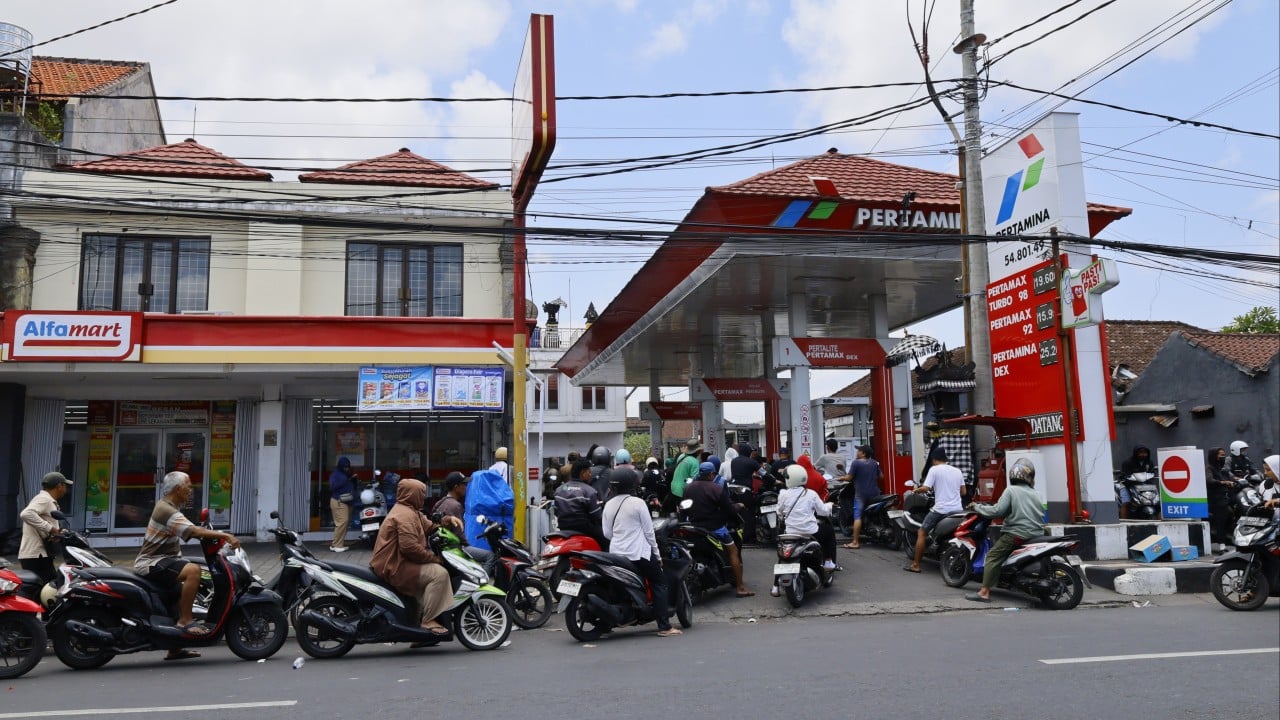
Each closure leaves California more reliant on imported fuel, which pushes up the state’s pump prices. On the desolate coast between San Francisco and Los Angeles, one pump recently made the news by posting $10 per gallon for unleaded gasoline.
Article content
So, whose gas is in your tank? It’s mostly Canadian. According to the Canada Energy Regulator, the country’s refineries turn out more gasoline, diesel, heating oil and jet fuel than Canadians use.
Article content
Advertisement 4
Article content
Canada even sends gasoline the other way — it is the largest supplier of gasoline imports to the U.S. and is the main supplier to several northeastern states, according to the U.S. Energy Information Administration.
Article content
But Canada does buy some of its fuel from abroad. Imports of refined petroleum products rose three per cent in 2025 to 485,000 barrels a day, nearly 80 per cent of which came from the U.S., the Canada Energy Regulator reported.
Article content
That number needs context, though.
Article content
First, most of it isn’t gasoline. Alberta, perhaps surprisingly, is Canada’s biggest importer, at about 200,000 barrels a day – about 40 per cent of the import volume. Much of that is condensate, a light liquid used to thin bitumen so it can flow through pipelines. Think of condensate feeding the oilsands, not cars.
Article content
It’s worth mentioning also that Alberta’s appetite for condensate is set to grow. If new export pipelines are eventually built, O’Rourke said, “we’re going to have to grow our own domestic condensate production considerably.”
Article content
Don’t, however, expect a wave of new upgraders to solve that issue. “Because energy companies make those investments on 20, 30, 40-year capital cycles, they’re more likely to squeeze extra barrels out of existing refineries in Alberta,” he said.
















 English (US) ·
 French (CA) ·
 French (FR) ·