

 1 month ago
67
1 month ago
67
PROTECT YOURSELF with Orgo-Life® QUANTUM TECHNOLOGY
Orgo-Life the new way to the future Advertising by AdpathwayEQUATORIAL GUINEA · ENERGY
Key Facts
—Deadline moved: The farm-in on block EG-08 was due to close in July and now runs to 31 August 2026. It is the second extension of the same transaction.
—The cause is in China: New Chinese rules on outbound investment, in force since 1 July 2026, have lengthened approval timelines for overseas projects.
—Who holds what: Fuhai Energy takes 40% of EG-08. Antler Global keeps 40% and stays operator, and state company GEPetrol holds the remaining 20%.
—The cheque: Fuhai has agreed to fund 95% of the first well, capped at US$53 million, with Antler covering the other 5%.
—The prize: Block EG-08 covers 731 square kilometres in about 80 metres of water. The parties put more than 56 billion cubic metres of gas in place across the block.
—A country in decline: Equatorial Guinea pumped about 55,000 barrels a day in 2023, against 241,000 in 2010, according to OPEC figures cited by Agence Ecofin.
—Where it sits now: The file rests with provincial authorities in Shandong, the province where Fuhai Energy is based.
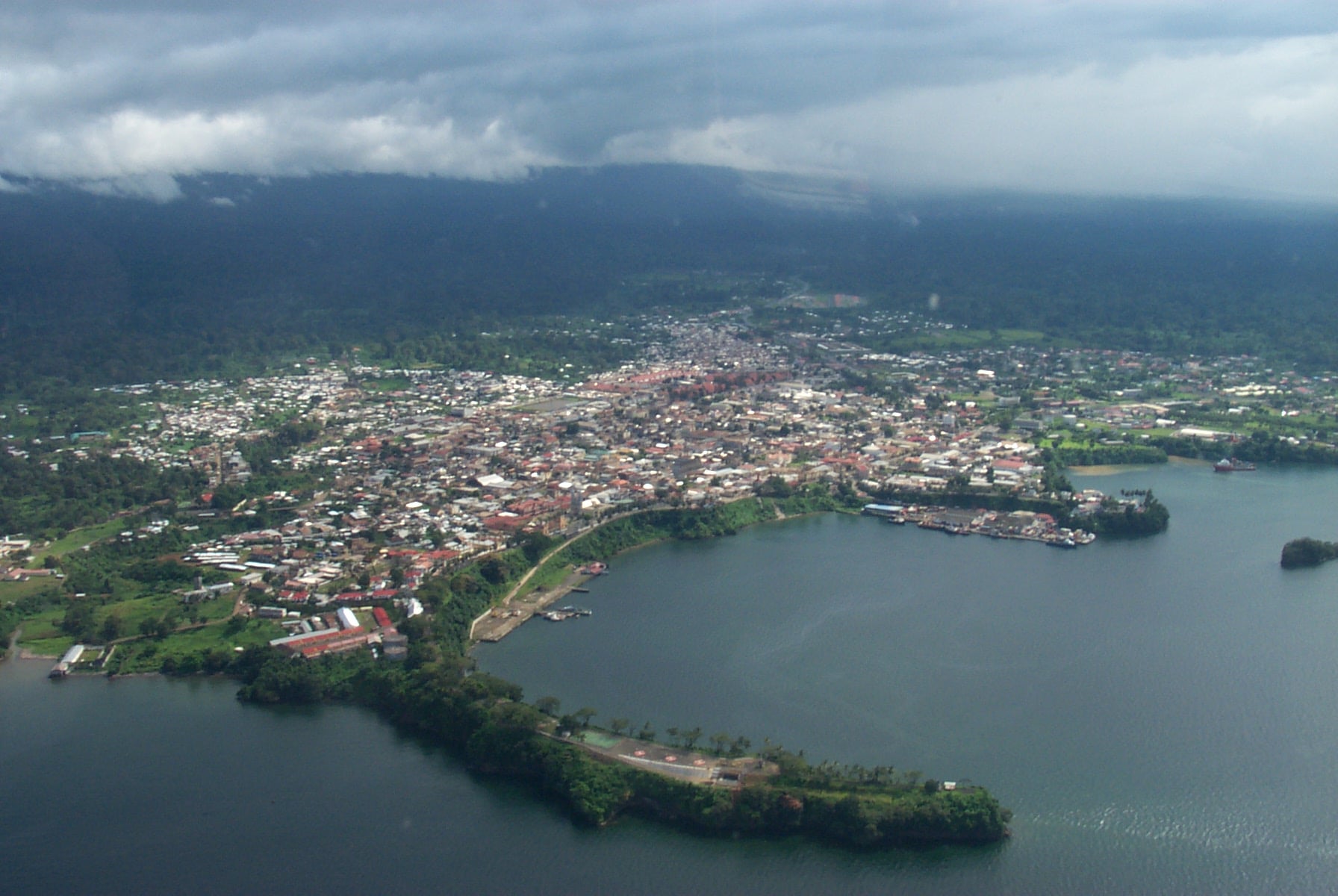
The Equatorial Guinea gas deal that would pay for the country’s next offshore well has been delayed a second time, to 31 August 2026. The hold-up is not in Malabo but in China, where new rules on investing abroad took effect on 1 July.
One-stop reference
Company Intelligence
Every listed company in Latin America — financials, ownership and structure for 1,450+ companies across 26 exchanges, in one place.
What the Equatorial Guinea gas deal actually covers
Britain’s Europa Oil & Gas agreed in December 2025 to sell part of its interest in the offshore gas block EG-08 to Fuhai Energy of China. Agence Ecofin reported on 3 August that the closing has slipped for a second time.
Under the terms, Fuhai acquires 40% of the block. Antler Global, a Europa subsidiary, keeps 40% and remains in charge of operations, while the state oil company GEPetrol holds 20%.
The commercial heart of the agreement is who pays for the drilling. Fuhai has committed to cover 95% of the cost of the first well, capped at US$53 million, leaving Antler with the remaining 5%.
Equatorial Guinea’s own authorities approved the transaction at the end of May 2026. What is missing is a signature on the other side of the world.
A rule change in Beijing, a delay in the Gulf of Guinea
China brought in new regulations on outbound foreign investment on 1 July 2026. They lengthen the validation timetable for overseas projects, according to Agence Ecofin, even for ventures that sit comfortably inside Beijing’s own policy of economic expansion abroad.
Fuhai Energy is based in Shandong, and it is the provincial authorities there who must now sign off. Until they do, the farm-in cannot complete.
Europa announced the latest delay on Friday 31 July and pushed the deadline to 31 August. Chief executive William Holland said the company remained confident of receiving the approval in the coming weeks.
That is a modest statement about a significant problem. A rule written in Beijing has quietly become the critical path for a well off the coast of Central Africa.
Why Malabo needs this well to happen
Equatorial Guinea’s oil production has fallen a long way. Output was around 55,000 barrels a day in 2023, compared with 241,000 barrels a day in 2010, on OPEC figures cited by Agence Ecofin.
The country has been looking for partners willing to fund offshore exploration and slow that decline. Gas is the most plausible route back.
Block EG-08 covers 731 square kilometres in roughly 80 metres of water. The partners estimate more than 56 billion cubic metres of gas in place across the block, of which more than 25 billion sit in the Barracuda prospect alone.
Once the deal closes, the partners can bring in a rig for the Barracuda-1 well, planned for early 2027. That single well is what would confirm whether the wider estimate holds.
What happens if the approval slips again
A third extension would push the timetable into the final quarter of 2026, and rig availability is not something the partners control. Drilling programmes are booked well in advance, and a slot missed is rarely a slot easily replaced.
That is the practical risk in a delay of this kind. The paperwork moves in weeks, but the equipment moves in seasons.
Europa has given no indication that Fuhai wants to withdraw, and the approval sought is procedural rather than a judgement on the project. The Equatorial Guinean side has already signed off.
Still, the early-2027 date for Barracuda-1 assumes a close in August. Each further month of waiting makes that date harder to hold.
For Malabo, the cost of delay is measured in production it does not have. Every year the decline continues without new drilling is a year of narrower fiscal room in a country that depends on hydrocarbons for most of its export earnings.
What it signals for Chinese money across Africa
For years the working assumption across African capitals was that Chinese capital, once committed, would arrive. This delay complicates that assumption in a small but instructive way.
The obstacle here is not political risk in Equatorial Guinea, nor a dispute between the partners. It is an administrative change in the investor’s home country.
Any African project that has budgeted for Chinese equity now has a new variable to model. Approval timelines set in a Chinese provincial capital can move a drilling date on the other side of the Atlantic.
Malabo is not waiting idly. Italy’s Eni obtained a reconnaissance agreement in February to evaluate six further blocks, and the hydrocarbons ministry signalled in September 2025 that it was preparing a licensing round covering 24 blocks.
That is the sensible hedge for a producer in decline: keep several partners in play rather than depend on one cheque. The Barracuda timetable is a reminder of why.
Frequently asked questions
Why has the Equatorial Guinea gas deal been delayed?
New Chinese regulations on outbound foreign investment, in force since 1 July 2026, have lengthened approval timelines for overseas projects. Fuhai Energy is still waiting for clearance from provincial authorities in Shandong.
Who owns block EG-08 under the agreement?
Fuhai Energy takes 40%, Antler Global keeps 40% and remains operator, and the state company GEPetrol holds the remaining 20%.
How much is Fuhai Energy paying towards drilling?
Fuhai has committed to fund 95% of the cost of the first well, capped at US$53 million. Antler Global covers the remaining 5%.
When could drilling at Barracuda begin?
Once the agreement closes, the partners can mobilise a rig for the Barracuda-1 well, which is planned for early 2027.
How much gas could block EG-08 hold?
The parties estimate more than 56 billion cubic metres of gas in place across the block, with more than 25 billion in the Barracuda prospect alone.
This article was produced by The Rio Times’ automated newsroom system. How we use AI · Report an error
The Rio Times · Power Map
See who really holds power in Latin America
Click to open the Power Map →














 English (US) ·
  French (CA) ·
  French (FR) ·