

 12 hours ago
1
12 hours ago
1
PROTECT YOURSELF with Orgo-Life® QUANTUM TECHNOLOGY
Orgo-Life the new way to the future Advertising by AdpathwayMonths before the Real Thing’s You to Me Are Everything became a UK No 1 hit in 1976, lead singer Chris Amoo took the unreleased song to the Timepiece, a nightclub devoted to Black music tucked in between bars on Liverpool’s Fleet Street. His DJ friend Les Spaine stuck it on, and the empty dancefloor “just filled up, and nobody, not one person in that place, had heard the song before”, Amoo says with pride on a call from his home on the outskirts of Liverpool. “That’s when me and Les looked at each other and thought: you’ve got something there, brother.”
The track’s symphonic majesty and romantic vocals captured the hearts of millions, and it peaked in the charts during 1976’s summer heatwave. Fifty years later, Amoo is on tour with his fellow bandmate Dave Smith in celebration of its anniversary. But the Real Thing were just the most high-profile group from an underground funk and R&B scene which emerged in 1970s Liverpool, upheld by a generation, predominately from the Toxteth area south of the city centre, that embraced Black American culture.
They were not inspired by the city’s household names like the Beatles, Amoo says; instead, it was from seeing groups like the Jackson 5 and the Temptations on television that he thought: “They look like us – we can do that!” Likewise Spaine, now considered a godfather of the UK’s funk scene, grew up in a household with a deep love for Black American music: “Nat King Cole, the Drifters, the Ink Spots, Five Blind Boys of Alabama, all them sorts of things that my old man used to play.”
Black US soldiers residing in Burtonwood, a nearby airbase, brought the latest records to Toxteth on weekends, leaving them with friends or at clubs, as well as “clothes, those really fantastic baseball boots and the apple hats that they used to wear. We’d learn all the new dances and songs,” Amoo says.
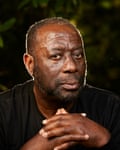
Spaine started DJing with the imported records he amassed, Amoo formed the Real Thing, and as each made a name for themselves in the music business, they became mostly immune to the colour ban that Black people faced. “I could get into many clubs, Chris could, but the majority of people from Toxteth couldn’t,” Spaine says. “We weren’t morbid about it; there was a saying back then, ‘that’s the way it is’. You could have signs saying no this, no that. This was before laws came in prohibiting that.”
Located in town among nightclubs that enforced a colour ban, the Timepiece became the club for Toxteth’s Black community to let loose. “We had big screens and I’d go and visit all the record companies to get these 16mm films,” Spaine remembers. “Then we’d have a back projector and all of a sudden these people could see Michael Jackson, Rufus and Chaka Khan.” As for the dress code, “we were soul boys, so you had to be immaculate; we had mohair suits and Ben Sherman shirts”.
People of all races would travel from across the country for their all-nighters. “Everybody who loved Black music went,” says Barbara Phillips, former member of Distinction, a vocal harmony band formed in Liverpool in 1976. “It was the only place where you kind of felt safe.”
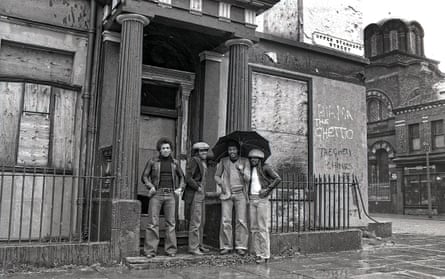
Liverpool had been home to Black communities since the 18th century. During the transatlantic slave trade, enslaved Africans were brought to work as servants or sold at auctions in the dock area. Following the abolition of slavery, sailors from across the world, many from West Africa, worked on trade ships and contributed to the war effort during the world wars. Many settled in Toxteth. “The Windrush is a wonderful thing that we should all be proud of, but Black people have been contributing and in this country, especially in Liverpool, for hundreds of years and there’s a narrative to make it sound as if we all came in 1948,” says Spaine, whose Sierra Leonean father was a merchant seaman in Liverpool.
Both Spaine and Amoo speak fondly of their experiences growing up in Toxteth in the 1950s and 60s, “this melting pot of poor white people, Chinese people and Black people and we all just got on really well,” Spaine says.
“If you were getting up to a little bit of mischief, you’d have older women shouting ‘I can see you Christopher, I’m going to tell your mother and father’,” Amoo laughs. “They shouldn’t be shouting at us because we were 16 at that point, but there you go.”
The warmth in the community was offset by deprivation. “There was no money coming into Toxteth, no businesses that could thrive,” Amoo says. Those hardships, along with racial profiling by police, were a driving force for 1981’s Toxteth riots, which lasted nine days and resulted in widespread damage, hundreds of injured officers and the death of a man who was rammed by a police vehicle.
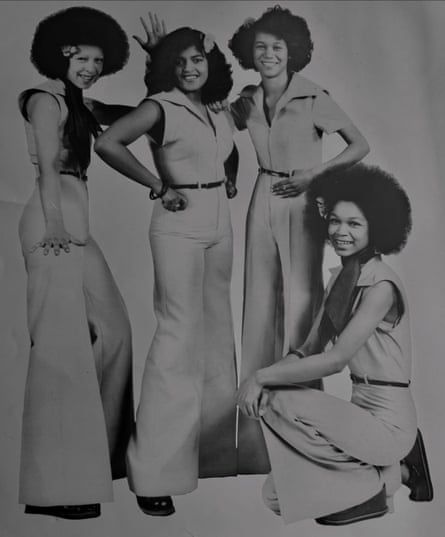
But when the Real Thing topped the charts in 1976, their entire community was jubilant. A Black band from Liverpool had got to No 1 – the first Black British band to do so. “The whole city was behind them,” says Phillips, and her group Distinction soon had a first of their own: never before had a Black British female group been signed to a major record label.
Distinction formed in the basement of their local community centre where they had vocal lessons from Vic Christian, whose brother Garry had success with the multi-racial Liverpool band the Christians; Phillips’s father was calypso musician Lord Woodbine, who mentored the Beatles. “We liked to think that we were funky, also harmonies were our big thing,” Phillips says. “We used to copy the Three Degrees because that was the nearest to what we saw ourselves as. But I think we were too young to be like anybody, because everybody we looked up to they were proper women, and we were just girls.”
The band members – Phillips and her sister Sue, plus Donna Alleyne and Mandy Smith – were still just teenagers when they got a deal with EMI, but, Phillips says, the label “would sign an artist but just sit on them for a year. You wouldn’t get to release anything, and that kind of happened with us.” They got picked up in Germany by the Hansa label who released their single That’s the Way I Like It in 1982, “the nearest we got to making it”. They spent a month in Germany touring cities and US air force bases, but their career soon fizzled out.
Spaine describes Distinction as “wonderful: they could harmonise, they could move”, and highlights other Black Liverpudlian acts such as the Chants and Colin Areety, “but most of them just kept local. I think in them days we always had this idea that everything American was best; the Real Thing were holding their own but there were lots of acts here which weren’t given the push given to American acts. You just did not have that interest from London.”
The UK recording industry and music fans “absolutely weren’t ready,” says Phillips. “They didn’t mind blue-eyed soul – white singers who covered Black music – but they didn’t really want to buy into Black UK artists. I can remember a poster of us and it had on it ‘four coloured girl singers’. That sounds like 200 years ago!” Instead, Phillips found success elsewhere, writing for stage, TV and radio and setting up a talent development agency.
Making an album in the 1970s was incredibly costly compared to now, Amoo says, which stripped some artists of opportunities. “First, record companies would have to find you a writer if you didn’t write yourself. Then they’d have to bring you down to London because there was nowhere up here to do it. Then you’re paying God knows how much an hour for studio time. For a vocal group like Distinction, you’d have to bring in a musician to make the track. For acts like them it was difficult, and they were good: a nice female vocal group, basically like our younger sisters.”
Even the Real Thing, Les argues, do not get the credit they deserve as a band. Their song Children of the Ghetto released in 1977 has been remade by several artists from Earth, Wind & Fire’s Philip Bailey to Mary J Blige. “Chris and Eddie wrote Children of the Ghetto, and Americans pay it more credit than the UK lot do.” But the Real Thing eventually had their story told in Everything, an acclaimed 2019 documentary, and Amoo remains grateful for his career. “We have been airbrushed out quite a lot,” he says, “but there’s a hell of a lot of experiences that the Real Thing have had that most other bands in the country can only dream of.”
And for all the difficulties the scene faced, Spaine’s memories of Liverpool’s Black music scene in the 70s still remain equally strong and rosy. “You didn’t make a great amount of money but you worked for the weekend – you literally lived for the weekend. Those nights, you forgot all your troubles.”



















 English (US) ·
  French (CA) ·
  French (FR) ·