

 2 months ago
65
2 months ago
65
PROTECT YOURSELF with Orgo-Life® QUANTUM TECHNOLOGY
Orgo-Life the new way to the future Advertising by AdpathwayBooks · Brazil
Key Facts
—The event. FLIP, Brazil’s most important literary festival, holds its 24th edition this year.
—The dates. It runs July 22 to 26 in Paraty, a colonial town on the coast near Rio de Janeiro.
—The honoree. Each year FLIP celebrates one Brazilian author; in 2026 it is the poet Orides Fontela.
—The curator. The literary critic Rita Palmeira leads the program this year.
—The pedigree. Past guests include Nobel winners and global names from Toni Morrison to Salman Rushdie.
—Why it matters. It is a rare global showcase for Brazilian and Latin American writing.
The FLIP Paraty festival, Brazil’s grandest celebration of books, returns in July with a tribute to a difficult, luminous poet most foreign readers have never heard of, in a setting that has become a fixture of the world literary calendar.
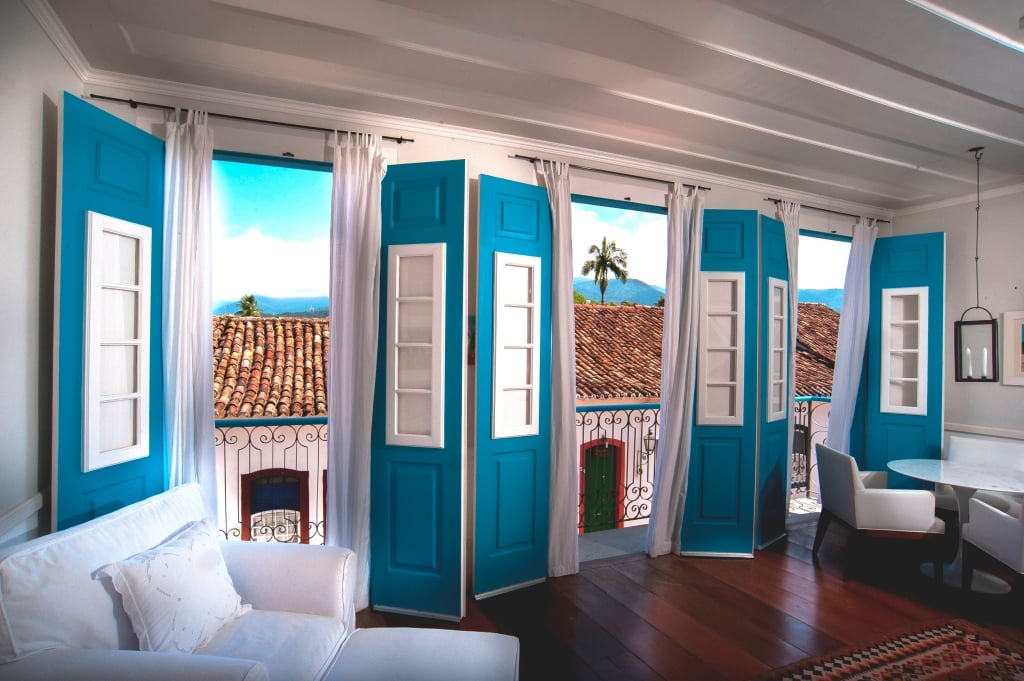 Paraty, Rio de Janeiro state. (Photo internet reproduction)
What the FLIP Paraty festival is
FLIP stands for Festa Literária Internacional de Paraty, the International Literary Festival of Paraty. Held since 2003, it is the most important event of its kind in Brazil and one of the best known in Latin America.
The setting is half the appeal. Paraty is a preserved colonial town of whitewashed houses and cobbled streets on the coast between Rio de Janeiro and São Paulo, and for a few days each year it fills with writers and readers.
This year’s edition, the 24th, runs from July 22 to 26. It returns to its traditional winter slot, pushed slightly later because of the World Cup.
The format is part lecture hall, part street party. Ticketed talks in a main tent run alongside free events, concerts and children’s programs spread through the town.
That mix is deliberate. Organizers have always wanted the festival to feel open rather than academic, and the result draws a broad, devoted crowd each year.
The poet at the center this year
Every FLIP is built around a single Brazilian author, and the 2026 honoree is Orides Fontela. For most readers outside Brazil the name will mean nothing, which is part of why the choice is interesting.
Fontela, who lived from 1940 to 1998, was a poet of spare, philosophical verse. She came from a modest background in the interior of São Paulo state and spent much of her life in poverty, even as critics praised her work.
Her poems are short, dense and concerned with language, silence and being. She is a writer’s writer, admired by peers and largely unknown to the wider public, which makes the festival’s spotlight a kind of overdue recognition.
Her life was as austere as her verse. She worked as a teacher, struggled financially for years and died in relative obscurity, leaving a small but fiercely respected body of work.
Choosing her now reflects a wider rediscovery. Critics and younger readers have begun returning to her poems, and the festival’s tribute is likely to push fresh editions and translations.
A festival with global pull
FLIP has long punched above its weight. The festival was founded by the British publisher Liz Calder, who helped launch the careers of writers like Salman Rushdie, and it quickly drew an international roster.
Over the years its stages have hosted Nobel laureates and global names, from Toni Morrison to Chico Buarque. That mix of local and international voices is its signature.
This year the program is curated by the literary critic Rita Palmeira, who sets the themes and chooses the guests. The full lineup blends established Brazilian authors with writers from abroad.
The curator’s role at FLIP is unusually visible. Each year the choice of honoree and theme is read almost as a statement about the state of Brazilian letters.
Why it matters beyond Brazil
For a foreign reader, FLIP is a useful window. Brazilian literature is under-translated and under-read abroad, and the festival is one of the few moments when it commands international attention.
It is also a real economic event for Paraty, drawing tens of thousands of visitors and filling the town’s hotels. Culture, here, is also an industry.
And the choice of Orides Fontela sends a quiet signal. A festival that could chase celebrity has instead asked its audience to discover a demanding poet, which says something about what it values.
For visitors planning a trip, the practical draw is simple. Few settings pair serious literary programming with a postcard-perfect colonial town and a stretch of Atlantic coast.
Frequently Asked Questions
When and where is the FLIP Paraty festival?
The 24th edition runs from July 22 to 26 in Paraty, a colonial town on the Brazilian coast between Rio de Janeiro and São Paulo. It is Brazil’s most important literary festival.
Who is Orides Fontela?
She was a Brazilian poet who lived from 1940 to 1998, known for spare, philosophical verse about language and silence. Admired by critics but little known to the public, she is the 2026 honoree.
Why is FLIP internationally known?
Founded in 2003 by British publisher Liz Calder, it has hosted Nobel winners and global authors alongside Brazilian writers. It is one of the few events that brings international attention to Brazilian literature.
The Rio Times · Power Map
See who really holds power in Latin America
Click to open the Power Map →




 English (US) ·
  French (CA) ·
  French (FR) ·