

PROTECT YOURSELF with Orgo-Life® QUANTUM TECHNOLOGY
Orgo-Life the new way to the future Advertising by Adpathway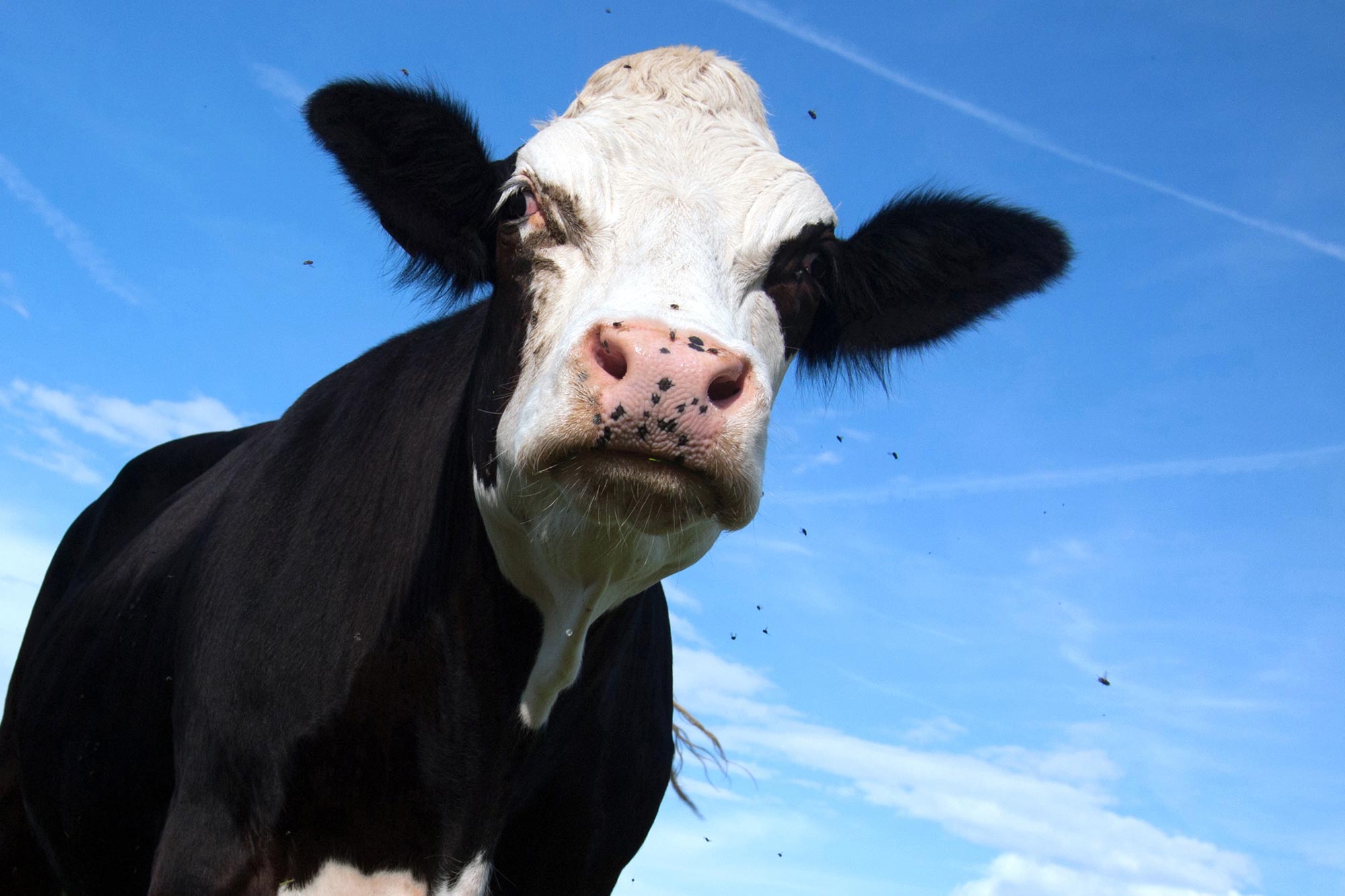 New research suggests that chronic inflammation caused by a bacterial endotoxin may play a much larger role in mad cow disease and related brain disorders than previously thought. Credit: Shutterstock
A study shows that the devastating disease can arise even when infectious prions are absent.
For decades, mad cow disease has been understood largely through one terrifying idea: a normal brain protein can fold the wrong way, become infectious and set off a chain reaction of damage. New research led by the University of Alberta suggests that this explanation may be incomplete.
The study found that brain damage resembling prion disease can occur even when infectious prions are absent. Instead, chronic inflammation triggered by lipopolysaccharide (LPS), a powerful bacterial endotoxin, appeared capable of causing similar neurodegenerative changes on its own.
Prion disease usually develops when normal proteins in the brain misfold into abnormal, infectious forms. That process remains central to diseases such as bovine spongiform encephalopathy (BSE), better known as mad cow disease. But the new work points to a wider biological problem, in which inflammation may help push the brain toward damage before infectious prions are involved.
“This fundamentally challenges the prevailing theory that these types of brain diseases are only about prions or similar misfolded proteins,” says Burim Ametaj, a nutritional immunobiologist in the Faculty of Agricultural, Life & Environmental Sciences and lead author on the study.
 Burim Ametaj. Credit: John Ulan
The research suggests that neurodegeneration may depend on several interacting processes rather than a single trigger. Inflammation appears to weaken the brain’s defenses, overwhelm cells, encourage proteins to misfold, and drive an excessive immune response that adds further injury.
“All three processes feed into each other, which means we need to target inflammation and immune health, not just the misfolded proteins.”
New clue to a devastating outbreak
The findings may help explain one unresolved part of the United Kingdom’s mad cow disease crisis, which devastated the livestock industry in the 1980s and 1990s. More than 160 people died after eating infected beef, and more than four million cattle were slaughtered.
Ametaj says endotoxins in animal-derived feed given to cattle may have contributed to the spread or severity of BSE. The study found high levels of LPS contamination in meat and bone meal, blood meal, and tallow, the types of feed implicated in the outbreak.
In mouse models, LPS alone, injected under the skin, caused spongiform brain symptoms in 40 percent of cases. These symptoms produce the “holey” tissue appearance seen in BSE and related diseases. When LPS was combined with lab-created misfolded proteins, the rate rose to 50 percent. In both cases, Alzheimer like damage appeared even without the naturally occurring infectious prion responsible for BSE.
The study also found that when an actual prion disease such as BSE was present, LPS-driven inflammation sharply worsened brain damage, leading to 100 percent mortality within 200 days of infection.
The work may also offer a possible explanation for why England and Wales had far more BSE cases than Scotland. Ametaj points to differences in rendering practices used to make livestock feed.
“Plants in England and Wales removed a critical substance called hexane from the production process to cut costs. This solvent was essential not only for fat extraction, but also for dissolving and removing LPS from the meat-and-bone meal.
“In contrast, Scottish rendering plants retained the hexane step and potentially because of that, had markedly fewer BSE cases—a fact long known but never systematically explained,” he notes.
Ametaj notes that chronic exposure to contaminated feed may have combined with other risk factors in dairy cows. High-grain diets immediately after calving and increased “leaky gut” can promote systemic inflammation, which may help create conditions for neurodegenerative disease.
“This suggests that excluding the hexane step left contaminated feed that could independently trigger neurodegeneration, explaining why the BSE epidemic followed the geographic pattern it did.”
Implications for human diseases
The findings could have practical consequences for livestock feed and food safety, according to Ametaj. If endotoxin contamination can worsen or help trigger prion-like brain damage, then rendering practices and feed monitoring remain important safeguards.
“The lessons from the BSE outbreaks about proper rendering processes and better feed safety remain relevant today. The prevention path is clear: maintain endotoxin-removal processing steps and monitor contamination. Any industrial feeding system that doesn’t control this could create conditions for neurodegeneration.”
Ametaj is also “cautiously optimistic” that the work could help guide research into human neurodegenerative diseases, including Alzheimer’s and Parkinson’s. The connection is not a claim that endotoxins cause all such diseases. Instead, it suggests that inflammation and bacterial toxins may be one modifiable piece of a much larger puzzle.
“It opens up an entire anti-inflammatory medicine toolkit. Bacterial endotoxins have been found in the brains of Alzheimer’s patients, so risk factors that reduce dementia—exercise, anti-inflammatory diets, gut health, metabolic health—might work partly by reducing endotoxin burden.
“These diseases are complex, but if endotoxin exposure contributes to even 20 to 30 percent of cases, controlling this modifiable risk factor could spare millions of people,” Ametaj adds. “We might prevent some neurodegenerative diseases the way we prevent heart disease, by managing inflammatory risk factors throughout life.
“In a field where there’s been little hope, that matters.”
Reference: “Lipopolysaccharide and Recombinant Prion Protein Induce Distinct Neurodegenerative Pathologies in FVB/N Mice” by Seyed Ali Goldansaz, Dagnachew Hailemariam, Elda Dervishi, Grzegorz Zwierzchowski, Roman Wójcik, David S. Wishart and Burim N. Ametaj, 28 June 2025, International Journal of Molecular Sciences.
DOI: 10.3390/ijms26136245
The study was funded by the former Alberta Livestock and Meat Agency and the Alberta Prion Research Institute.
Never miss a breakthrough: Join the SciTechDaily newsletter.
Follow us on Google and Google News.



















 English (US) ·
  French (CA) ·
  French (FR) ·