

 12 hours ago
6
12 hours ago
6
PROTECT YOURSELF with Orgo-Life® QUANTUM TECHNOLOGY
Orgo-Life the new way to the future Advertising by AdpathwayHAITI · TRADE
Key Facts
- —What happened The HOPE and HELP trade preference programmes for Haiti have been extended to 31 December 2028.
- —What they do They let Haitian-made apparel enter the United States duty free under relaxed rules of origin.
- —The route The extension came through H.R. 6504 and a continuing resolution rather than a standalone trade bill.
- —The catch The programmes had already lapsed once, on 30 September 2025, before a retroactive fix restored them.
- —The industry view The ADIH manufacturers association calls the programmes a lifeline for thousands of Haitian workers.
- —Why it matters Apparel is close to the only large formal export employer Haiti still has.
One American trade programme keeps most of Haiti’s remaining formal factories open. It now has a horizon rather than a deadline.
One-stop reference
Company Intelligence
Every listed company in Latin America — financials, ownership and structure for 1,450+ companies across 26 exchanges, in one place.
The Haiti HOPE and HELP trade programmes now run to the end of 2028. The extension gives Haitian factories a planning horizon they had lost.
Haiti HOPE is the older of the two, first passed in 2006 and widened in 2008. HELP followed the 2010 earthquake.
HOPE stands for the Haitian Hemispheric Opportunity through Partnership Encouragement Act. HELP is the Haiti Economic Lift Program Act.
Together they let Haitian-made clothing enter the United States without duty. They also relax the rules on where the fabric may come from.
That second point is what makes them work. Haiti has no textile mills of its own.
How the Extension Happened
The path was not a clean one. The programmes expired on 30 September 2025 and lapsed.
A legislative package ending a government shutdown restored them retroactively for fifteen months. That moved the expiry to 31 December 2026.
On 12 January 2026 the House passed the Haiti Economic Lift Program Extension Act, numbered HR 6504. Delegate Stacey Plaskett announced it as a three-year reauthorisation to 31 December 2028.
A continuing resolution carried the extension through Congress. The African Growth and Opportunity Act was extended alongside it.

Why This Programme Carries So Much Weight
Haiti’s formal economy has narrowed sharply. Gang control of Port-au-Prince has closed or displaced most other large employers.
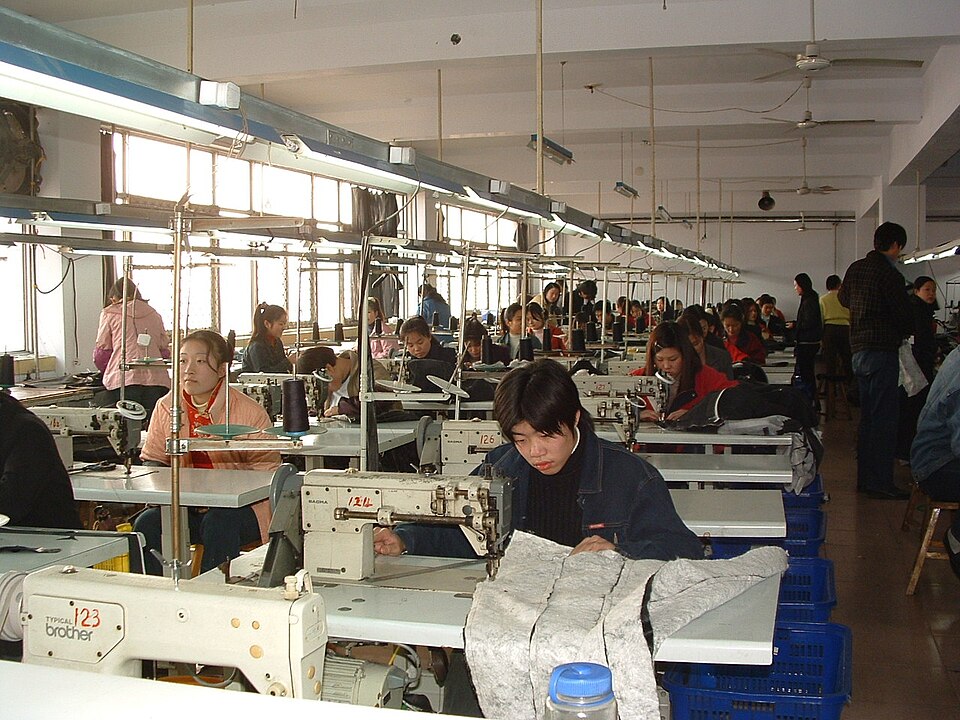
Apparel assembly is what remains. It runs in industrial parks with their own security and their own port access.
Those factories exist because of duty-free access. Without Haiti HOPE, the same work moves to Central America or Asia within a season.
The industry association, the Association des Industries d’Haiti, has said as much repeatedly. Its president has called the programmes a lifeline for thousands of Haitian workers and their families.
The Job Numbers Are Not Precise
Figures for how many Haitians depend on the programmes vary widely between sources. The association itself uses the phrase thousands of workers rather than a count.
The Rio Times could not verify a single authoritative employment number. Estimates in circulation are not consistently sourced.
What is not in dispute is the share. Apparel dominates Haitian exports to the United States by a wide margin.
Customs data on the American side is the firmer source. It records what arrived, not how many people made it.
The Rules of Origin Point
Most trade preference schemes require that fabric come from the exporting country or a partner. Haiti cannot meet that test.
HOPE and HELP waive it within quota limits. Haitian factories can buy fabric anywhere and still ship duty free.
That flexibility is why the sector survived at all. It also means the benefit can disappear the moment the waiver does.
Quota ceilings still apply to some categories. Producers plan around them rather than against them.
What Comes Next
The first marker is implementation guidance from US customs. Retroactive restorations create refund questions for importers.
The second is whether buyers return. A brand that moved orders during the 2025 lapse does not move them back automatically.
Security is the other half of that decision. Duty-free access does not help a factory that cannot get containers to a port.
The third is 2028 itself. A three-year horizon is better than a one-year one, but it is still a cliff on a calendar.
Factory investment runs on longer cycles than that. A machine bought today is expected to work well past the expiry date.
That is the structural weakness of preference programmes. They are renewed politically rather than guaranteed by treaty.
More: Caribbean news in English, every day from The Rio Times.
Frequently Asked Questions
What are HOPE and HELP?
HOPE is the Haitian Hemispheric Opportunity through Partnership Encouragement Act and HELP is the Haiti Economic Lift Program Act. Together they let Haitian-made apparel enter the United States duty free under relaxed rules of origin.
How long is the extension?
The programmes now run to 31 December 2028. They had lapsed on 30 September 2025 and were first restored retroactively to 31 December 2026 before the longer extension passed.
Why does it matter so much to Haiti?
Apparel assembly is close to the only large formal export employer left in the country. The factories exist because of duty-free access, and the ADIH association describes the programmes as a lifeline for thousands of workers.
Sources: American Apparel and Footwear Association, Office of Delegate Stacey Plaskett, US International Trade Administration, Association des Industries d’Haiti, Rio Times.



















 English (US) ·
  French (CA) ·
  French (FR) ·