

 1 hour ago
7
PROTECT YOURSELF with Orgo-Life® QUANTUM TECHNOLOGY
Orgo-Life the new way to the future Advertising by AdpathwayGENEVA, November 2 (IPS) - Émile Zola, the well-known French journalist, novelist, playwright, and key figure in theatrical naturalism, who played a significant role in France’s “political liberalization,” inspired me to speak out.
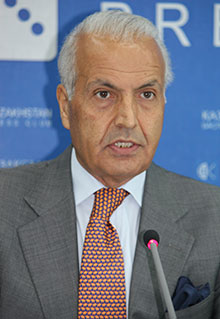 Saber Azam
In 1898, he raised his voice and used his pen to denounce injustice and prejudice against a wrongly accused person when he published “I Accuse,” an open letter that remains a landmark in social, political, and cultural history for its power and courage.
I do not claim the knowledge, charisma, distinction, or public recognition of the renowned writer. Yet I use my pen and raise my voice to express my indignation at injustice and prejudice against humanity and to decry those who have turned the world into an explosive time bomb. The world’s tragic state must sicken all who care about humankind’s destiny. International law and order are frequently violated, and bloody, unlawful wars are waged. When countless innocent children, women, and men are regularly slaughtered; when space is at risk of militarization; when treachery becomes the “art of the deal” in every field; when rights, virtue, and decency are systematically violated; when bigotry is practiced everywhere; when conflicts become a source of enormous wealth for a few; when notorious criminals are protected; and when family and other human bonds are destroyed, every active conscience must awaken and act to stop the madness. Our world faces not only threats of insecurity, social and financial collapse, religious confrontation and wars, and climate disasters, but also serious moral decay and ruin. These crises worsen daily.
I do not intend to write literary pieces or politically acceptable articles, but rather to make my points known in plain language despite the risks. Therefore, I raise my voice and declare:
I Accuse the World Leaders
After World War II, the United Nations (UN) was established to “maintain international peace and security … take effective collective measures for the prevention and removal of threats to the peace, and for the suppression of acts of aggression or other breaches of the peace … develop friendly relations among nations based on respect for the principle of equal rights and self-determination of peoples … achieve international cooperation in solving international problems of an economic, social, cultural, or humanitarian nature, and in promoting and encouraging respect for human rights and for fundamental freedoms for all without distinction as to race, sex, language, or religion.” Thus, this body was created with a “world-loving” spirit.
To this end, the Security Council, a powerful 15-member body, was established to act on behalf of all countries to “[maintain] international peace and security.” Its resolutions are binding. Five “superpowers”—the United States, the Soviet Union/Russian Federation, China, the United Kingdom, and France—were granted not only permanent membership in this esteemed body but also the right to veto proposals before the Council. The rest of the world had to settle for the remaining ten seats, allocated for two-year terms according to an uneven geographic distribution. This arrangement glaringly disregards the historical injustices committed against hundreds of millions of indigenous populations across the Americas, Asia, Africa, the Oceanic Islands, and Australia, as well as the principle of majority rule.
At the same time, “with a view to the creation of conditions of stability and well-being which are necessary for peaceful and friendly relations among nations,” the 54-member Economic and Social Council was established under Article 60 of the UN Charter to strengthen cooperation among nations in social and economic development and in universal respect for human rights and dignity. Each member state serves on this body for three years.
On the legal front, the 15-member International Court of Justice was also established to peacefully resolve disputes among states. Each judge serves a nine-year term. Article 65 of the UN Charter provides that this institution will intervene “at the request of whatever body [Member States] may be authorized by or in accordance with the Charter of the United Nations” to file a legal complaint against another state.
With the above internationally recognized political, social, economic, and judicial structures in place to maintain and strengthen peaceful cooperation, there was hope that they would be used earnestly for their intended purposes; that wars and destruction would end; that future generations would live in peace; that social and economic progress would be equitable; and that all challenges would be resolved in accordance with the UN Charter.
By 17 September 2026, the five permanent members of the Security Council, primarily the former Soviet Union/Russian Federation and the United States, had vetoed at least 248 resolutions to protect their interests and those of their closest allies, ignoring the “world-loving” spirit of cooperation they had previously embraced.
Article 4 of the Charter ties UN membership directly to a state’s “peace-loving” nature and its willingness to accept the obligations set out in the Charter. Articles 5 and 6 authorize the Security Council to recommend preventive or enforcement measures to the General Assembly, including suspending or expelling a member state that consistently violates the Charter’s principles. However, since its establishment in 1945, no rogue member state has been expelled from the UN.
Article 52 of the Charter states that nothing precludes the establishment of regional peace and security entities, provided their aims and activities are consistent with the UN’s. The article therefore implicitly recommends that, on matters of peace and security, disputes between or among states, and social, political, and economic development, all countries use the diverse “world-loving” UN structures. However, repeated Soviet vetoes in the Security Council may have prompted the establishment of the North Atlantic Treaty Organization (NATO) in April 1949 and the Southeast Asia Treaty Organization (SEATO) and Central Treaty Organization (CENTO) in February 1955. The Soviet Union requested NATO membership in 1954 but was denied. These regional military alliances certainly “pushed” the communist giant to establish the rival Warsaw Pact in May 1955, contributing to the Cold War and significantly diminishing the UN’s role in world peace and security.
Meanwhile, the Organization of American States was created in April 1948. The European Coal and Steel Community was established in April 1951, leading to the European Economic Community under the Rome Treaty in March 1957 and the European Union under the Maastricht Treaty in February 1992. These developments prompted other regions to establish their own structures to protect their interests. The Organization of African Unity was created in May 1963 and became the African Union in July 2002 under the Sirte Declaration. Other regional entities included the Association of Southeast Asian Nations (August 1967) and the Organization of Islamic Conference (1972), which became the Organization of Islamic Cooperation (June 2011). Additional military, political, and economic organizations of varying importance were created in other regions, including the Shanghai Cooperation Organization (April 1996), the Union of South American States (May 2008), and the Community of Latin American and Caribbean States (December 2011).
The International Court of Justice has been largely ineffective. Superpowers pressure it to support their “preferred belligerent” in interstate conflicts. The International Criminal Court, established in 2002 despite a long history of calls for its creation to punish genocide, crimes against humanity, and war crimes, has been systematically hampered by powerful and wealthy countries from fulfilling its duties properly and consistently.
As a result, UN structures have failed to achieve peace, justice, prosperity, and progress for all, and most other entities have also fallen short of these objectives. The self-centered approach of influential countries, particularly the five permanent members of the Security Council, drives this flagrant disregard for the much-needed “world-loving” spirit of cooperation.
[To be continued]
Saber Azam is a former UN official. He is the author of Soraya: The Other Princess and Hell’s Mouth: A Journey to the Heart of West African Jungles. His third book, Nowhere to Go, will be published soon.
IPS UN Bureau



© Inter Press Service (20261102183813) — All Rights Reserved. Original source: Inter Press Service
















 English (US) ·
 French (CA) ·
 French (FR) ·