

 1 month ago
20
1 month ago
20
PROTECT YOURSELF with Orgo-Life® QUANTUM TECHNOLOGY
Orgo-Life the new way to the future Advertising by AdpathwayThe United States and Indonesia have announced the establishment of a new defense partnership aimed at “maintaining peace and stability” in Asia, the same day that President Prabowo Subianto met Russian President Vladimir Putin in Moscow.
The announcement came after Indonesian counterpart Sjafrie Sjamsoeddin met with U.S. Secretary of War Pete Hegseth at the Pentagon yesterday. In a joint statement released after the meeting, the U.S. Department of War and Indonesia’s Defense Ministry said that the Major Defense Cooperation Partnership (MDCP), as it is known, was the fruit of “decades of cooperation” and underscored “the strength and potential of the bilateral defense relationship.”
“Both countries recognize each other as important partners and reaffirm their commitment to cooperation based on mutual respect, sovereignty, and shared interest in regional peace and stability,” the statement said.
Speaking with Sjafrie, Hegseth praised Indonesia’s role in President Donald Trump’s Board of Peace initiative, and the leading role that it has taken in the International Stabilization Force for Gaza. He said that the new MDCP “bolsters regional deterrence, and advances our shared commitment to peace through strength,” the Department of War said in a separate statement. Sjafrie responded that the Indonesian side had “very great enthusiasm to continue to develop our defense relationship.”
According to the joint statement, the MDCP is composed of three “foundational pillars”: military modernization and capacity building; training and professional military education; and exercises and operational cooperation. The two countries say they will pursue “cutting-edge initiatives” including “next-generation” maritime, subsurface, and autonomous systems technologies, and maintenance, repair, and overhaul support. In a throwback to the Suharto era, the statement said that Sjafrie and Hegseth “have also committed to enhance joint special forces training,” and to expand existing multilateral exercises, including Super Garuda Shield.
The announcement comes a day after Indonesia’s Defense Ministry confirmed that it was discussing a proposal to give U.S. military aircraft access over Indonesian airspace. The confirmation came after several media outlets reported over the weekend that the U.S. was seeking “blanket overnight access” for its military aircraft through Indonesian airspace, according to a Reuters report, although the Ministry said that a final agreement had not yet been reached. There was no mention of U.S. overflight rights in the publicity surrounding the MDCP, although no official text of the agreement has yet been made public.
The timing of the agreement is curious for the Indonesian side, to say the least, with domestic pressure building on President Prabowo Subianto’s administration to withdraw from the Board of Peace in the wake of the joint U.S.-Israeli attack on Iran. In early March, Indonesia announced that it was suspending its participation on the Board’s activities until further notice, and it future participation is uncertain.
The recent deaths of three Indonesian peacekeepers in southern Lebanon has also amplified calls for the country to cancel its planned deployment of 8,000 peacekeepers to the ISF. Foreign policy analysts and Muslim groups have criticized the ISF’s lack of Palestinian representation and argued that it could compromise Indonesia’s longstanding support for the Palestinian cause.
The timing suggests that the agreement has been in negotiation for some time, as part of Jakarta’s attempt to fortify its defense relations with major partners. In February, Indonesia signed a major security agreement with Australia that commits both countries to increased security consultations and joint consultations over emergent shared threats. Like the Australian pact, the MDCP seems symbolic and relatively light on substance, focusing on the incremental expansion of initiatives that are already underway. The inclusion of the the word “major” in the agreement’s title also suggests a desire to inflate the importance of what has been agreed.
In any event, it is clear that Prabowo’s administration intends to maintain Indonesia’s non-aligned foreign policy doctrine, which emphasizes sustained defense engagements with all major powers, including China and Russia.
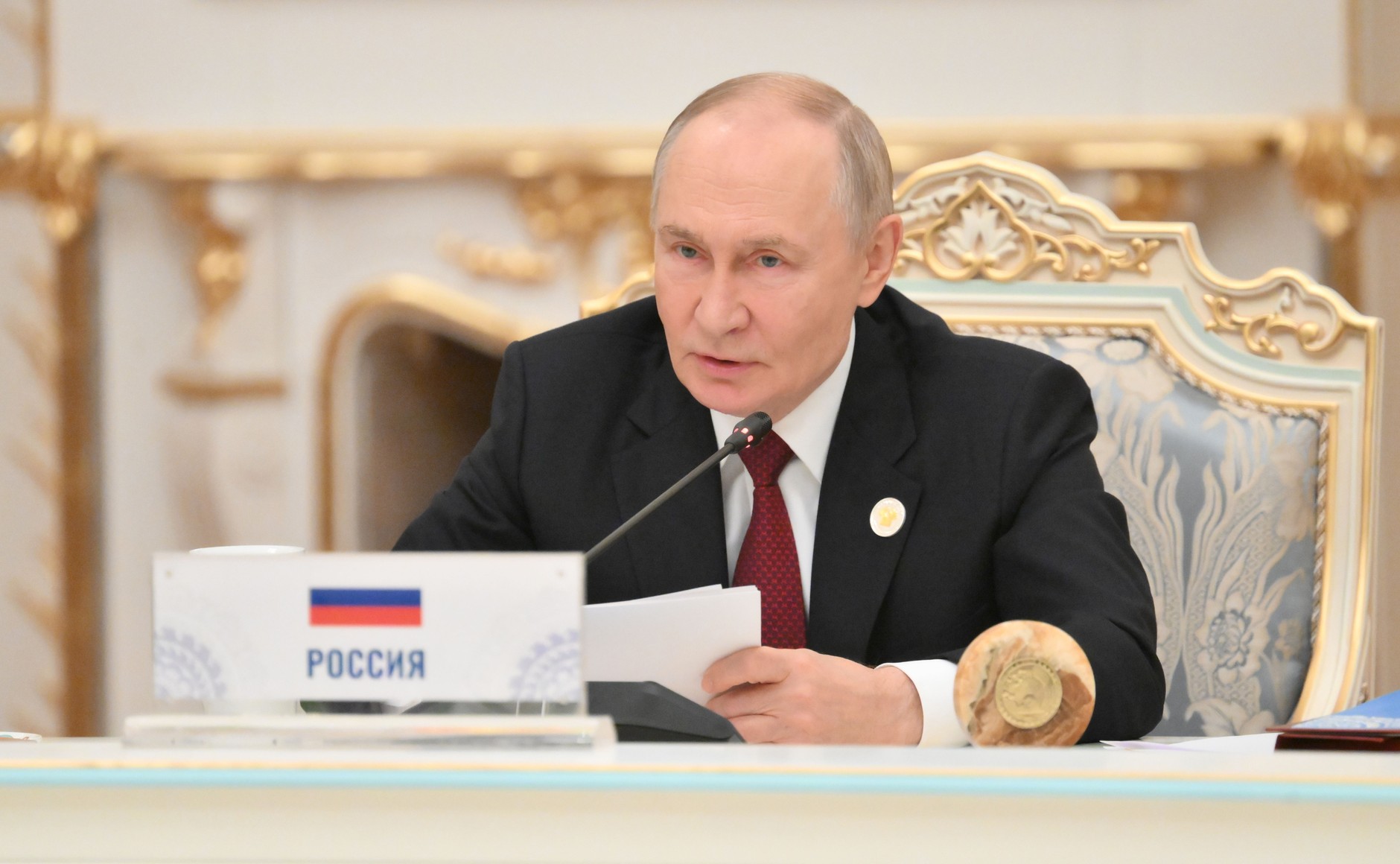
As if to underline the point, the Indonesian leader yesterday held talks with President Vladimir Putin in Moscow, his third visit to Russia in less than a year. The likely purpose of the trip was to consolidate the recent progress in relations with Russia, and to secure shipments of Russian oil to help fill the current shortfall of supplies from the Gulf.
Addressing Prabowo, Putin said that he was “very pleased that our contacts are regular and underscore the special nature of our relations,” according to the official readout from the Kremlin. In response, Prabowo thanked Putin for meeting him “on such short notice” and hailed the “tangible progress across nearly all areas of cooperation that we discussed during our previous meeting.”
“We recognize Russia’s significant and constructive role in shaping today’s geopolitical landscape, particularly amid the prevailing uncertainties,” Prabowo said. He added that it was “especially important for us to engage in joint consultations, exchange views on future developments, and identify priority areas for further cooperation, particularly in the economic and energy sectors.”
Prabowo’s snap visit to Russia followed working visits to both Japan and South Korea at the end of March. In both cases, energy security was high on the agenda.











 English (US) ·
  French (CA) ·
  French (FR) ·