

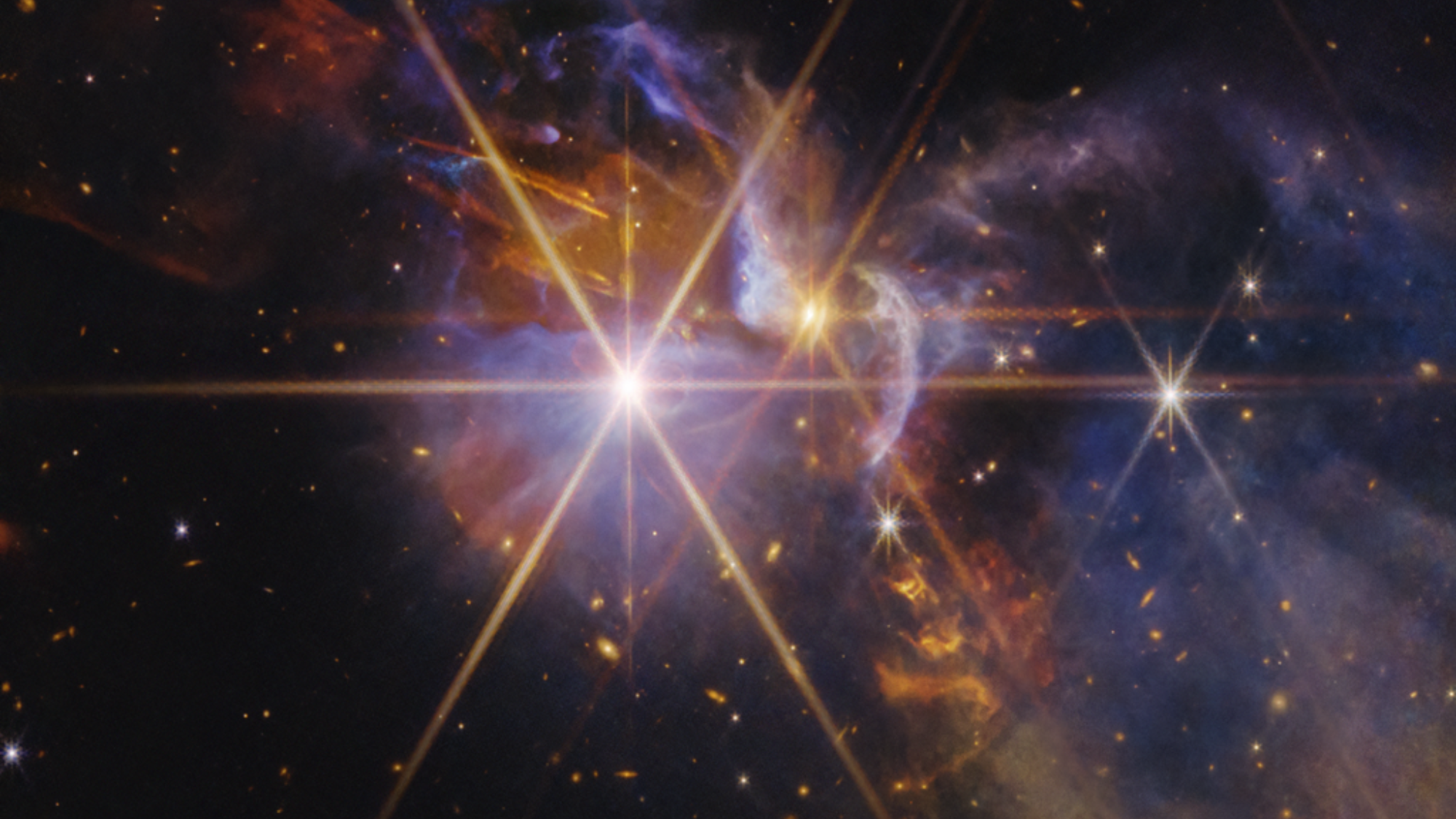
Infant stars or "protostars" celebrate their independence with cosmic fireworks in a stunning new image from the James Webb Space Telescope (JWST).
NASAreleased this
imageto celebrate the 250th anniversary of the birth of the U.S. It is a fitting tribute as the
protostarsbreak away from the molecular cloud in which they formed to become fully fledged stars in their own right.
Protostars are born when patches in vast molecular clouds cool and form clumps, collapsing under their gravity. Protostars continue to gather material from these prenatal clouds until they have enough mass to trigger the
nuclear fusionof hydrogen into helium in their cores, the process that defines what a
main-sequence staris.
What is it?
The protostars sit in a region known as FS Tau, located around 450 light-years away, which has become a popular target for astronomers aiming to study the evolution of low-mass stars.
Why is it incredible?
Though previously well studied, it has taken the incredible infrared observing power of the
JWSTto peer through the thick clouds of star-forming gas and dust in FS Tau and visualize the protostars of this region in great detail.
One of the aims of this research is to investigate the impact that radiation and outflows of material from low-mass stars have on their environment. The
outflowsoccur as protostars gather matter from their surroundings, occasionally blasting out some of this matter.
The JWST image of FS Tau reveals gaps between the outflows that support the theory that protostars gather or "accrete" matter in discrete episodes, between which they lie dormant.
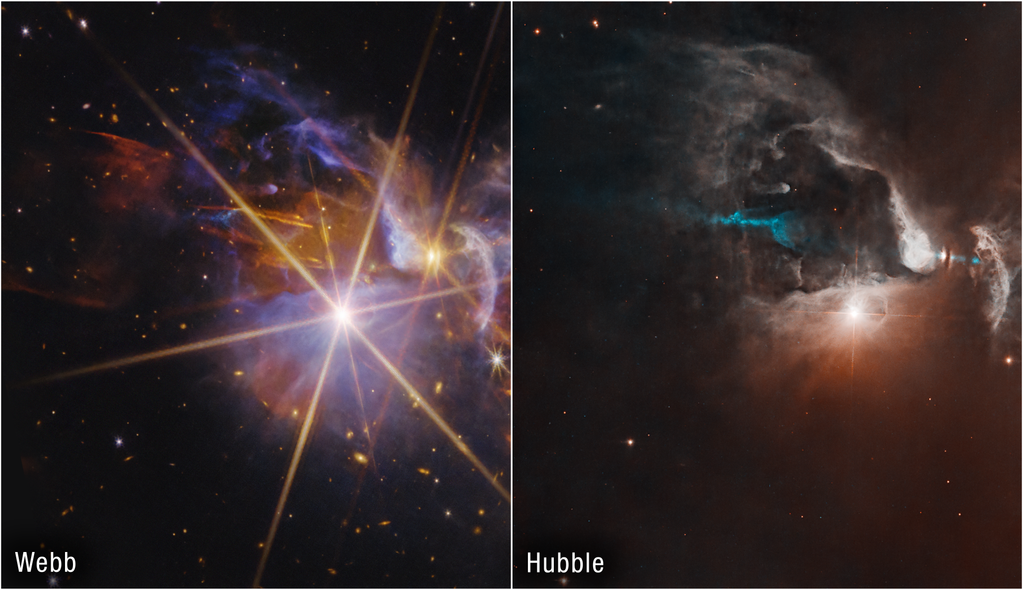
The effect of protostar outflows on their environment can be seen in the JWST image via the prominent blue ridges. These represent gas that has been shunted by outflows, creating dense regions of matter that reflect light from proximate protostars.
The result is cosmic fireworks that put even the most impressive July 4 celebrations to shame. But at least we get hot dogs.
















 English (US) ·
  French (CA) ·
  French (FR) ·