

 1 month ago
47
1 month ago
47
PROTECT YOURSELF with Orgo-Life® QUANTUM TECHNOLOGY
Orgo-Life the new way to the future Advertising by Adpathway
President Trump met on Friday with top advisers to decide whether to intensify the military assault against Iran, according to four people briefed on the discussion. The consultations came just days before Mr. Trump is set to meet Israel’s prime minister, Benjamin Netanyahu, for the first time since Mr. Netanyahu made the case in February for a joint offensive against Iran that began weeks later.
The announcement of the meeting comes at a crucial moment in the war, which is now nearing the end of its fifth month. Tehran was said to have rejected the latest American cease-fire proposal. And since a recent cease-fire collapsed the two sides traded attacks for the 13th night in a row with little to no sign of willingness from either to return to the negotiating table.
In a wide-ranging question-and-answer session with reporters in the Oval Office on Friday, Mr. Trump offered little indication of what new attacks could accomplish, and he refused to answer a question about whether attacks he has threatened on civilian infrastructure could be considered war crimes under international law.
On Thursday Mr. Trump had told Axios that he did not expect Israel to take part in a potentially “massive attack” that he is considering because Israel might face retaliatory bombardment from Iran. Mr. Netanyahu is also expected to attend the funeral of Senator Lindsey Graham, a staunch supporter of Israel.
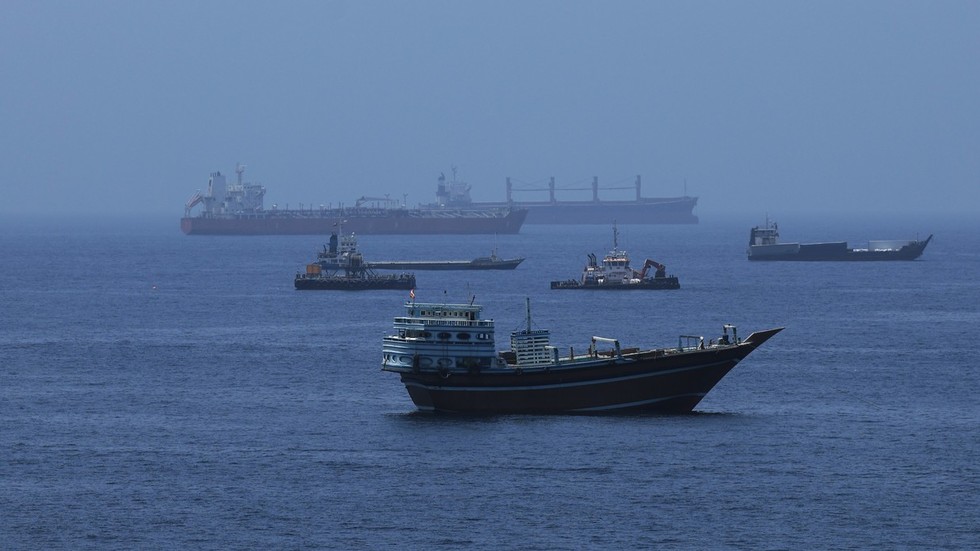
Overnight, U.S. forces targeted Iranian military assets and facilities, including drone storage sites, to reduce the threat to commercial shipping in the Strait of Hormuz, U.S. Central Command said.
The Iranian military said it had launched drone attacks against U.S. military targets at bases in Bahrain, Jordan and Kuwait. There were no immediate reports of damage or casualties. The Islamic Revolutionary Guards Corps issued a warning for residents of countries that host American forces to keep at least 500 meters from any building suspected of housing U.S. personnel.
The resurgence in fighting has sent the price of oil above $100 for the first time since May, though it settled Friday afternoon slightly below that mark. A threat by the Iranian-allied Houthi militants in Yemen to expand the fight to the Red Sea and target Saudi ships has injected further uncertainty into global energy markets.
Here’s what else we’re covering:
Nuclear ambitions: American intelligence agencies believe that Iran’s new supreme leader, Ayatollah Mojtaba Khamenei, and the harder-line government that emerged after the United States and Israel killed many of Iran’s previous leaders have ambitions to develop advanced nuclear weaponry, according to officials briefed on the assessments. Read more ›
Energy markets: The price of Brent crude, the global benchmark for oil, was up more than 7 percent at $100.95 a barrel on Friday, before dropping to around $98 a barrel. The price of crude is nearly 40 percent higher since the start of the war. Read more ›

U.S. embassies in several countries in the Middle East issued security alerts Friday advising Americans to “reconsider travel to and through the region.” The notices were posted by U.S. missions in Iraq, Kuwait, Lebanon, Qatar, Bahrain, Oman, Saudi Arabia, the United Arab Emirates, Jerusalem and Jordan. They followed a broader worldwide caution issued by the State Department on Wednesday.

President Trump said little on Friday afternoon about whether he was going to order a major escalation of attacks on Iran, telling reporters only that “we’re talking to them.” It was unclear whether behind-the-scenes negotiations could get diplomacy back on track. “Look, we’re locked and loaded,” he said during an Oval Office event on new innovations in nuclear energy. “We’re ready to go, but we’re talking to them, so maybe there will be, maybe there won’t be a tipping point.”
“Maybe they will cry uncle, or maybe they’ll just give up, or maybe they’ll just go into a cave and hide,” he added.
He spoke hours after meeting with top military and national security advisers about whether to order what he told Axios could be a “massive attack” on Iran.
Video


American intelligence agencies believe that Iran’s new supreme leader, Ayatollah Mojtaba Khamenei, is far more interested than his father and predecessor in pursuing a nuclear weapon, according to officials briefed on the assessments.
Ayatollah Khamenei’s father, who was killed at the start of the war in an Israeli attack aided by U.S. intelligence, had sworn off developing a nuclear weapon. While American officials long asserted that Iran wanted to be capable of building a nuclear weapon, many believed Ayatollah Ali Khamenei’s hesitancy was genuine.
His successor has never publicly called for Iran to build a nuclear weapon. But U.S. intelligence agencies believe that Mojtaba Khamenei and the harder-line government that emerged after the United States and Israel killed many of Iran’s previous leaders have ambitions to develop advanced nuclear weaponry.
The current government has already worked to assert greater control over the Strait of Hormuz and proved a difficult negotiating partner. If the U.S.-Israeli war has made Tehran more, rather than less, likely to pursue a nuclear weapon, it would amount to one more grave consequence of the killing of the supreme leader and the steps toward regime change the Trump administration initially pursued.
American officials caution that most of the intelligence on Mojtaba Khamenei’s views comes from before the war. He was badly injured in the first part of the war, and American officials said he has limited his communications and public appearances because of his injuries and also because he does not want to be targeted in an airstrike.
The officials assess that he remains in charge of the government but does not have the absolute authority and influence of his father, who ruled for more than 36 years.
The assessment comes as President Trump is weighing whether to intensify the military campaign against Iran. A determination that the supreme leader is potentially open to pursuing a bomb would provide additional justification for an escalation.
While U.S. officials insist Tehran has not made any moves to restart its nuclear program, Iran has taken some steps to preserve its nuclear assets after the U.S. strikes on key facilities last year or during pauses in fighting during the current war.
Iran has moved at least some centrifuges, according to American officials, to a heavily fortified underground complex in central Iran that the United States refers to as Pickaxe Mountain. The Wall Street Journal first reported this week that Israeli intelligence had tracked the movement of the centrifuges.
While such a move could be a first step toward rebuilding enrichment capability, U.S. officials said they believe that for now Iran is more interested in preserving some of its equipment by trying to move it outside the range of American bombs.
In June 2025, Mr. Trump ordered the U.S. military to conduct strikes on three key nuclear facilities. B-2 stealth bombers dropped the largest conventional bombs in the Air Force inventory on two of the sites, Fordo and Natanz. A third site, at Isfahan, was hit with Tomahawk missiles.
Mr. Trump immediately claimed that the military operation had obliterated the facilities, but initial intelligence assessments were far more measured, suggesting the program had only been set back by months.
Iran’s nuclear site at Pickaxe Mountain was not targeted in the attacks last summer. And the facilities there are a far more difficult target for the U.S. military. The underground facilities are buried deep below a mountain, out of the range of the most powerful conventional U.S. bombs, according to multiple American officials.
After assessing the damage at the Fordo nuclear facility, the Iranians learned just how deep the U.S. weapons could penetrate, and are confident that Pickaxe’s even deeper underground halls are safe from conventional aerial attack.
But Iranians remain worried that U.S. forces could mount a commando raid against Pickaxe, potentially using ground forces to enter the site and destroy it from within. U.S. intelligence agencies have reported that Iran has moved ground forces to Pickaxe to deter any ground raid.
Mr. Trump this week threatened to attack the facility, calling it “a possible target for a nice big fat shot right in their front door.”
He also said the United States saw no activity there, a reference, officials said, to the fact that Iran has not restarted nuclear enrichment or other work, despite moving equipment there.
American officials declined to discuss the planning for any attack on the site, and said Mr. Trump has been presented a broad range of options and an array of potential targets. It was foolish, several officials said, to predict what targets Mr. Trump might approve.
Whatever missteps the United States has made in its war with Iran, the damage to the Iranian nuclear facilities, particularly in its strikes last year, succeeded in at least freezing progress on the nuclear program.
The intelligence agencies assessed that the damage would have set back the program by only six months, had the Iranians immediately moved to repair centrifuges or restart enrichment work at other sites. But, American officials said, the Iranians did not immediately dig out all of the facilities or restart enrichment at other locations.
Still, the building blocks of a bomb, most notably Iran’s stockpile of highly enriched uranium, remain intact and accessible to Tehran.
Ali Khamenei had issued a religious order, or fatwa, prohibiting the use of nuclear weapons by Iran, a stance publicly announced to the International Atomic Energy Agency in 2005.
The fatwa had its limits. While it prevented Iran from using a nuclear bomb, it did not block the government from developing its overall program or taking steps toward weaponization. Even after the fatwa was in place, harder-line elements in the Iranian government wanted to be able to quickly develop a nuclear weapon.
But based on public statements and intercepted conversations before the war, American intelligence officials assessed that Mojtaba Khamenei did not share his father’s hesitancy and was interested in pursuing an advanced nuclear weapon.
At the end of the Biden administration, U.S. officials said Iran was looking at ways to develop a cruder nuclear weapon, potentially like the Hiroshima-style bombs, that would be difficult to deliver but would provide something of a deterrent.
The new supreme leader, according to U.S. officials, sees less utility in that type of weapon but appears to support developing the kind of thermonuclear warhead that could eventually be miniaturized and placed on a long-range missile.
In his public statements, Ayatollah Khamenei has vowed to preserve Iran’s nuclear capabilities, but has not spoken directly of a need to obtain a weapon. He distanced himself from an agreement the United States and Iran signed in June that said Iran would not pursue a nuclear weapon. Ayatollah Khamenei said he had allowed the agreement, but did not agree with it as a “matter of principle.”
Rosemary Kelanic, the director of the Middle East program at Defense Priorities, a think tank skeptical of American military intervention, said the war and the announcement this week that the United States may help Saudi Arabia build enrichment facilities make it “significantly more likely” that Iran pursues a nuclear weapon.
“Iran now has a much greater incentive to weaponize to deter future U.S. or Israeli attempts at collapsing the regime or the Iranian state, which means that the war is counterproductive to its own ostensible goals of preventing Iranian proliferation,” she said.
Iranian officials who previously argued in internal debates that only a nuclear weapon could prevent an Israeli or American attack believe their position has been strengthened, U.S. officials have said.
Dustin Volz and Michael Crowley contributed reporting.
President Trump met on Friday with top advisers and senior members of his cabinet to decide whether to intensify the military assault against Iran, according to four people briefed on the planned discussion.
The meeting comes as Mr. Trump faces a potential inflection point in his approach to Iran, after the collapse of a fragile cease-fire and a memorandum of understanding that was intended to bring the United States and Iran back to the negotiating table for a longer-term denuclearization deal.
Mr. Trump previewed some of his discussions in an interview with Axios on Thursday, saying: “I am considering a massive attack. Bigger than ever before. I am close to making a decision. We are all set for it.”
He also indicated that the Israelis most likely would not be part of a new escalation, saying there could be “consequences” for them, apparently meaning from Iran. Prime Minister Benjamin Netanyahu of Israel is coming to the United States on Monday and plans to meet with Mr. Trump, Mr. Netanyahu’s office announced.
Mr. Trump has insisted the U.S.-Israeli war in Iran would be a relatively short “excursion,” although it has now lasted nearly five months, with no end in sight.
The cease-fire collapsed after Iran hit a cargo ship traversing the Strait of Hormuz with a drone strike late last month, which was followed by additional strikes on ships soon after. The United States resumed strikes against Iran as well as its military blockade of the Strait.
In the last two weeks, Iranian strikes against U.S. interests in the Middle East, including a military base in Jordan, have killed four service members.
Mr. Trump’s meeting with top advisers came as the Pentagon has been rushing more forces, weaponry and supplies to the Middle East in case the war sharply escalates.
Additional Air Force F-16 fighters from Germany and stealthy F-35 jets from Britain have arrived in the Middle East in recent days, joining scores of warplanes and attack drones already positioned at land bases or on two aircraft carriers, according to several U.S. military officials who spoke on the condition of anonymity to discuss operational matters.
U.S. Central Command has declined to comment on any new deployments.
Long-range B-2 and B-52 bombers in the United States are on high alert, and additional aerial refueling planes that would gas up the bombers have also moved closer to the region, military officials said. This week, the Pentagon used a B-1B long-range bomber based in Britain to strike Islamic Revolutionary Guards Corps targets in Iran, U.S. officials said. Axios previously reported the B-1B mission, the first against Iran in weeks.
Nearly 20 warships are on station in or near the Arabian Sea, launching Tomahawk missiles and enforcing a naval blockade against commercial vessels entering or leaving Iranian ports. Some 50,000 American troops in the region and in Europe are assigned to the overall mission.
As of early Friday, Central Command had carried out 13 consecutive nights of bombing runs, hitting coastal radars, anti-ship missile launchers and a fleet of small Iranian attack boats and other sites that the Pentagon says have contributed to attacks on commercial ships transiting the Strait of Hormuz.
The U.S. military has also damaged or destroyed an increasing number of railway bridges around the country that civilians use but that also enable Iranian commanders to flow supplies to the southern coastal region near the strait.
Central Command has stopped saying in its nightly statements how many targets it is striking — arguing that gives the Iranian high command too much information — but U.S. military officials said more than 1,000 targets have been hit in the latest two-week escalation.
In contrast, the 38-day major military campaign that started on Feb. 28 struck some 13,000 targets before the two countries reached a cease-fire agreement on April 8.
So far, threats of increased bombings by Mr. Trump have not deterred new attacks from Iran. Some of the country’s current leaders appear to be more hard line than those who were killed by joint U.S. and Israeli operations earlier in the year. And while Iran is struggling economically and has seen some erosion of its own military, its leadership appears willing to endure conflict with the United States regardless of the broader costs.
The U.S. Embassy in Jerusalem on Friday joined a growing number of American diplomatic missions in the region issuing security alerts amid the heightened tensions in the Middle East. Warning of the “potential for unforeseen escalation,” the embassy urged Americans to exercise caution and prepare for canceled flights, temporary airspace closures and other travel disruptions. The advisory followed a separate alert from the U.S. Embassy in Jordan earlier in the day and a worldwide caution issued by the State Department two days earlier.
As tensions between Iran and the United States escalate, the head of Iran’s top operational military command, which coordinates the regular armed forces and the Islamic Revolutionary Guards Corps, warned of Iranian reprisals for the deaths of citizens. In a statement carried by Iran’s state broadcaster, the offical, Ali Abdollahi, who commands the Khatam al-Anbiya Central Headquarters, said, “For every Iranian citizen killed, one American service member will be sent to hell. Abdollahi added that the policy would now be an officially established rule of the battlefield, concluding, “We have prepared free, direct tickets to hell for you.”
The threat came a day after Secretary of State Marco Rubio said President Trump’s policy toward Iran was “a head for an eye.”
An Omani diplomatic delegation traveled to Tehran for talks on arrangements governing the Strait of Hormuz, Iran’s state news agency IRNA reported on Friday. Under the memorandum of understanding signed by Iran and the United States in June and now effectively abandoned, Iran agreed to hold discussions with Oman over the future administration of the strait, a narrow waterway between Iran and Oman that was, before the war, a key conduit for Gulf oil. The report did not provide further details about the delegation or the talks.

The U.S. Embassy in Jordan warned on Friday that Americans should “avoid travel to military bases” in the country and generally to avoid traveling to the Middle East writ large. Iranian strikes last weekend on a base that U.S. and Jordanian troops share killed three American soldiers.
A 40-year-old engineer living in Bushehr, a port city in southern Iran that has been the site of heavy attacks, said a strange atmosphere has taken over the city, as what was once unimaginable has become an everyday occurrence. She asked to be identified only by her first name, Sama, for fear of government reprisal for speaking to foreign media.
During the weeks of U.S.-Israeli strikes this spring, she said, everyone was curious and anxious about what targets near them had been hit.
“Now, we are not even curious anymore,” Sama said. “Is this normal? That we no longer feel anxiety? That no one has even evacuated the city? This is abnormal.”

Prime Minister Benjamin Netanyahu will travel to Washington next week for his first White House meeting with President Trump in more than five months, his office said Friday. Netanyahu will also attend the funeral of Senator Lindsey Graham, a staunch Israel ally who died this month. The two leaders last met in person in February, where Netanyahu made the case for the joint offensive against Iran that began weeks later. Their new meeting, set for Tuesday, comes as the Trump administration appears to be weighing whether to once again escalate the war against Iran.
Iran’s Revolutionary Guards on Friday warned civilians in countries hosting U.S. military personnel to stay at least 500 meters from any building suspected of housing American forces. Iran’s bombing of U.S. bases across the Middle East has caused many American service members to move to hotels and office spaces, according to military personnel and American officials. The renewed warning suggested that the targets could widen again, as President Trump has threatened to strike Iranian civilian infrastructure in response to attacks on shipping.

Bahrain’s interior ministry said emergency sirens had been activated and urged people to take shelter. It was the second time Friday that the the ministry announced the sounding of these sirens, which usually warn of incoming attacks.
The Iranian military said in a statement published by state media that it had launched drone attacks on Friday on U.S. military targets in Kuwait.
The Iranian military said in a statement published by state media that it had launched drone attacks on Friday morning against U.S. military targets at bases in Bahrain and Jordan. There was no immediate confirmation of any damage or casualties in those two countries.


Iran on Thursday rejected a cease-fire proposal from President Trump that was carried to Tehran by the Iraqi prime minister, according to Iranian officials. The failed mediation effort came as Mr. Trump was threatening to escalate the war and target Iran’s critical infrastructure.
The officials, who asked not to be identified because they were discussing sensitive national security issues, said Prime Minister Ali al-Zaidi’s trip to Iran followed his recent visit with Mr. Trump at the White House.
After publication, the Iraqi government denied the account in a statement on social media, without elaborating. An Iraqi official, speaking on the condition of anonymity, said on Thursday that Mr. al-Zaidi was carrying a proposal to Tehran.
The details of the cease-fire proposal were not immediately clear. But Iranian officials said that it was the only offer on the table, and that their government was not interested in a temporary deal that left the question of control over the Strait of Hormuz unresolved.
Mr. al-Zaidi traveled to Tehran with a delegation of senior Iraqi officials and met with President Masoud Pezeshkian; Iran’s top negotiator, Brig. Gen. Mohammad Bagher Ghalibaf; and its foreign minister, Abbas Araghchi, according to local media reports.
Mr. Araghchi told state television that Iran and Iraq, which share a border, had mutual economic, political and security interests and close ties and that the visit was significant given the current circumstances in the region.
Mr. Araghchi said that Mr. al-Zaidi had shared his “views and impressions” from his trip to Washington, but that Tehran and Washington already had enough mediators. “The problem is not passing messages,” he said. “The problem is America’s outlook, which is illogical, greedy and controlling.”
Iran and the United States have steadily escalated tensions over the past few weeks, with American forces bombing military bases, as well as infrastructure like railroads, airports, bridges and seaports. Iran has launched strikes with ballistic missiles and drones on American military targets in the Middle East.
Two Iranian officials said that the country’s armed forces were anticipating — and preparing for — the possibility of the war expanding if Mr. Trump carries through with his threats to strike the capital of Tehran and critical infrastructure. If he does, the officials said, Iran will expand the fight regionally, including by striking Tel Aviv and asking its Houthi allies to close Bab al-Mandab, a strategic waterway in the Red Sea.
On Thursday in Tehran’s Azadi Square, where supporters of the government stage nightly pro-war rallies, a military vehicle paraded Iranian-made ballistic missiles pointing at the sky.
Corrected on
July 24, 2026
:
An earlier version of this article misattributed the account of Iran’s rejection of the proposal. It came only from Iranian officials, not also from Iraqi officials.

Democrats on the Senate Armed Services Committee urged Defense Secretary Pete Hegseth on Thursday to provide “a full and accurate accounting” of all U.S. troops killed or wounded in the Iran war.
“The information currently available to the public suggests that the department has not consistently provided timely and comprehensive public casualty reporting throughout the conflict,” Senator Mazie Hirono of Hawaii said in a letter also signed by the panel’s 11 other Democrats.
The senators said the Pentagon’s system for tracking casualties, which the Defense Department has said is updated regularly, has reported “inconsistent casualty figures, raising additional questions about the transparency and reliability of the department’s public reporting and statements.”
The Pentagon said earlier this week that roughly 100 American troops had been injured by Iranian attacks since early July. The Defense Department did not disclose the latest casualties in Jordan and elsewhere in the Middle East until The New York Times reported on injuries from four attacks last week, the last of which, on Friday, killed three soldiers and wounded several others.
At least 18 U.S. service members have died in the war since it started on Feb. 28, and about 570 have been wounded so far.

After months of relatively minimal involvement in the U.S.-Iran war, the Iranian-backed Houthi militant group in Yemen is making a delayed but potentially consequential entrance.
The Houthis claimed to have launched missile and drone strikes on two Saudi oil tankers in the Red Sea on Wednesday, just days after the group declared a naval blockade on shipping linked to Saudi Arabia.
The group has long portrayed itself as a frontline member of Iran’s so-called axis of resistance and has publicly tied itself to Iran’s fortunes. But while the Houthis are close to Iran, analysts describe their partnership as one shaped by both coordination and constraint.
Here’s what to know about the Houthis and their relationship with Iran.
Who are the Houthis?
The Houthis are Shiite militants who have been fighting Yemen’s internationally recognized government for about two decades. They overran the Yemeni capital, Sanaa, in 2014, forcing the government to flee to the southern city of Aden.
The following year, a Saudi-led coalition launched a bombing campaign to oust the militants but failed, leaving the Houthis in power in northern Yemen. Hundreds of thousands of people died from the violence, famine and disease that ensued in one of the world’s worst humanitarian crises.
The Houthis oppose Israel and the United States. The group is part of the so-called axis of resistance led by Iran, along with Hamas in Gaza, Hezbollah in Lebanon and armed groups in Syria and Iraq.
Fighting between the Houthis and the Saudi-backed Yemeni government subsided in recent years, and the United Nations helped broker a cease-fire in 2022.
Since then, the group has continued to launch attacks on its adversaries in the region. In the wake of the Hamas-led Oct. 7, 2023, attack on Israel that killed over 1,200 people and Israel’s subsequent bombardment of the Gaza Strip that has killed more than 73,000 people, the Houthis disrupted international shipping by firing on passing vessels in the Red Sea.
Crucial to the Houthis’ power is the Bab el-Mandeb Strait, a narrow waterway on Yemen’s southwest tip. The strait connects the Red Sea to the Gulf of Aden and is one of the world’s most important shipping routes.
Have the Houthis been involved in the war?
Until recently, the Houthis’ involvement in the broader Iran war had been halting and cautious. Experts said the group had been weakened by last year’s weekslong bombardment by the United States and Israel in Yemen — and forced into a careful calculation about how much of its dwindling arsenal it could afford to spend.
The new front in the war started to crack open earlier this month, when Houthi authorities accused Saudi Arabia of attacking Yemen’s main international airport in Sanaa in a dispute over an Iranian plane that tried to land there.
Analysts say Iran may have also urged the Houthis to disrupt shipping in the Red Sea. With the Strait of Hormuz effectively closed for months, the Red Sea has become a vital alternative export route for the transportation of Saudi oil and gas.
What is the Houthi relationship with Iran?
The Houthis are neither a direct conduit for Iranian interests in Yemen, nor a fully independent entity free of the Islamic Republic’s influence.
Analysts have said Iranian support helped the Houthis evolve from a group of poorly organized rebels to a powerful armed presence in the region, with an arsenal of cruise and ballistic missiles and long-range drones.
But the group has had to weigh its loyalty to Tehran alongside domestic calculations. It may have delayed engaging in full-scale confrontations in the current regional conflict because it could risk inviting renewed strikes on Houthi leadership and infrastructure — or even emboldening rival Yemeni factions.












 English (US) ·
  French (CA) ·
  French (FR) ·