

 8 hours ago
1
8 hours ago
1
PROTECT YOURSELF with Orgo-Life® QUANTUM TECHNOLOGY
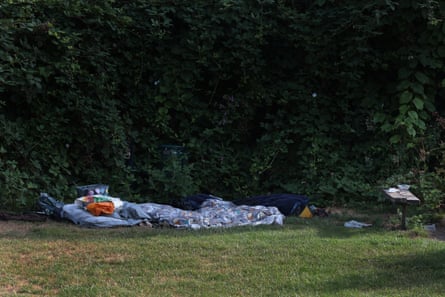
Orgo-Life the new way to the future Advertising by AdpathwayIt is close to midnight as two outreach workers from Spear, a homelessness charity in south London, shine their torches around bushes on the edge of a park in Twickenham.
Suddenly they alight on an array of sleeping bags, airbeds, toilet rolls and plastic bags stuffed with belongings – a rough sleeping encampment that has popped up in the last two days.
“We are seeing numbers going up which is really not what we want,” said Peter Bancroft, the operations manager at the charity. “And it is everyone from individuals with complex mental health and substance use issues, to people who have either had a relationship breakdown or lost their job and fallen behind with their rental payments.”
In a bold first pledge in his first speech as prime minister, Andy Burnham promised to eradicate rough sleeping in England, allocating an extra £340m of funding.
The move was welcomed by homelessness charities, but with some scepticism: Boris Johnson said he would end rough sleeping when he was prime minister, and Keir Starmer vowed to halve long-term rough sleeping during his time in office.
Yet rough sleeping numbers have risen to 4,793, the highest on record.
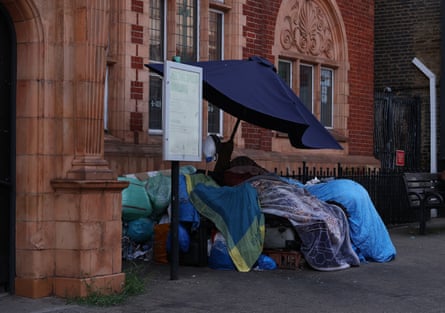
On their shift, Spear outreach workers are following up nine referrals for new rough sleepers who have been spotted throughout Wandsworth and Richmond in the past 48 hours, as well as checking on the people they already know and speaking to others they spot on the way.
Their journey takes them into graveyards, parks, front gardens, shop doorways and car parks, where people have been spotted sleeping in tents, in cars and on the ground. Some people are happy to chat to the workers – they accept water, the offer of a mobile phone and a housing assessment – but others turn down all offers of help.
Two people with drug addiction issues sleeping in a haphazard tent in the corner of a graveyard had emergency council accommodation until two weeks ago, but they didn’t use it and it was revoked.
Bancroft said: “I would love to be able to say homelessness services can deal with this, but I’ve been playing the game a long time now and I know the best results have been in partnership with other services.
“You’ve got to get drug and alcohol services, mental health services, social services, all onboard, everybody working collaboratively to wrap around the person or it just falls apart. Ultimately, my dream is to be out of a job because that would mean we’ve solved it, but it’s not easy.”
The details on Burnham’s rough sleeping plans are still unclear but it is likely he will build on the success of his A Bed Every Night scheme in Manchester, which departed from the norm by allowing all rough sleepers to access support – even those without local connections or recourse to public funds.
It also provided individuals with case workers to deal with multiple issues, not just housing, and it ran alongside a Housing First pilot scheme targeted at the most complex rough sleeping cases, which guided more than 300 people into long-term tenancies.
There is a growing consensus that funnelling lots of vulnerable rough sleepers, many with complex needs, illnesses and addictions, into communal living spaces such as hostels and houses in multiple occupation (HMOs) often pushes people back into homelessness.
Social housing is still being built at a painfully slow rate in England – Burnham has pledged the “biggest council housebuilding programme since the postwar period”, but his housing minister, Angela Rayner, has since acknowledged the country is still very far off this building pace.
Francesca Albanese, the executive director of policy and social change at Crisis, said: “For a long time in England we’ve just been maintaining the status quo, so putting lots of money into hostels, emergency and temporary accommodation – managing homelessness not ending it.
“What we need is to get people off the streets into permanent homes, not into temporary accommodation. Housing First is the most evidence-led intervention we know that works to end rough sleeping so we need to see that rolled out nationally. We know about Andy’s track record and there’s real optimism this can be done.”
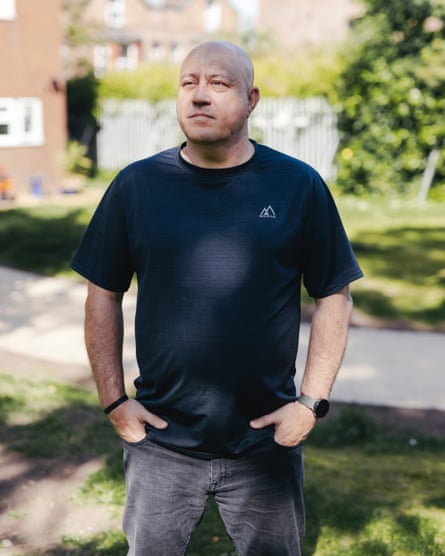
Ray, 53, spent four years drifting between sofa surfing, street homelessness and temporary accommodation that was “barely nicer than a prison cell” in Liverpool after experiencing sudden sight loss. It was only when he was given support from Crisis and finally offered a social home that he was able to turn his life around.
“The biggest thing for me is the government should be opening front doors again for people to come into and not putting all the pressure on charities,” he said. “I think Andy Burnham brings positivity to this and a different outlook. Housing is a right and shouldn’t be a fight. But this is not about one individual, it’s about a country that’s been in decline for generations.”

As well as the wider cost of living crisis, there are a range of policies thought to be driving up rough sleeping. Local housing allowance rates have been frozen which has increased the gap between what benefits cover and what landlords are charging, pushing more people into rent arrears.
Charities also said an increasing number of people on the streets are people who have left prison, or asylum seekers who have been granted refugee status and moved out of Home Office accommodation.
Any attempt to eradicate rough sleeping must deal with all these issues, experts said, not forgetting that a lot of rough sleepers – especially women – are not represented in the national statistics.
Lucy Campbell of the Single Homeless Project said: “If Andy Burnham is serious about ending rough sleeping, he needs to be the first political leader who’s not going to shy away from saying, actually, the figures are much higher than we think they are.
“And we cannot expect generic homelessness initiatives to work the same for men as they do for women and the LGBTQ community.”

















 English (US) ·
  French (CA) ·
  French (FR) ·