

.png) 15 hours ago
1
15 hours ago
1
PROTECT YOURSELF with Orgo-Life® QUANTUM TECHNOLOGY
Orgo-Life the new way to the future Advertising by Adpathway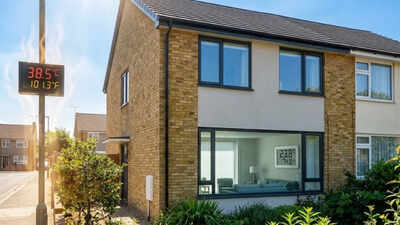
London is built on clay, which acts like a sponge (Representative image)
Cracks appearing across walls, doors suddenly refusing to close and windows becoming difficult to open are emerging as a new concern for homeowners in London after an unusually hot and dry summer.
The problem is linked to subsidence, as heat and prolonged dry conditions cause the clay-rich soil beneath homes to shrink and shift.London and parts of southeast England are particularly vulnerable because much of the region is built on clay. When the soil is wet, clay absorbs water and expands. During hot, dry periods, it loses moisture and contracts. If this movement happens unevenly beneath a building, its foundations can shift, causing cracks and other structural problems.The process is known as “shrink-swell”. It becomes particularly significant when the ground beneath different parts of a property moves at different rates.“Subsidence is one of the most damaging geohazards in the UK today,” a spokesperson for the British Geological Survey said, as quoted by CNN.
Making the problem worse
High temperatures are not the only factor. Trees and other vegetation can also contribute to ground movement. During dry conditions, their roots extend deeper into the soil in search of water, drawing moisture from the ground around nearby properties.
This can further dry out the clay and cause it to contract.Older homes can be more exposed because they often have shallower foundations. More than half of London's homes were built before 1945, making the city's ageing housing stock an important factor in the risk.The problem is also spreading beyond London and southeast England.“When I started in the business 40 years ago, it was mostly a London and southeast England issue.
But with climate change it is now affecting many other parts of the UK as well,” said subsidence expert Bob Gibson, director of Building & Structural Consultants.Every hot, dry summer can trigger a surge in subsidence claims. In 2025, the UK insurance industry paid out a record $415 million in subsidence-related claims, up 10% from the previous year, according to the Association of British Insurers.The pressure has continued this year. Insurers paid more than $97 million in subsidence-related claims in the second quarter of 2026, while the average claim rose to a record $27,000.“Following the extremely hot and dry weather we saw over July and August this year, it’s likely we’ll see more subsidence claims over the coming months,” said Louise Clark, general insurance policy manager at the ABI.
What does subsidence mean for homeowners?
Subsidence does not necessarily mean a house is about to collapse. But it can cause serious and expensive damage, including cracks in walls, distorted door and window frames and problems with foundations.The extent of the damage depends on both the underlying ground conditions and how vulnerable the building is.“There are two ingredients to consider in subsidence risk,” said Brunella Balzano, senior lecturer in structural design at Cardiff University. “The vulnerability of the building and the hazard itself.”Homeowners may have limited options for addressing the underlying ground movement. Measures can include removing trees or vegetation close to the property, installing barriers to prevent roots from reaching the foundations and, in more severe cases, underpinning the building by strengthening or extending its foundations.But the growing risk is also creating a problem for the property insurance market.“I think it’s possible … that in the near future, subsidence might not be insured anymore,” Balzano said.Homeowners in high-risk areas are already reporting difficulties obtaining cover. Gibson said insurers were “jacking-up premiums hugely, or not inviting renewal of subsidence cover”.That creates another property-market concern: serious subsidence can reduce a home's value, make it harder to sell and leave owners facing substantial repair costs.London's particular vulnerability comes from the type of clay beneath much of the city. Some of these soils contain expansive minerals that respond strongly to changes in moisture.That means a combination of prolonged heat, drought and vegetation can produce ground movement beneath buildings.The risk is expected to increase as temperatures rise. British Geological Survey data indicates that more than 26% of properties in London could be affected by subsidence by 2070 if global warming continues at roughly its current pace.For homeowners, the warning signs can therefore be more than cosmetic. New or widening cracks, sticking doors and distorted windows can indicate movement in the building and may warrant a professional assessment.Subsidence is generally a gradual process rather than an immediate threat to life. But as extreme heat and drought become more frequent, ground movement is becoming an increasingly important consideration for Britain's housing stock, insurance costs and property values.




















 English (US) ·
  French (CA) ·
  French (FR) ·