

 2 months ago
19
2 months ago
19
PROTECT YOURSELF with Orgo-Life® QUANTUM TECHNOLOGY
Orgo-Life the new way to the future Advertising by Adpathway
Argus
•
Jul 08, 2026
Market Digest: RCL
Sector(s)
Consumer Cyclical
Summary
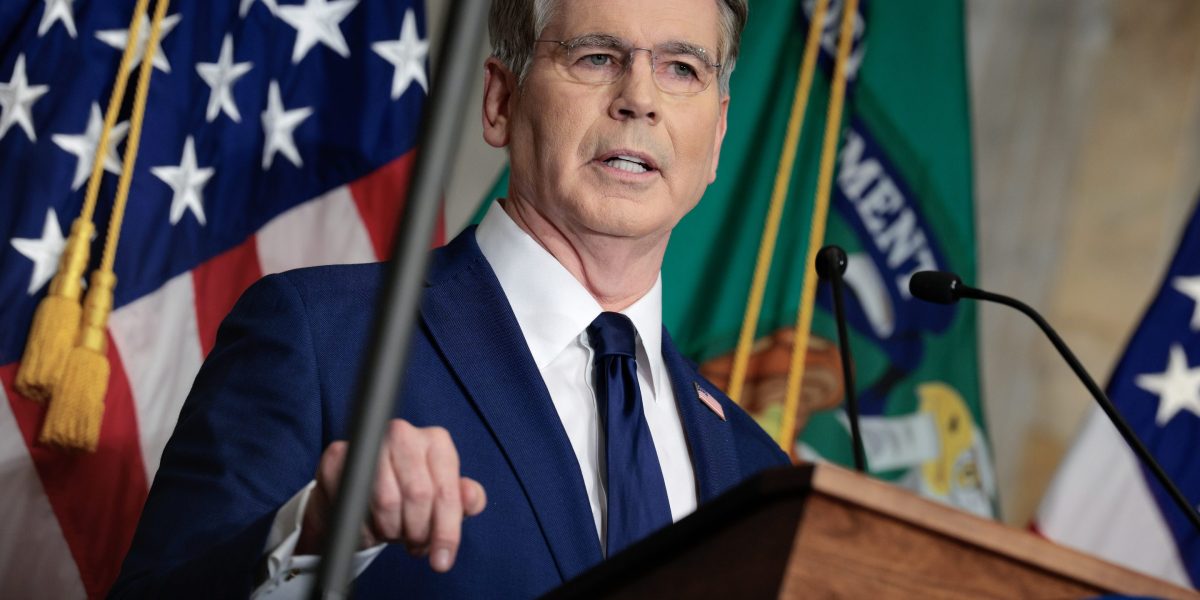
The Second Quarter of 2026: Reset to Growth As the nation observed the 250th anniversary of the first Fourth of July, partisan divides and internecine sniping took a back seat, at least for a day. And with the U.S. Men's National Soccer Team as a rallying point, the nation celebrated American exceptionalism and the ongoing belief that we can continually advance from where we began, be that in a humble or elevated manner. The stock market cooperated in 2Q26, with a 15% gain in the S&P 500, following twin 5% declines (rounded) in 4Q25 and 1Q26. Earnings growth was exceptional, job gains were solid if somewhat below expectations exiting the quarter, and gasoline prices topped out below peak expectations as consumers limited their driving. Market & Economic Environment 2Q26 The stock market in 2Q26 rallied across April and May, and then declined in June. That followed a similarly bifurcated 1Q26, in which stocks rallied across January and February, and then stumbled in March. The S&P 500 soared 10.4% in April 2026 following the April 8, 2026, truce with Iran and a strong start to 1Q26 earnings season. The index rose 5.1% in May as an exceptionally strong earnings season played out, reassuring investors about valuation concerns, and as consumer demand elasticity (buying less gasoline) prevented a further spike in energy prices. The S&P 500 fell 1.1% in June 2026, even as energy prices came down and traffic improved through the Strait of Hormuz. Investors appeared to recognize that strong earnings growth was reliant on artificial intelligence (AI) build-outs, causing them to question the sustainability and return on investment from this spending. Altogether, the S&P 500 rose 14.9% in 2Q26, following consecutive 4.6% declines in 1Q26 and 4Q25. The index in 2Q26 delivered its best second quarter since 2020. Meanwhile, the Nasdaq Composite Index rose about 26% in 2Q26 even with a late-quarter retracement, while the blue-chip Dow Jones Industrial Average (DJIA) advanced about 15% in the second quarter. The DJIA had its best first half in five years. The memorandum of understanding signed between the U.S. and Iran appears to represent the best chance yet to end the war. But inflation reaccelerated across the second quarter, partly due to Iran war oil shocks, but also due to tariffs and lingering supply chain inefficiencies. After multiple years of strength, the U.S. employment economy showed signs of slowing in the second half of 2025. Employment growth was better than expected across the first half of 2026 but has been erratic and challenging to predict. June 2026 nonfarm payrolls missed expectations, with a 57,000 gain, below the consensus estimate of 110,000. Given downward revisions to the prior two months, nonfarm payrolls averaged a monthly gain of 110,000 for the June-April period, versus 188,000 for May-March. The unemployment rate was 4.2% in June after three consecutive 4.3% readings. Average hourly earnings for June grew 3.5% annually. For the past few years, annual wage growth stayed ahead of rising prices, but wage growth may now be running behind inflation. Another bulwark of the bull market has been corporate earnings growth. First-quarter 2026 annual earnings growth of 29%-30% was the highest since 4Q21, which had an easy comparison against the COVID-19 shutdown quarter of 4Q20. About 85% of companies reported results that were above consensus expectations, meaningfully higher than the long-term range of 75%-80%. Companies exceeded calendar 1Q26 EPS expectations in midteen percentages, compared to a historical beat against expectations in the 5%-7% range. Two factors consistently keeping earnings moving forward are revenue growth and margin expansion. From a mid-single-digit rate in recent years, annual revenue growth for 1Q26 was about 11%. Even amid war-related energy price shocks, companies have been able to expand margins as they incorporate lessons learned in other tough times (COVID-19, the supply chain crisis, inflation at 40-year highs, tariffs, etc.) and as they begin to incorporate AI-based efficiencies. The final report of 1Q26 gross domestic product (GDP) indicated annualized growth of 2.1%, accelerating from 0.5% growth in 4Q25 that was impacted by the government shutdown. In broad strokes, the 1Q26 GDP report shows a commercial and industrial economy that appears to be benefiting from aggressive investment in AI. The consumer economy is struggling, with households making hard choices on spending amid existing and new inflation. First-quarter 2026 Personal Consumption Expenditures (PCE) increased 0.5%, down from 1.9% in 4Q25, with both durable goods and nongoods spending rising 0.5%. Services, typically the biggest spending category within GDP, rose 0.5% in 1Q26 (down from 2.7% in 4Q25) and contributed just 0.26 percentage point to GDP growth. Nonresidential fixed investment, the proxy for corporate capital spending, rose by 10.6% in 1Q26, up meaningfully from 2.4% growth in 4Q25. The AI boom drove 15.8% growth in equipment spending and 13.8% growth in intellectual property products. Nonresidential fixed investment contributed 1.42 percentage points to total 1Q26 GDP. PCE and nonresidential fixed investment contributed a combined 1.79 percentage points to 1Q26 GDP growth. The purchasing managers' reports from the Institute for Supply Management showed the industrial and services economies clearly in expansion territory. The Manufacturing Purchasing Managers' Index (PMI) was at 53.3%, and the Services PMI was at 55.4% in June, both above the 50 demarcation line between expansion and contraction. The Conference Board's Consumer Confidence Index edged up to 91.2 in June from 90.6 in April. The Index of Consumer Sentiment from the University of Michigan recovered to 49.5% in June from 44.8% in May but was down from 60.7% a year earlier as war-related inflation drove gas prices higher and consumers fretted about jobs availability. Kevin Warsh became chairman of the Federal Reserve (Fed) in May 2026. The new Fed chair helms a board of governors more inclined to raise than reduce the fed funds rate. The PCE Price Index within 1Q26 GDP rose 4.6%, up from 2.9% in 4Q25. Excluding energy and food, Core PCE (the Fed's preferred inflation gauge) rose 4.4% in 1Q26. In the Personal Income & Outlays report for May, the annual change of 3.4% in the Core PCE Price Index was the highest in three years. The May
Upgrade to begin using premium research reports and get so much more.
Exclusive reports, detailed company profiles, and best-in-class trade insights to take your portfolio to the next level
Related Reports
Daily – Vickers Top Insider Picks for 07/08/2026
Jul 08, 2026
•
VITL, CUEN, FISV, STRR, SPG, VIRC, ACCS, FRST, GRNT, MTDR, NCLH, BETR, BCDA, NTHI, ZOMDF, EFOR, MSIF, AVBC, OPAL, PSNY, NEWT, CSPI, HDSN, AWRE, GLND
Analyst Report: American Airlines Group Inc.
Analyst Report: Norwegian Cruise Line Holdings Ltd.
Market Update: LUV
Analyst Report: Southwest Airlines Co
View more related reports




















 English (US) ·
  French (CA) ·
  French (FR) ·