

 10 hours ago
6
10 hours ago
6
PROTECT YOURSELF with Orgo-Life® QUANTUM TECHNOLOGY
Orgo-Life the new way to the future Advertising by Adpathway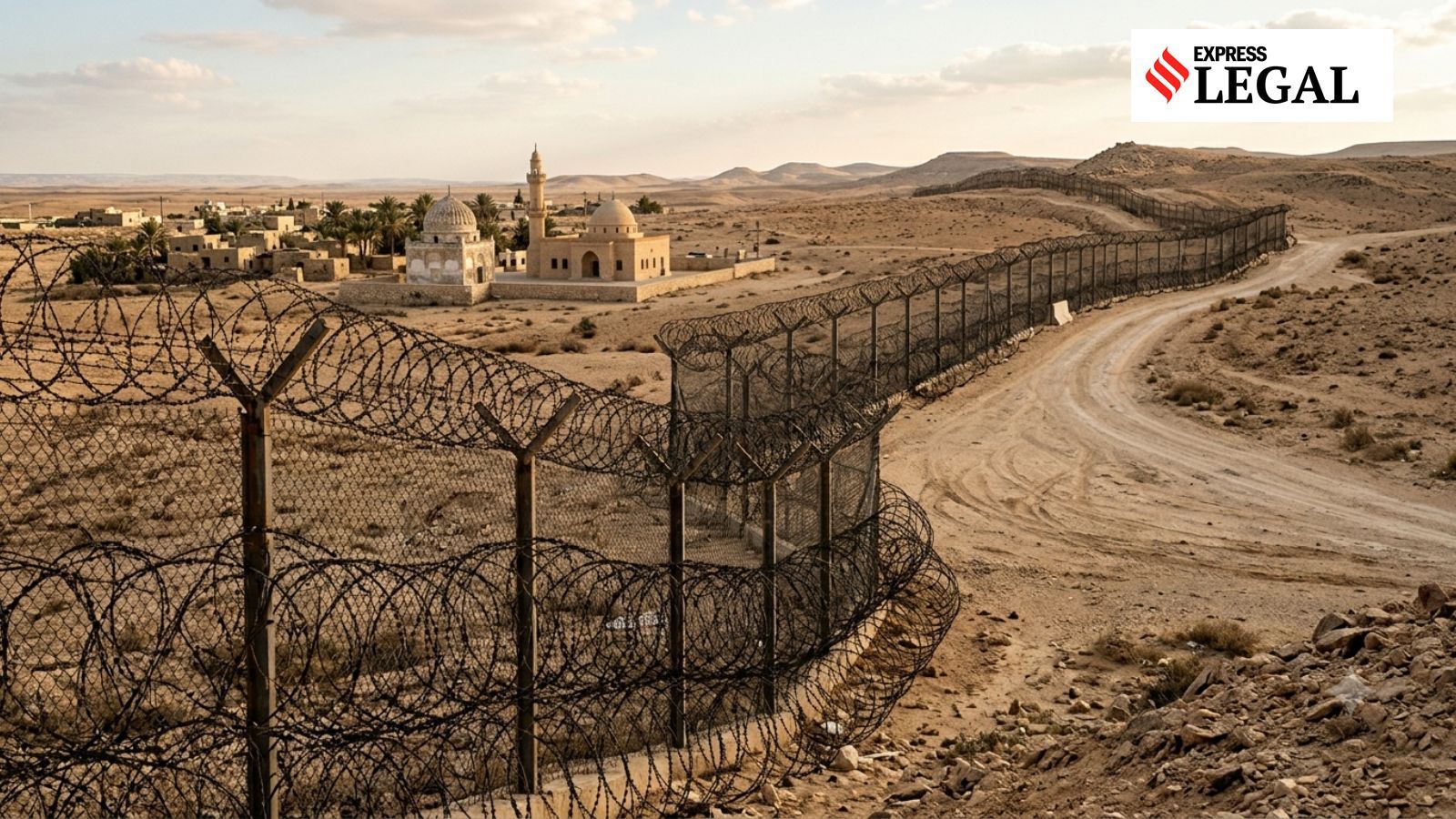 The court said that policy decisions concerning the border area were based on intelligence inputs, documentary evidence, and past incidents involving cross-border threats and smuggling. (Image generated using AI)
Refusing to stall eviction proceedings against religious institutions near the Indo-Pak border within 50 kilometers, the Rajasthan High Court has held that national security outweighs speculative fears of demolition and parties must first approach statutory authorities.
Justice Sameer Jain was hearing a batch of writ petitions filed by several mosques, madrasas, dargahs and individuals from Jaisalmer, Barmer and other border districts, challenging notices issued under the Rajasthan Colonization Act, 1954 and the Rajasthan Land Revenue Act, 1956 concerning properties situated within approximately 50 kilometres of the Indo-Pak border.
“In matters involving national security, strict adherence to the traditional rigours of natural justice is not always warranted, and a pragmatic, situation-responsive approach is permissible, provided that there exists material justifying such action,” the court said on July 13.
Interestingly, the court penned a few lines of poetry in Hindi and added, “..Court holds that in matters involving national security, strict adherence to the traditional rigours of natural justice is not always warranted, and a pragmatic, situation- responsive approach is permissible, provided that there exists material justifying such action.”
In the present case, the court noted that “sufficient procedural compliance” was achieved without any prejudice to the petitioners, who had abstained from participation. “Accordingly, the writ petitions are held to be not maintainable and are liable to be dismissed,” it held.
 Justice Sameer Jain said that issues involving the international border require greater judicial restraint. (Image enhanced using AI)
What petitions challenged
The case arose after authorities issued notices to several religious structures and occupants in the sensitive border belt, alleging unauthorized occupation of government land, illegal constructions and absence of mandatory permissions. The petitioners approached the high court claiming the notices were part of a larger exercise to remove structures following heightened security measures near the international border and expressed apprehension that demolition would follow.
The lead petition was filed by the Peer Mohammad Shah Jilani Dargah in Jaisalmer, while connected petitions involved numerous madrasas, mosques, dargahs and individuals across Jaisalmer and Barmer districts.
Story continues below this ad
The petitioners argued that several of these institutions had existed for decades, attracted devotees from different communities and conducted religious events with permissions granted by district authorities. They claimed the authorities had acted arbitrarily and with a predetermined intention to demolish the structures without following due process.
The state opposed the petitions, arguing that the structures were situated in an extremely sensitive border zone and that many had allegedly been established without statutory permissions on government land.
It relied upon intelligence inputs, documentary material and national security considerations to justify the issuance of notices. The government also maintained that the petitioners had adequate statutory remedies under the Rajasthan land laws.
National security can’t be ignored
The judgment stressed that issues involving the international border require greater judicial restraint.
Story continues below this ad
The court accepted the state’s submission that policy decisions concerning the border belt were based on intelligence inputs, documentary evidence and past incidents involving cross-border threats and smuggling.
It observed that authorities had nevertheless issued show-cause notices and provided opportunities of hearing before taking any final action.
Relying on Supreme Court precedents, Justice Jain held that high courts should ordinarily not entertain writ petitions against mere show-cause notices, especially where disputed questions of fact exist, and statutory remedies remain available.
Committee for border matters
Before dismissing the petitions, the high court directed that, considering the element of national security, a committee comprising the district collector, superintendent of police and a representative of the Border Security Force (BSF) should examine issues arising in such sensitive border cases.
Story continues below this ad
Dismissing the entire batch of petitions, the court held that the petitioners must first avail themselves of the remedies provided under the Rajasthan Colonization Act and the Rajasthan Land Revenue Act before invoking the extraordinary jurisdiction of the high court.













 English (US) ·
  French (CA) ·
  French (FR) ·