

PROTECT YOURSELF with Orgo-Life® QUANTUM TECHNOLOGY
Orgo-Life the new way to the future Advertising by Adpathway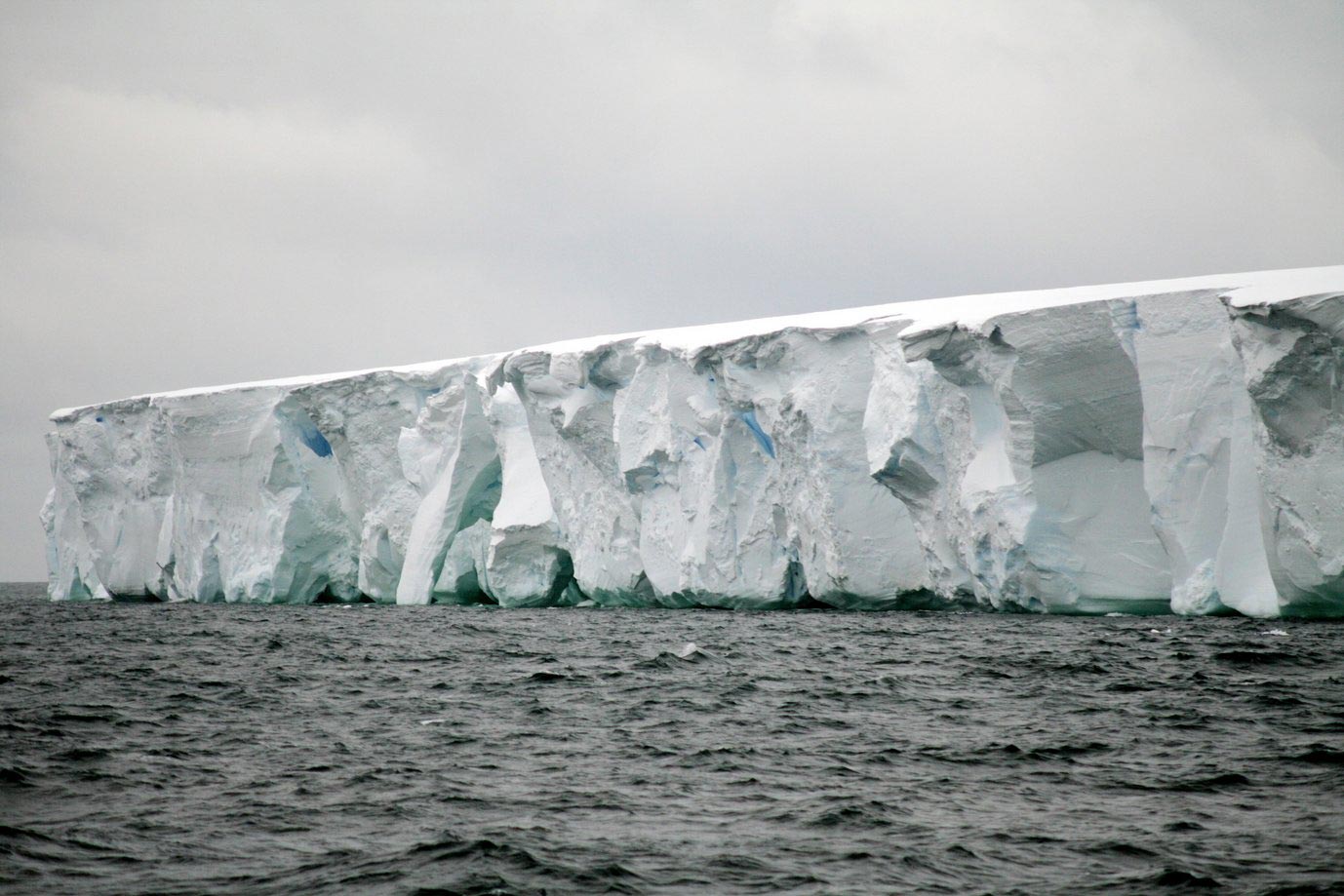 Antarctic ice sheet in the Southern Ocean. Credit: Alfredo Martínez-García, Max Planck Institute for Chemistry
A closer look at Earth’s history shows that melting ice sheets temporarily increased stratification in the Southern Ocean.
A new study finds that during the last two major deglaciations, the shifts from ice ages to warmer interglacial periods, meltwater released from the Antarctic ice sheet strengthened layering in the Southern Ocean. This enhanced stratification reduced the mixing of surface and deep waters and slowed the circulation of the global ocean.
The findings underscore the powerful influence of the Antarctic ice sheet on ocean dynamics and, in turn, on the global climate system. The research was led by François Fripiat of the Max Planck Institute for Chemistry and the Université Libre de Bruxelles, in collaboration with scientists from Princeton University and the Alfred Wegener Institute.
Over the past three million years, Earth has cycled repeatedly between extended glacial intervals and warmer interglacial phases. During glacial periods, vast ice sheets spread across much of the Northern Hemisphere, reaching into parts of Europe. Deglaciations marked the gradual retreat and loss of these massive ice sheets, reshaping ocean circulation and climate patterns worldwide.
Much attention for the North Atlantic, less for the Southern Ocean
Scientists have long examined how melting ice in the Northern Hemisphere affects the North Atlantic.
“While the impact of melting large Northern Hemisphere ice sheets on North Atlantic circulation has been studied for decades and is recognized for its major climatic consequences, the specific role of Antarctica on the Southern Ocean that surrounds it remains largely unknown,” explains François Fripiat.
In the North Atlantic, freshwater released from the Greenland ice sheet is thought to weaken the Atlantic Meridional Overturning Circulation (AMOC), a major ocean current system that helps keep Europe relatively warm.
By contrast, the Southern Ocean has received far less attention, despite its central role in the climate system. Encircling Antarctica, it links the Atlantic, Indian, and Pacific Oceans and acts as a hub for global ocean circulation. It is also the primary region where the atmosphere exchanges gases with the deep ocean, a massive carbon reservoir that holds roughly one hundred times more carbon dioxide than the atmosphere.
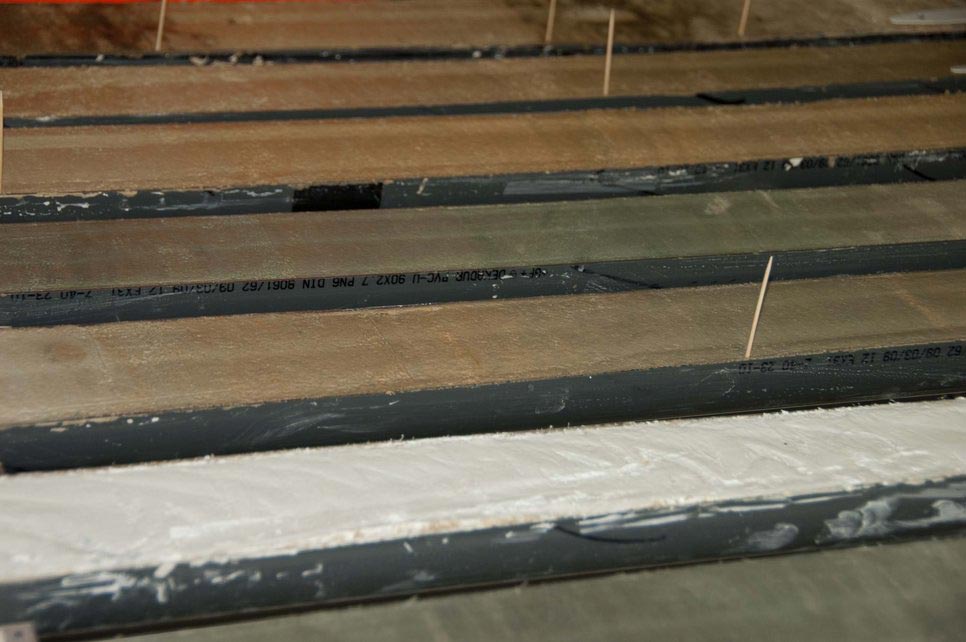 Sediment cores from the Southern Ocean. Credit: Alfredo Martínez-García, Max Planck Institute for Chemistry
These exchanges depend largely on ocean stratification, that is, the way water masses are organized into layers that are more or less well mixed. “The ocean can be compared to a huge machine that redistributes heat and carbon on a planetary scale. When this machine becomes stratified, its operation slows down, with direct consequences for the climate,” explains François Fripiat.
Diatoms as a climate archive
For the study recently published in the journal Proceedings of the National Academy of Sciences (PNAS), the researchers analyzed sediment cores taken from the Southern Ocean. Their data is based on the isotopic composition of organic matter preserved in the shells of diatoms.
These microscopic shells of marine algae are found in large numbers in the Southern Ocean sediments and serve as a natural archive of past environmental conditions.
Impact of Ice-Sheet melt on ocean mixing
The results show that during deglacial periods, ocean stratification intensified strongly near Antarctica, driven by large inputs of freshwater from ice-sheet melting. At the same time, farther north near the polar front, the combined action of these freshwater inputs and the westerly winds promoted enhanced upwelling of deep waters, maintaining a certain degree of ocean ventilation on a global scale.
“Our data show that the climate system did not completely grind to a halt. Even when the ocean near Antarctica became more stratified, other mechanisms still allowed deep waters to rise and exchange with the atmosphere, notably under the influence of winds. These exchanges may have released CO₂ into the atmosphere, contributing to the warming that ended ice ages,” explains François Fripiat.
Far from being a simple icy desert, Antarctica thus appears as one of the invisible conductors of Earth’s climate system. Understanding its mechanisms means better anticipating the planet’s future.
Reference: “Deglacial stratification of the polar Southern Ocean” by François Fripiat, Daniel M. Sigman, Xuyuan E. Ai, Cédric Dumoulin, Simone Moretti, Anja S. Studer, Bernhard Diekmann, Oliver Esper, Thomas Frederichs, Frank Lamy, Ling Liu, Frank Pattyn, Mareike Schmitt, Ralf Tiedemann, Gerald H. Haug and Alfredo Martínez-García, 2 February 2026, Proceedings of the National Academy of Sciences.
DOI: 10.1073/pnas.2502076123
Never miss a breakthrough: Join the SciTechDaily newsletter.
Follow us on Google and Google News.




















 English (US) ·
  French (CA) ·
  French (FR) ·