

 1 month ago
95
1 month ago
95
PROTECT YOURSELF with Orgo-Life® QUANTUM TECHNOLOGY
Orgo-Life the new way to the future Advertising by AdpathwayMexico · Defense
Key Facts
—Current fleet. Mexico operates only three aging Northrop F-5E/F Tiger II fighters, in service since 1982.
—Program goal. The Air Force aims to buy about 12 new jets to restore air defense and ground-attack capabilities.
—Frontrunner. The U.S.-made F-16 Block 70/72 Viper is considered the leading candidate despite its higher cost.
—Budget status. No official budget figure has been released by Mexican defense officials as of July 2026.
—Timeline. A potential deal could be finalized by late 2026, with first aircraft arriving by 2028.
Mexico fighter jets are under formal evaluation as the country’s Air Force launches its first major combat aircraft acquisition in decades, aiming to replace a tiny fleet of planes that first flew in the early 1980s.
One-stop reference
Company Intelligence
Every listed company in Latin America — financials, ownership and structure for 1,450+ companies across 26 exchanges, in one place.
Why Mexico Is Looking for New Fighter Jets
Mexico’s current frontline air combat capability rests on just three operational Northrop F-5E/F Tiger II light fighters. Those aircraft have been in service since 1982, giving the fleet more than 40 years of wear.
Air Force Commander General Román Carmona Landa said the F-5 represents Mexico’s greatest capability but relies on old technology. He confirmed the force is planning a replacement in the short and medium term.
The aging fleet has left Mexico with a symbolic rather than practical air defense posture for decades. For foreign investors and expats, this gap matters because a country’s ability to patrol its airspace is tied to broader security stability and sovereignty enforcement.
The push to modernize is not just about hardware. It reflects a wider ambition under the Defense Ministry, known as SEDENA, to bring the armed forces into the 21st century after years of focusing mostly on ground-based anti-narcotics operations.
The Contenders for a US$ Multi-Billion Decision
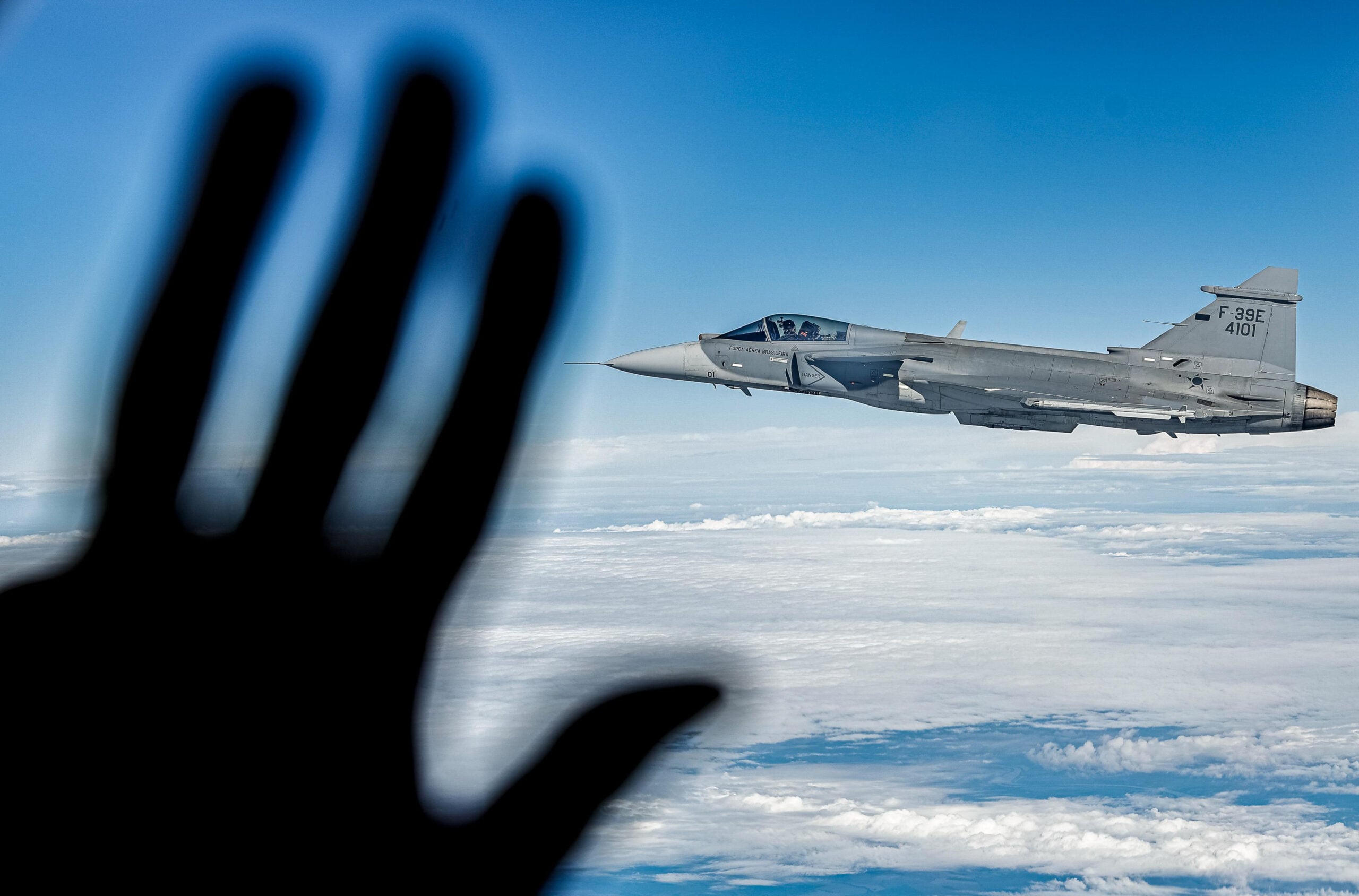
Four aircraft are under review, General Carmona Landa told defense publication Janes at the Tulum Air Show in April 2026. The U.S.-made Lockheed Martin F-16 Block 70/72 Viper is seen as the frontrunner.
Other candidates include Sweden’s Saab JAS-39 Gripen E/F, South Korea’s KAI FA-50 Fighting Eagle, and Italy’s Leonardo M-346FA Master. The FA-50 and M-346 are lighter, cheaper options compared to a frontline fighter like the F-16.
The F-16 Viper is the most advanced and combat-proven of the group, flown by dozens of air forces worldwide. The Swedish Gripen, meanwhile, is prized for lower operating costs and the ability to take off from short runways, a potentially useful feature given Mexico’s diverse terrain.
The South Korean FA-50 and Italian M-346FA are both light combat aircraft that double as advanced trainers. For a country with limited recent fast-jet experience, these could offer an easier and more affordable transition path, though they lack the raw power and radar reach of a full-size fighter.
Budget and the ‘Under Evaluation’ Status
No official budget has been announced by Mexico’s Defense Ministry (SEDENA). The F-16 is noted as the most expensive option, but officials have not ruled out purchasing used F-16s from U.S. surplus to cut costs.
The entire program remains in a market analysis phase. Swedish manufacturer Saab confirmed to Mexican newspaper El Universal that no official offer is in progress and no formal negotiation has been announced.
This cautious approach is typical for large Mexican defense procurements, which often move slowly and with limited public disclosure. For international defense contractors, the lack of a formal tender means the competition is still wide open, though political and operational ties to the United States give American manufacturers a historical advantage.
The option of buying used F-16s, specifically older Block 40/50 models from U.S. stocks, could significantly lower the price tag. Such a move would mirror what other Latin American air forces have done when budgets are tight but the need for proven capability is urgent.
What Comes Next for the Air Force
If negotiations advance, a deal could be finalized by late 2026. The target is to have the first new aircraft delivered by 2028, equipping the 401st Fighter Squadron at Santa Lucía Air Base near Mexico City.
The push is part of a broader defense modernization led by SEDENA. However, no specific restructuring of Mexico’s Navy or naval aviation linked to this fighter purchase has been confirmed in current official statements.
Santa Lucía Air Base, also the site of Mexico City’s newer international airport, would become the nerve center of the revived fighter force. For aviation watchers and defense analysts, the 2028 delivery target is ambitious but feasible if a contract is signed within the next 18 months.
The program’s progress will be a key indicator of how Mexico balances its security budget between traditional military hardware and the dominant mission of internal law enforcement. It also signals to allies and neighbors that Mexico intends to rejoin the club of Latin American nations with a modern air policing capability.
What It Means for Expats, Investors, and Regional Stability
For the foreign community living in or doing business with Mexico, a modernized Air Force is a double-edged signal. On one hand, it suggests a government investing in long-term institutional strength and territorial integrity, which can underpin a stable investment climate.
On the other hand, any major military spending in Latin America raises questions about shifting budget priorities. Observers will watch closely to see if the fighter program draws funds away from other areas, though no such trade-off has been indicated by officials.
Regionally, Mexico has long maintained a deliberately low-profile air force, avoiding the kind of arms-race dynamics seen elsewhere. A purchase of 12 F-16s would not upset the regional military balance, but it would mark a symbolic departure from decades of minimal air combat investment.
For U.S. relations, a sale of new or used F-16s would deepen the already close defense cooperation between the two neighbors. It would also mean increased training exchanges, maintenance contracts, and long-term industrial ties that American aerospace companies are keen to secure.
The Road to a Final Decision
The market analysis phase is expected to continue through the second half of 2026. During this time, the Mexican Air Force will assess not just the sticker price of each jet, but the full lifecycle costs including training, spare parts, and weapons packages.
Political factors will also play a role. A purchase from a U.S. company would likely face smoother approval in Washington’s export control system, while European or Korean options would require building newer bureaucratic bridges.
Ultimately, the decision will test Mexico’s willingness to spend significantly on a capability it has done without for decades. For now, the only certainty is that the three aging F-5s cannot fly forever, and the clock is ticking on a replacement.
Frequently Asked Questions
Has Mexico already bought new fighter jets?
No As of July 2026, Mexico is only evaluating options. No purchase contract has been signed, and the process is in the market analysis phase.
Any reports suggesting a done deal are premature.
Which fighter jet is Mexico most likely to buy?
The Lockheed Martin F-16 Block 70/72 Viper is considered the frontrunner, according to defense sources. However, cheaper alternatives like the FA-50 and used F-16s are also being studied, and no formal offer has been requested from any manufacturer yet.
Why does Mexico need new fighter jets now?
Mexico’s current fleet of three F-5 fighters is over 40 years old and technologically obsolete. The Air Force wants to restore modern air defense, reconnaissance, and ground-attack capabilities to meet current security challenges.


















![New Japanese convenience store rice balls taste like instant noodles [Taste test]](https://soranews24.com/wp-content/uploads/sites/3/2026/09/0_c8e809.jpg?w=1200&h=630&crop=1)




 English (US) ·
  French (CA) ·
  French (FR) ·