


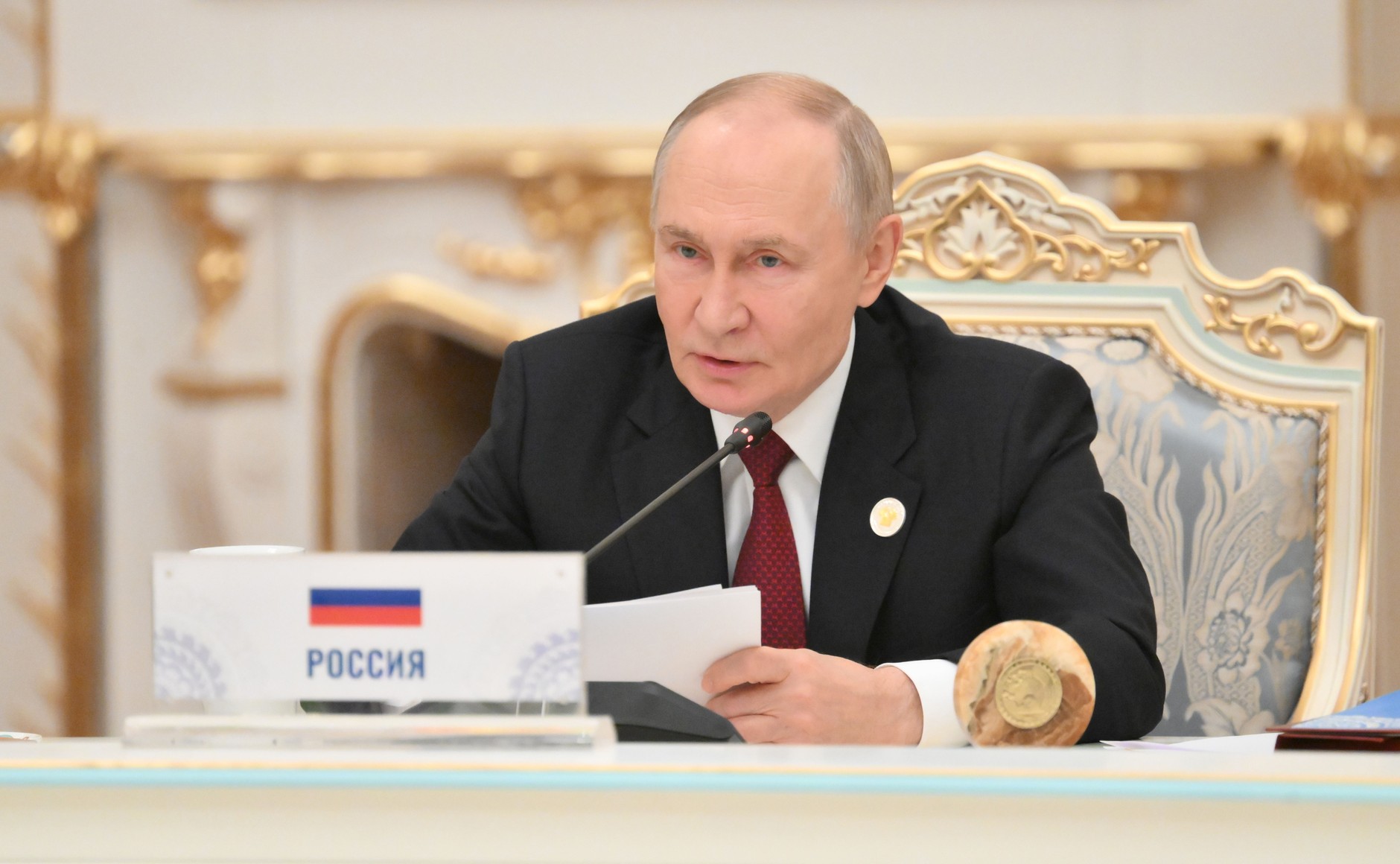
Vladimir Putin is spending his nights holed up in the Kremlin out of fear for his safety, according to reports.
The 73-year-old Russian president has blocked access to mobile internet across Moscow for nearly two weeks amid concerns that his vast state surveillance apparatus - including CCTV systems in the capital - may have been compromised.
"According to sources, Putin himself has been spending much more time in the Kremlin - including overnight stays," reported the Russian Telegram channel VChK-OGPU, which has links to the security services and the Rucriminal website.
Putin has also restricted the use of Telegram on Russia's frontline in Ukraine, despite the messaging app being a key communication tool for his troops. The move has sparked anger among soldiers, who had already lost access to Starlink satellite internet after Elon Musk disconnected the service for Russian forces, while it remained available to the Ukrainian military.
Image:
AFP via Getty Images)Ensure our latest headlines always appear at the top of your Google Search by making us a Preferred Source. Click here to activate or add us as your Preferred Source in your Google search settings.
In recent days, Putin has held secret meetings in his Kremlin hideout, which are not publicly reported to Russians, according to VChK-OGPU.
It comes after Israeli Defense Forces spokeswoman Anna Ukolova told Russian RBC radio that any country taking a hostile stance towards Israel would face consequences.
She said: "I cannot comment or discuss all the capabilities we possess, otherwise they would, of course, cease to be our capabilities. But I think that over the last, at least two-and-a-half years, while the war has been ongoing - a war that began with Hamas’s attack on Israel - the Mossad, our Air Force, and indeed the Israeli army as a whole, have already demonstrated that we do possess such capabilities.
"And I think that the mere elimination of these very important figures, the top brass of all these proxies, including Iran’s Supreme Leader Ali Khamenei, already demonstrates that our capabilities are quite substantial."
Ukolova added: "None of those who seek to harm us will be left unscathed. Again, the question here is who wishes us ill. I hope that Moscow does not wish Israel ill at the moment. I would like to believe that."
Image:
Anadolu via Getty Images)Kremlin ideologist Alexander Dugin hit back at her remarks, saying: "She said that Israel controls all web cameras in Russia and could easily hit whoever it wants - including Putin."
Images this week have shown heightened security at the Kremlin amid concerns that Putin's extensive electronic surveillance system may have vulnerabilities that could allow his movements to be tracked, raising fears of an assassination attempt.
Armed Federal Security Service officers, along with vehicles equipped with electronic warfare systems designed to suppress drones, were seen around the Kremlin. Officers were also stationed on Lenin's Mausoleum on Red Square, according to VChK-OGPU.
The mobile internet shutdowns in Moscow, which were first reported on March 5 in the outskirts of the capital, spread across the city last week. Many other regions have experienced connectivity blackouts since May.
Russian authorities have said the restrictions are part of security measures to fend off Ukrainian drone attacks, but industry experts suspect they are part of preparations to block Russians’ access to the global internet.
Kremlin spokesman Dmitry Peskov said on Wednesday that the mobile phone internet shutdown in Moscow was in "strict conformity with the law" and would last "as long as additional measures to ensure security of our citizens are necessary".
The Kremlin has blocked access to major social media sites, including Twitter, Facebook and Instagram, since Russia's full-scale invasion of Ukraine in February 2022. Last year, Russia's communications watchdog announced it was restricting messaging apps WhatsApp and Telegram. At the same time, authorities have actively promoted a "national" messenger app called MAX, which critics see as a surveillance tool.














 English (US) ·
  French (CA) ·
  French (FR) ·