

.png) 3 days ago
5
PROTECT YOURSELF with Orgo-Life® QUANTUM TECHNOLOGY
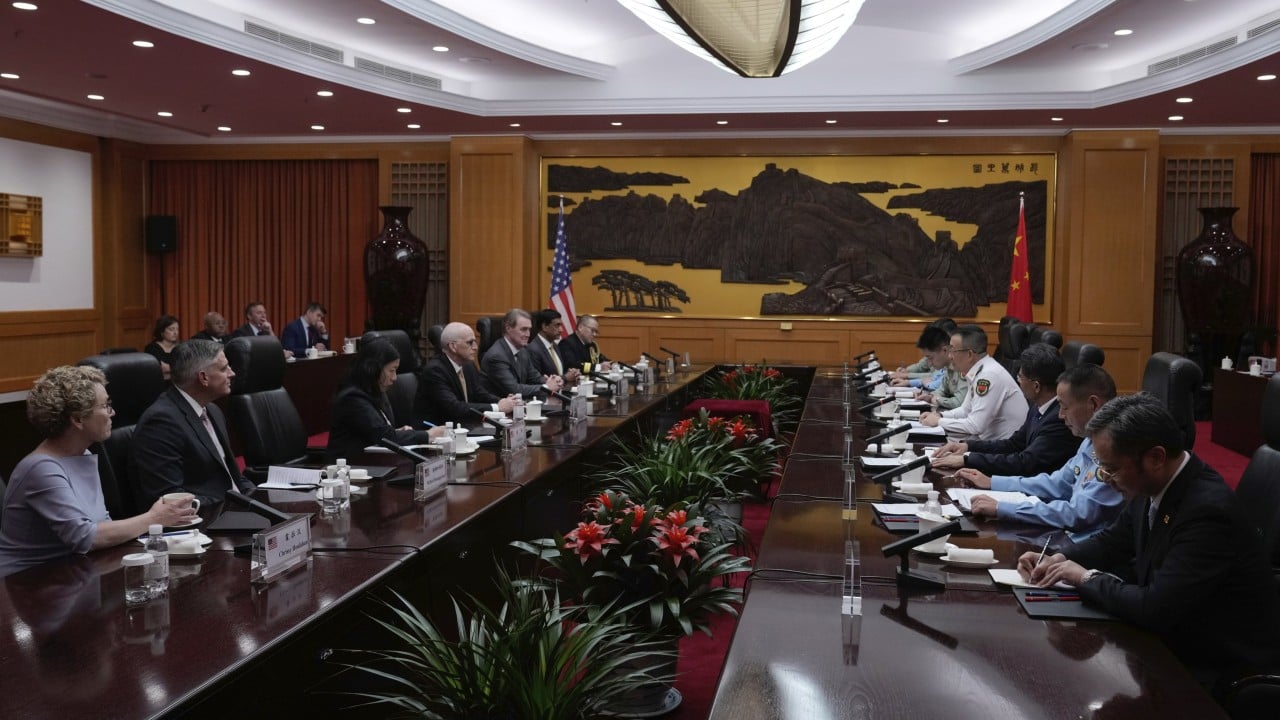
Orgo-Life the new way to the future Advertising by AdpathwayThe full text of the Mecca Joint Defence Agreement, signed by Pakistan, Saudi Arabia and Turkiye and containing a mutual defence clause, was published on Wednesday by a United Kingdom-based digital news website, Middle East Eye, which reported that the Turkish government has submitted the pact to its Parliament for ratification.
The pact, signed in August, establishes a new international defence alliance similar to Article 5 of the North Atlantic Treaty, according to which an armed attack against one member state is considered an armed attack against all member states.
The text of the agreement, obtained by the media outlet, does not identify any specific country or region as a threat, but emphasises that all participating countries will take the necessary measures to support one another in the event of an armed attack against their independence, sovereignty or territorial integrity.
This 16-article agreement commits the three countries to mutual military assistance and cooperation in intelligence, defence production, logistics and counter-terrorism.
“If the territorial integrity, sovereignty, or internationally recognised borders of any of the ‘Parties’ are threatened or endangered, the ‘Parties’ shall use all necessary means to eliminate such threat(s) or danger(s),” the first article of the treaty states.
Also Read
Article 2 of the treaty states that “an externally originating armed attack against any of the ‘Parties’ shall be considered an attack against all the ‘Parties’.”
Intelligence-sharing and defence
The three countries will deepen cooperation in defence, defence industry and security, strengthen ties between their armed forces and undertake joint activities to improve defence cooperation under Article 3. The participating countries will also hold regular consultations on international security and develop individual and joint measures to protect their national security and address threats under Article 4.
Article 5 of the treaty states that countries will strengthen cooperation against terrorism in all its forms, including joint efforts at the operational level, to safeguard regional and international security.
The agreement also refers to Article 51 of the United Nations Charter, which recognises the inherent right of individual and collective self-defence.
Article 9 provides for intelligence-sharing through mutually agreed secure channels, subject to covering information security, data protection and confidentiality.
Under Article 10, the three countries will provide logistical support to one another during peacetime, war and other emergencies, including the supply of weapons, ammunition, fuel, spare parts and other equipment and compatibility of support services.
Despite provisions for extensive intelligence and information-sharing, Article 13 restricts the disclosure of classified information and documents obtained under the agreement to any state, company or individual outside the three signatories.
Article 16 states that the agreement will remain in force indefinitely once the required ratification procedures are completed. However, a member cannot withdraw during the first 10 years after the agreement enters into force.
After that, withdrawal requires written diplomatic notification to the other signatories at least three months in advance. The agreement allows amendments through consultations and unanimous agreement among the core parties.
Written By
Martand Mishra
Martand Mishra has started his reporting career with defence coverage. He is a graduate of the Indian Institute of Mass Communication. He enjoys reading books on defence, history and biographies.




















 English (US) ·
 French (CA) ·
 French (FR) ·