

PROTECT YOURSELF with Orgo-Life® QUANTUM TECHNOLOGY
Orgo-Life the new way to the future Advertising by Adpathway
A growing display of flowers and tributes is seen at a memorial outside the Bondi Pavilion, honouring the victims of a mass shooting attack that killed 15 people at Bondi Beach in Sydney, New South Wales, Australia.
Claudio Galdames Alarcon/Anadolu via Getty Images
- Australia’s spy agency faced a wide array of threats prior to the mass shooting at Bondi Beach, said the intelligence chief.
- Australia announced a suite of gun law reforms following the shootings.
- The mass shooting has sparked national soul-searching about antisemitism.
Australia’s spy agency was “stretched” by threats on many fronts in the lead-up to an antisemitic mass shooting at Bondi in December, the nation’s intelligence chief said on Monday.
Sajid Akram and son Naveed are accused of opening fire as Jewish families thronged Bondi Beach for a Hanukkah celebration, killing 15 people in Australia’s worst mass shooting in decades.
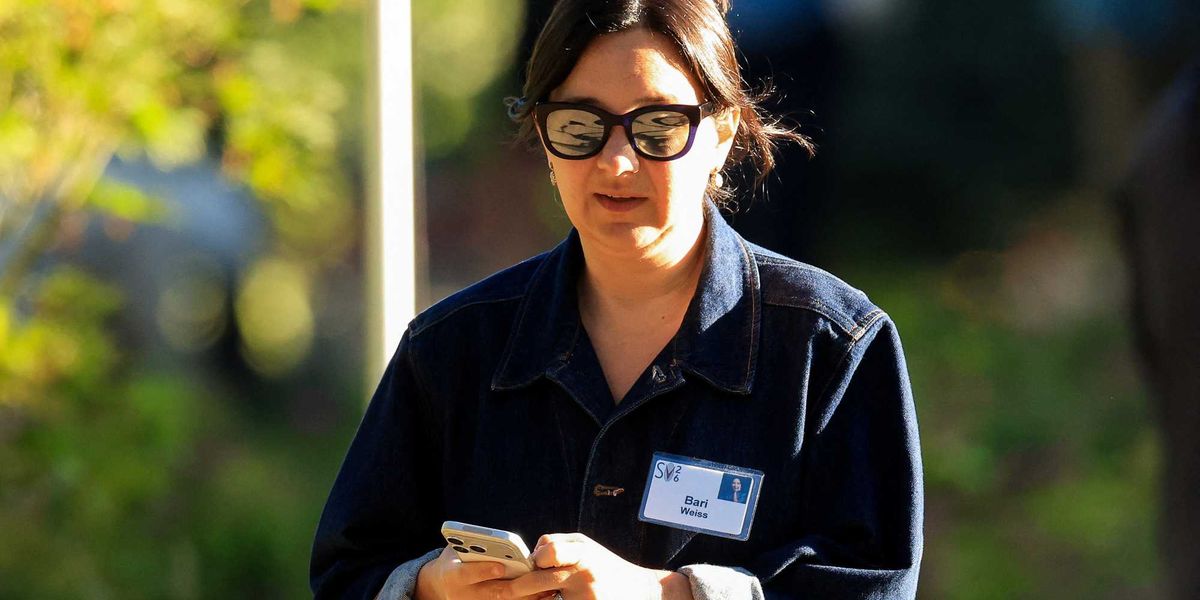
Top security official Mike Burgess fronted an inquiry into the shootings, where he was asked about Australia’s counter-terror capabilities.
Burgess said the Australian Security Intelligence Organisation had been “stretched” by a wide array of threats, ranging from religious extremism to young people radicalised online.
But he said the spy agency still had enough resources to do its job.
“We were not leaving serious matters untreated or uninvestigated,” he told the high-powered Royal Commission inquiry.
“Again, I’d stress, we are not all-seeing and all-knowing.
“In retrospect, I still think that our resourcing was sufficient for the problems we faced,” he added.
READ | Bondi Beach killing inquiry gets Australia Jews talking about experience of antisemitism
Burgess will later be grilled on confidential intelligence arrangements in a closed-door hearing.
The mass shooting has sparked national soul-searching about antisemitism and widespread anger over the failure to shield Jewish Australians from harm.

This photo shows Sajid and Naveed Akram, armed with three firearms, allegedly shooting toward the crowd gathered within Archer Park at Bondi Beach in Sydney.
Australia announced a suite of gun law reforms following the shootings, including a nationwide gun buyback scheme.
The buyback scheme has since stalled as the federal government struggles to convince Australia’s states and territories to sign on.
Royal commissions hold public hearings and can sometimes run for years.
The inquiry is led by Virginia Bell, a widely respected former High Court judge.
Reuters reported recently that witnesses from the Jewish community told the inquiry they felt increasingly unsafe amid rising hostility since the October 2023 start of the war in Gaza.
“The sharp spike in antisemitism that we’ve witnessed in Australia has been mirrored in other Western countries and seems clearly linked to events in the Middle East,” Bell said.
Bell added:
It’s important that people understand how quickly those events can prompt ugly displays of hostility towards Jewish Australians simply because they’re Jews.
“What is happening in Australia today is not a faint echo of a distant past,” said Peter Halasz, an 86-year-old Holocaust survivor who fled to Australia from Hungary.
“For those of us who lived through the 1930s and 1940s, it is something we recognise, and that recognition is frightening and cause for alarm.”
Alleged gunman Sajid Akram, 50, was shot and killed by police during the assault.
His 24-year-old son, Naveed, an Australian-born citizen who remains in prison, has been charged with terrorism and 15 murders.














 English (US) ·
  French (CA) ·
  French (FR) ·