

 3 months ago
23
3 months ago
23
PROTECT YOURSELF with Orgo-Life® QUANTUM TECHNOLOGY
Orgo-Life the new way to the future Advertising by Adpathway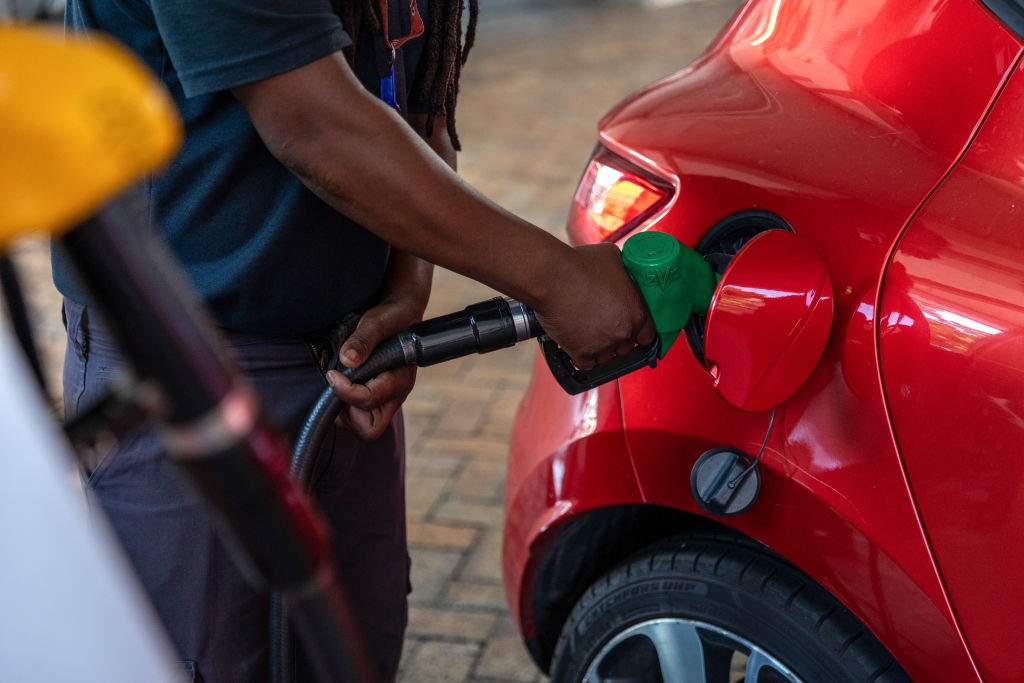
Fuel prices are due the first increase since December when prices change on 4 March.
Dwayne Senior/Bloomberg via Getty Images
- For more financial news, visit News24 Business.
The strong rand has acted as a counterweight to surging international oil prices over the past month, but motorists will still be set back somewhat at the pump in March.
Farmers, the logistics sector and wholesalers will be especially affected by the expected increase of up to 65c per litre in diesel prices. 95 octane petrol is set for an increase of about 21c per litre and 93 octane 18c. Paraffin is due a 45c a litre increase.
The increases have shot up over the past week, with the mid-month estimates still indicating a minor increase of only 2c per litre for 95 octane and up to 46c per litre for diesel.
The Central Energy Fund has released the final underrecovery numbers for the oversight period, but the Department of Petroleum and Mineral Resources has yet to announce the final increases. The department has until Tuesday at the latest to do so, before price increases go into effect just after midnight. Motorists will wake up to the increases on Wednesday, 4 March.
The rand, which closed at R15.85 – its strongest level since January — following the Budget speech on Wednesday, will tame the fuel price increases by between 17c and 19c per litre.
Apart from the impact of international oil prices and the rand-dollar exchange rate, the only unknown in March is that the differential between 95 and 93 octane is adjusted at the beginning of each quarter, determining how the fuels differ in different zones or regions. Its impact is only a few cents per litre.
South Africans must already brace themselves for an increase of 21c per litre in fuel prices in April, representing the collective increase in the general fuel levy, the carbon fuel levy and the Road Accident Fund levy.
According to Reuters, fuel prices have dropped over the past week after the United States and Iran extended nuclear talks, easing concerns about potential hostilities that could disrupt supply.
Geopolitical risk premiums of $8 to $10 a barrel have built into oil prices on fears that a conflict will disrupt Middle East supply through the Strait of Hormuz, where about 20% of global oil supply passes, according to analysts quoted by Reuters.
The United States and Iran held indirect talks in Geneva, Switzerland, on Thursday over their long-running nuclear dispute to avert a conflict after US President Donald Trump ordered a military build-up in the region, Reuters reported.
They plan to resume negotiations with technical-level discussions scheduled next week in Vienna.
In other news, the Organisation of Petroleum Exporting Countries and its allies, including Russia, are expected to vote to increase output at Sunday’s meeting, which could lead to prices easing further.
However, this week’s drop hasn’t been enough to shield the local economy from March increases – the first since December.
In January, diesel and petrol prices were cut to the lowest levels since February 2022. 95 octane petrol is sold for R20.10 in Gauteng and R19.27 at the coast, while the wholesale price for diesel with 0.05% sulphur is R19.92 in Gauteng and R17.09 at the coast.





















 English (US) ·
  French (CA) ·
  French (FR) ·