

 2 months ago
32
2 months ago
32
PROTECT YOURSELF with Orgo-Life® QUANTUM TECHNOLOGY
Orgo-Life the new way to the future Advertising by Adpathway
The closure of several domestic refineries in recent years has left SA dependent on imported finished fuels.
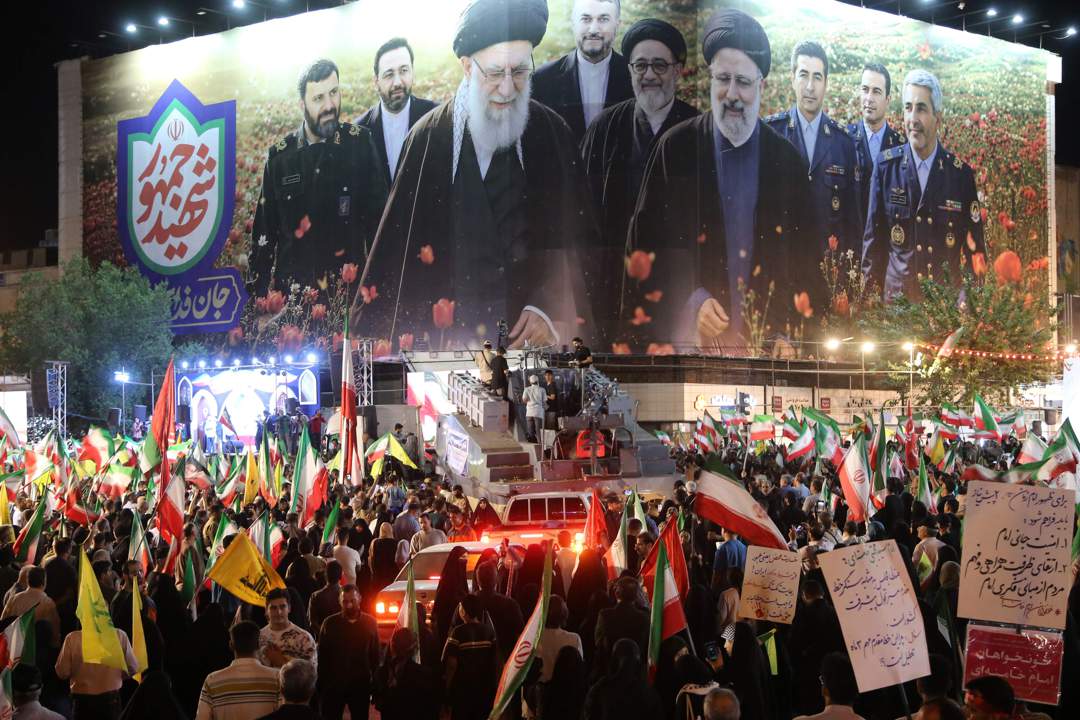
Press Office of Islamic Revolutionary Guard Corps/Handout/Anadolu via Getty Images
- Amid a global scramble for fuel, the Department of Mineral and Petroleum Resources said there is no immediate risk of fuel shortages in South Africa.
- However, it confirmed that one of SA’s two remaining refineries is currently closed for maintenance.
- Escalating conflict in the Middle East and disruptions to fuel supply could raise the prospect of shortages in SA, experts told News24.
- For more financial news, go to News24 Business.
The Department of Mineral and Petroleum Resources (DMPR) has said there is no immediate risk of fuel shortages in South Africa.
However, it confirmed that one of South Africa’s only two operational refineries is currently closed for maintenance – amid a global race for fuel supplies.
Escalating conflict in the Middle East and disruptions to fuel supply could raise the prospect of shortages in SA, experts previously told News24.
READ | Fuel rationing fears hit SA as oil crisis exposes local weak spots
The Iran war has choked the flow of oil through the key Strait of Hormuz, which usually carries a fifth of global exports. Strikes on oil facilities in the Middle East have also hit supplies.
Oil traders are now scrambling for alternative cargoes, and competition for supply is expected to intensify as Middle East oil producers struggle to get their oil out.
This has sparked fears about South Africa’s access to fuel. Many of its domestic refineries have closed in recent years, and the country is dependent on imported finished fuels that arrive largely on a just-in-time basis.
South Africa has only two oil refineries left: the Glencore-owned Astron Energy refinery in Cape Town, and the Natref refinery at Sasolburg. But the Astron refinery is currently closed due to a planned maintenance shutdown, the DMPR said in a statement on Monday evening.
Astron shut the refinery in mid-February for maintenance and safety inspections. It is only expected to be reopened at the end of April, according to a company notice.
“However, as part of standard operational planning, the company has secured sufficient fuel imports to cover supply requirements during this maintenance period,” the DMPR said.
Local refineries rely on crude oil imports sourced primarily from West Africa and increasingly from other countries across the African continent, the department added.
“Oil companies that currently import refined petroleum products from countries affected by the conflict are actively exploring alternative supply sources to ensure uninterrupted fuel availability in the domestic market.”
The DMPR said that SA still has access to Sasol’s Secunda coal-to-liquids plant, which continues to play “a critical role in domestic fuel production”.
The DMPR warned that higher petrol and diesel prices – which are largely determined by oil prices and the rand exchange rate, as oil is priced in dollar – are expected in April.
Brent oil surged almost 30% to $120 a barrel on Monday at midday but has since cooled to $85 late on Tuesday, after US president Donald Trump vowed an imminent end to the conflict.
On Tuesday, the Central Energy Fund estimated that unleaded petrol (95) would be increased by more than R3.30 a litre in the first week of April and wholesale diesel by around R5.60. There are still more than two weeks to go before prices are set.
Other governments have moved to shield their nations from the fallout, with Thailand capping diesel prices and Vietnam scrapping import duties on many imported petroleum products. Both countries have also asked civil servants to work from home to save fuel consumption.
South Korea, the world’s eighth-largest consumer of crude oil, is also considering fuel price ceilings, while Japan is mulling releasing its national oil reserves.
South Africa is in a vulnerable position, as government owns only 8 million barrels of strategic oil stocks.
Meanwhile, the country uses more than 600 000 barrels of oil-equivalent products a day. Without rationing, the strategic stocks theoretically equate to less than two weeks of supply.

















 English (US) ·
  French (CA) ·
  French (FR) ·