

 2 months ago
97
2 months ago
97
PROTECT YOURSELF with Orgo-Life® QUANTUM TECHNOLOGY
Orgo-Life the new way to the future Advertising by Adpathway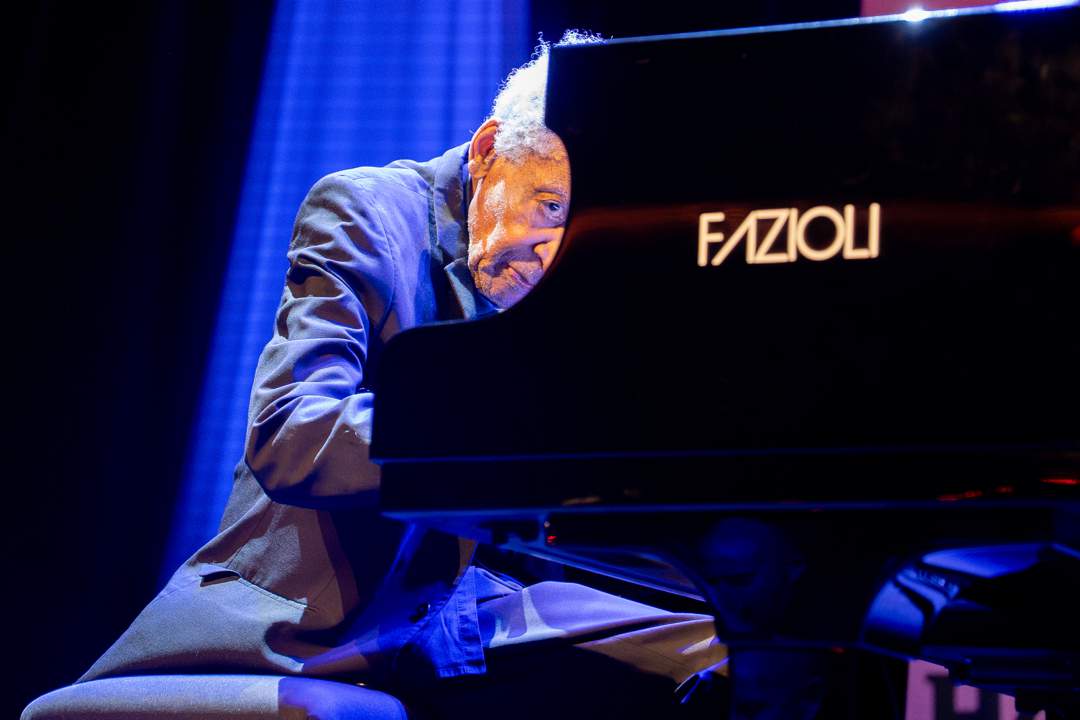
Abdullah Ibrahim performing at the Cape Town International Jazz Festival on 27 March 2026.
- Legendary South African jazz pianist and composer Abdullah Ibrahim has died aged 91 in Germany following a short illness.
- Ibrahim had a seven-decade career and was part of The Jazz Epistles, South Africa’s first black jazz group.
- President Ramaphosa paid tribute, describing him as an international icon who campaigned against apartheid through his music.
Legendary South African pianist, composer and global jazz icon Abdullah Ibrahim has died at the age of 91.
Ibrahim died peacefully surrounded by family in Germany following a short illness, his family said in a statement on Monday.
Over a seven-decade career, he rose to become one of international jazz’s most influential and celebrated figures, bringing the spirit and sound of South Africa to audiences worldwide.
Just months before his death, Ibrahim graced South African audiences one final time at the Cape Town International Jazz Festival in March, delivering a performance marked by the artistry and profound musical vision that had defined his life’s work.
His partner, Marina Umari, paid tribute: “Abdullah passed away peacefully with South Africa and its people in his heart. His love for his country never wavered, no matter where in the world he found himself.”
Born Adolph Johannes Brand, Ibrahim was part of The Jazz Epistles, a groundbreaking sextet established in the 1950s that became the first black jazz group in South Africa to record a full-length album.
I’ve been attending Abdullah Ibrahim’s concerts for the past 40 years. I was in tears tonight watching him perform in his 90s. His legs have failed him but his mind and fingers have rule over realm of their own. Thank you, Maestro. pic.twitter.com/wPsqc0DZJu
— Kanthan Pillay 🇿🇦 (@KanthanPillay) March 27, 2026The band featured icons who would shape the South African jazz scene for decades: Kippie Moeketsi on alto saxophone, Jonas Gwangwa on trombone, Hugh Masekela on trumpet, Johnny Gertze on bass and Early Mabuza or Makaya Ntshoko on drums, with Ibrahim on piano. In this band, he was known as “Dollar Brand” – a childhood nickname he earned in Cape Town for his love of collecting imported American jazz.
The group rose to fame performing at the legendary jam sessions “Jazz at the Odin” at the Odin Theatre in Sophiatown.
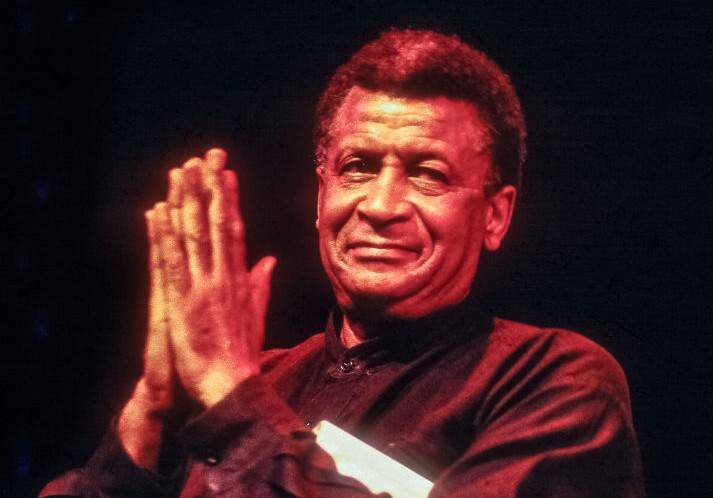
Abdullah Ibrahim (born Adolphe Brand, aka 'Dollar' Brand) takes a bow after his performance during the World Music Institute's 'South African Nights' concert at Town Hall, New York, New York on 28 March 1999.
Following the group’s separation, Brand converted to Islam, took the name Abdullah Ibrahim and moved abroad, where his career would flourish on the international stage.
Through timeless compositions and performances that blended jazz with the rich musical traditions of South Africa, Ibrahim became a cultural ambassador whose work spoke to the human spirit and the pursuit of freedom.
In an article titled “Songs of Liberation”, Sean Jacobs, associate professor of international affairs at The New School in New York City, described Ibrahim as “perhaps South Africa’s greatest musical innovator and composer of the twentieth century, not to mention one of its most successful cultural exports”.
Meanwhile, tributes are pouring in for the musician.
President Cyril Ramaphosa has expressed his profound sadness at the passing of Ibrahim, a recipient of the Order of Ikhamanga – a prestigious civilian honour awarded to South African citizens who have excelled in the fields of arts, culture, literature and music.
Today, we mourn the loss of Abdullah Ibrahim (1934-2026).
A giant of South African and global jazz, we are honoured that his final public performance took place on the Rosies Stage at CTIJF on 27 March 2026.
Rest in peace, maestro. Your music lives on. 🕊🎹 pic.twitter.com/GqeIVlefLv
In a statement, the Presidency offered condolences to Ibrahim’s children, pianist Tsakwe and hip-hop artist Jean Grae.
Their mother, Sathima Bea Benjamin, herself a renowned performer and recording artist, died in 2013.
She received the Order of Ikhamanga in 2004.
Ramaphosa remembered Ibrahim as an artist who campaigned against apartheid and drew worldwide audiences to his performances, showcasing his accomplishments as a soloist and in collaborations with established and emerging talent.
The president said Ibrahim’s music also reflected his spirituality and contemplative practice of martial arts.
In 2009, Ibrahim was awarded the Order of Ikhamanga in Silver in recognition of his excellent contribution to the arts, his success in putting South African music on the international map and his lifelong fight against racism and apartheid.
“Today our nation mourns the passing of an international icon and global citizen whose profound creations honoured the South Africa that shaped his political commitment and musical brilliance,” Ramaphosa said.
“As we commemorate the 50th anniversary of the youth uprising, the passing of Abdullah Ibrahim reminds us of the then-illegal benefit concert he organised in support of the liberation movement following the uprising, as a demonstration of his commitment to our struggle.”
READ | ‘There is only now’: SA jazz legend Abdullah Ibrahim stays in the present
“We give thanks for the many decades of his life that he devoted to his personal passion, which he shared with humanity through his recordings and his appearances in clubs and concert halls throughout the globe,” Ramaphosa said.
“He has enriched our lives with his musical gifts and his involvement in making the world a better place.
“May his soul rest in peace.”
Ibrahim will be laid to rest in the Bavarian town in Germany where he lived.
* This article has been updated to include new information.











 English (US) ·
  French (CA) ·
  French (FR) ·