

 10 hours ago
9
PROTECT YOURSELF with Orgo-Life® QUANTUM TECHNOLOGY
Orgo-Life the new way to the future Advertising by AdpathwaySince the start of his second administration, U.S. President Donald Trump has repeatedly proposed renewed talks with North Korea. Pyongyang has said that relations could improve if Washington respected its nuclear status and abandoned what it calls its “hostile policy.” But what would North Korea be willing to talk about if discussions resumed?
Pyongyang increasingly seeks talks on its security concerns, particularly U.S. military policy and the regional security environment, while treating its own possession of nuclear weapons as non-negotiable. It may even demand a halt to U.S. military exercises with its allies as a precondition for talks.
What Pyongyang Learned From Hanoi
The failure of the 2019 North Korea-Trump summit in Hanoi may have prompted Pyongyang to reassess its negotiating strategy and strengthen its commitment to retaining nuclear weapons. At the summit, North Korea sought partial relief from United Nations sanctions in exchange for dismantling its Yongbyon nuclear facilities. Washington, however, sought denuclearization measures extending beyond Yongbyon in exchange for a broader package of economic benefits. The summit ended without an agreement.
Why did North Korea not accept Washington’s “big deal”? Shortly after the summit collapsed, North Korean Foreign Minister Ri Yong Ho explained that security guarantees mattered more to Pyongyang than sanctions relief. North Korea had nevertheless proposed partial sanctions relief in return for dismantling Yongbyon because it believed Washington would find it difficult to take military measures at the time.
North Korea may have recognized the limits of what the United States could offer in terms of security guarantees. U.S. military strategy in Northeast Asia is not solely a response to the North Korean threat. It also reflects Washington’s alliance commitments to South Korea and Japan and its broader strategic competition with China. Even if North Korea gave up all its nuclear weapons, Washington might not be able to offer the security guarantees Pyongyang wants, given its regional interests and alliance commitments. From this perspective, North Korea’s attempt in Hanoi to exchange partial denuclearization for partial sanctions relief may have been a realistic approach. The failure in Hanoi appears to have convinced Pyongyang that giving up its nuclear weapons would not secure the guarantees it sought. After Hanoi, North Korea reinforced its commitment to retaining nuclear weapons through legislation and constitutional changes. In September 2022, it adopted a new law on nuclear forces policy. Kim Jong Un declared that North Korea’s status as a nuclear weapon state was irreversible and ruled out further negotiations on giving up its nuclear weapons or on denuclearization.
North Korea did not begin identifying itself as a nuclear weapon state in 2022. It had already codified that status in a 2013 law “consolidating the position of nuclear weapons state for self-defense.” Article 9 of that law, however, expressed support for international nuclear disarmament efforts. The omission of that provision from the 2022 law was therefore significant.
The 2022 law not only entrenched nuclear possession as a permanent foundation of national strategy but also called for qualitative and quantitative improvements in nuclear forces in response to external threats and changes in the international nuclear balance. In this context, a freeze on nuclear weapons production or a reduction in its nuclear arsenal could conflict with this policy if North Korea’s security environment remained unchanged.
Setting the Terms for Renewed Talks
North Korea’s recent statements on relations with Washington indicate that it expects changes in U.S. policy before talks resume, while treating its nuclear possession as non-negotiable.
In October 2025, Trump publicly expressed his desire to meet Kim Jong Un again during his trip to Asia. That didn’t eventuate, but Trump is reportedly looking at the possibility of a meeting with Kim during his next trip to Asia in November 2026.
At the Ninth Workers’ Party Congress in February 2026, Kim Jong Un stated that relations with the United States could improve if Washington respected North Korea’s status as a nuclear weapon state and abandoned its hostile policy. He thus linked improved relations to a change in Washington’s attitude toward a nuclear-armed North Korea and its policy toward Pyongyang.
In August, Trump again expressed interest in meeting Kim and ordered a reduction in South Korea-U.S. military exercises. Kim Yo Jong, Kim Jong Un’s sister and an authoritative voice for the regime, dismissed the move as insufficient. She argued that holding the exercises at all demonstrated Washington’s hostility. Kim Yo Jong’s response suggested that Pyongyang wanted the exercises halted altogether, rather than merely scaled back, before agreeing to talks. In the same statement, she also criticized South Korea’s push to acquire nuclear-powered submarines.
In September, Foreign Minister Choe Son Hui reaffirmed that North Korea’s nuclear status was irreversible. She rejected the coexistence of confrontation and dialogue in relations with North Korea and argued that a geopolitical realignment centered on a nuclear-armed North Korea was inevitable. Her statement reinforced the message that Washington could not maintain policies Pyongyang regarded as hostile and expect dialogue to follow.
North Korea has long sought security guarantees and an end to Washington’s hostile policy. The difference now is that Pyongyang treats its nuclear possession as non-negotiable and expects changes in U.S. attitudes and military policy before talks resume. A reduction in South Korea-U.S. military exercises alone appears insufficient to meet its demands. Its criticism of South Korea’s nuclear-powered submarine plans also suggests concern about potential U.S. support for such capabilities.
This departs from the Singapore agreement, which paired a commitment to denuclearization with improved relations and the establishment of a peace regime. Pyongyang now seeks U.S. policy changes as the starting point for diplomacy, rather than as part of a bargain over giving up its nuclear weapons.
North Korea’s strategy notwithstanding, its ability to change U.S. policy is not guaranteed. Despite Trump’s efforts to engage Pyongyang, the United States, South Korea, and Japan continue to reaffirm the goal of North Korea’s denuclearization, while Washington maintains its defense commitments to its allies.
Pyongyang may see no need to rush into talks. It continues to build up its nuclear forces, citing security threats, while strengthening ties with its partners.
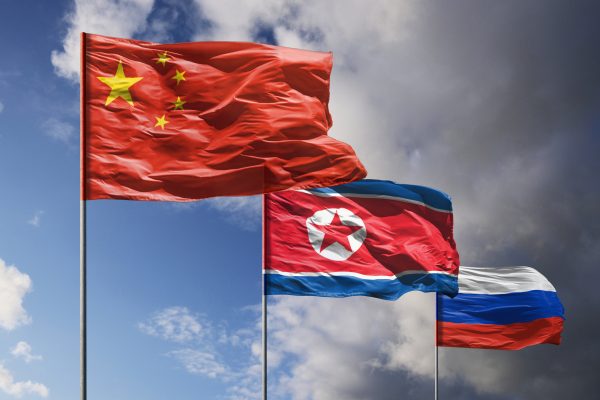
In September 2026, the International Atomic Energy Agency (IAEA) reported signs of a new uranium enrichment facility at Yongbyon and indications of expanded operations at Kangson. North Korea has also recently increased the frequency of its missile tests. Meanwhile, expanding military cooperation with Russia and improving relations with China are giving Pyongyang greater room to resist international pressure, including sanctions. Both countries oppose further sanctions on North Korea and have become quieter on its denuclearization.
North Korea may believe that time is on its side: As its nuclear capabilities grow and its diplomatic options expand, Washington may eventually have no choice but to enter talks on the basis that North Korea will retain its nuclear weapons.
How the United States Should Respond
Washington’s first task is to clarify the conditions under which North Korea is willing to negotiate and the agenda it is prepared to discuss. Some experts argue that a nuclear freeze or reductions should serve as interim goals if complete denuclearization cannot be achieved in the short term. This may be a realistic alternative for the United States, but Washington should not assume that Pyongyang will accept it as a topic for negotiation. North Korea may instead demand that negotiations focus on regional security issues or insist on changes in U.S. policy before agreeing to talks.
To clarify these issues, working-level meetings should precede any new North Korea-U.S. summit. Washington must coordinate closely with Seoul and Tokyo before negotiating measures that affect their security. If Pyongyang raises concerns about U.S. military activities on the Korean Peninsula, Washington should assess whether its demands can be addressed through reciprocal military measures.
Discussing regional security does not necessarily mean recognizing North Korea as a nuclear-weapon state or weakening allied military readiness. With South Korea’s agreement, for example, the United States could consider adjusting the scale or format of joint exercises in exchange for limits on North Korean exercises in specific areas, with arrangements for both sides to verify compliance. Once military crisis-management measures are in place and the security environment improves, Washington could argue that Pyongyang should move toward a nuclear freeze or reductions.
The United States must also challenge North Korea’s calculation that time is on its side. Maintaining existing sanctions and deterrence alone is unlikely to change Pyongyang’s strategic judgment. The United States should make clear that North Korea’s continued nuclear buildup could lead South Korea and Japan to strengthen their military capabilities and fuel calls in both countries for nuclear weapons of their own. An offer to discuss regional security should accompany that message. The aim should be to create incentives for diplomacy without triggering another arms race.
Washington should use security talks to pursue reciprocal military measures and build a path toward limits on North Korea’s nuclear capabilities. Knowing what each side is willing to offer before the next summit would improve the chances of reaching an agreement.



















 English (US) ·
 French (CA) ·
 French (FR) ·