

 1 month ago
11
1 month ago
11
PROTECT YOURSELF with Orgo-Life® QUANTUM TECHNOLOGY
Orgo-Life the new way to the future Advertising by AdpathwaySpace
The James Webb Space Telescope seems to have discovered more ancient black holes than theory had predicted, and now we have a new way to explain why

The James Webb Space Telescope has discovered plenty of little red dot galaxies
NASA, ESA, CSA, STScI, and D. Kocevski (Colby U.)/Space Telescope Science Institute Office of Public Outreach
There may have been black holes in the early universe before the first stars, and a group of theoretical physicists has proposed a new way to explain how they could have formed using the heat of the cosmic microwave background. The idea may be a better explanation for the “little red dots” identified by the James Webb Space Telescope (JWST) – distant galaxies that seem to host surprisingly large numbers of astonishingly ancient black holes.
“James Webb is discovering many more black holes than most of us theorists predicted in our most optimistic models,” says Priyamvada Natarajan at Yale University. “The universe is just littered with black holes.”
An existing idea is that primordial black holes formed in violent space-time spasms in the early universe before any stars appeared. But these violent spasms are hard to reconcile with the milder ripples that astronomers see in the cosmic microwave background (CMB), faint light left over from the primordial universe. Theorists have had to propose complicated new physical laws to make the explanation fit.
Wenzer Qin and Neal Weiner at New York University and Soubhik Kumar at Tufts University in Massachusetts realised there was another option. They began by assuming milder ripples of dark matter moved through the early universe, and argued that large black holes would be able to form inside clumps of this dark matter, with the hot CMB keeping gas and dust from collapsing into smaller ones instead.
They call these black holes “not-quite-primordial” and argue they provide an explanation for the black holes spotted via the JWST that doesn’t require drastic changes to cosmologists’ picture of the early universe.
The researchers reached out to Natarajan, a theoretical astrophysicist, to help confirm their logic.
“This is a case where you could actually have a black hole forming before the stars. And that I found really exciting,” says Natarajan.
“What’s nice about the model is that it invokes less speculative physics than traditional primordial black hole physics,” says John Regan at Maynooth University, Ireland, who wasn’t involved in the paper. “Having says that, what we need ultimately will be concrete observations. We’ll need to see some ultra-early-Universe signatures of black holes, be that from gravitational waves or from some future CMB observations, to see if black holes truly existed at the very earliest times.”
Qin and collaborators are getting ready for those observations. Their next step will be to simulate the new process and see what it implies about the spectrum of light that should be emitted from around a not-quite-primordial black hole. They can then compare these predictions more closely to data from JWST.
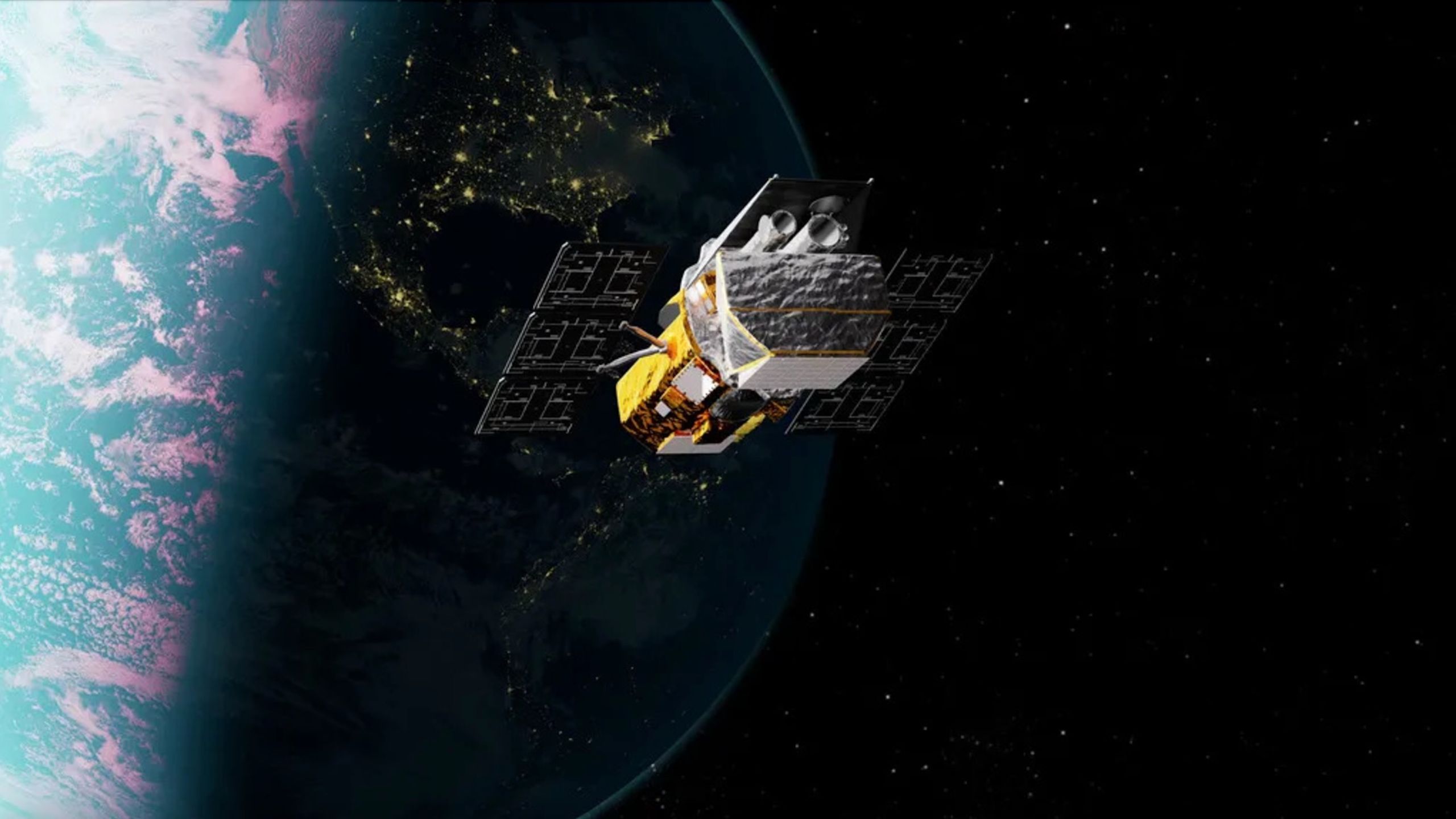
They are also looking forward to future satellite telescopes like the proposed Primordial Inflation Explorer (PIXIE), which should be able to measure the CMB spectrum well enough to find evidence for their proposal.



















 English (US) ·
  French (CA) ·
  French (FR) ·