

 1 day ago
1
PROTECT YOURSELF with Orgo-Life® QUANTUM TECHNOLOGY
Orgo-Life the new way to the future Advertising by AdpathwayIn February 2026, Japan became the first country in the world to successfully and continuously retrieve rare-earth mud, sediment rich in critical minerals, from a depth of 6,000 meters off Minamitorishima, its easternmost island, and bring it aboard a ship. For Japan – which relies on China for about 90 percent of its supply of rare earths, and which experienced a halt in exports from China in 2010 – this success sparked nationwide excitement as a major step toward breaking free from dependence on China.
As the first country to have continuously retrieved rare-earth mud from such depths, and as a member of the International Seabed Authority (ISA), Japan is in a position to influence the future of the maritime order. But there is an element of “political performance” surrounding the accomplishment.
The Asia-Pacific region has become the hottest battleground for commercial development in deep-sea mining. The competition over the deep sea is no longer just a battle for minerals. It shares a structure similar to the space race, in which nations seek to gain the upper hand in both resources and security, and plant their flag before the rules are set. Japan is no exception.
Experts argue that its rush at the island of Minamitorishima is driven less by the ore itself than by the political value of being seen to use the island – a way of reinforcing its claim of effective control over the vast waters around it.
The Special Significance of “Effective Control” Over Minamitorishima
The Japanese government continues to resist pressure from the international community to keep the brakes on commercialization of deep-sea mining at least until 2030. Shigeru Tanaka, director of the Asia-Pacific Resource Center (PARC), claims this relates to the hidden motive behind insisting on developing the sea around Minamitorishima Island, about 1,200 miles southeast of Tokyo, where rare earths were found in seabed sediment.
“A moratorium until 2030 shouldn’t really be a big deal for Japan. Researchers believe that commercialization by 2030 is impossible. Yet the reason they cannot support it is that there is political significance in continuing to show that Minamitorishima is being ‘used,’” said Tanaka.
In the past, China argued that Okinotorishima – a tiny, remote reef-islet at the southern edge of Japan’s territory – is just a rock, not an island, since no economic activity is taking place there. Under the United Nations Convention on the Law of the Sea, the waters surrounding an island constitute a vast Exclusive Economic Zone (EEZ) for the country that owns the island. A “rock,” by contrast, generates no EEZ. Establishing a track record of economic activity – in this case, mining – on or around Minamitorishima could serve as evidence to demonstrate Japan’s effective control to the international community, and to elevate Minamitorishima’s legal status.
“They’re trying to show that economic viability exists on Minamitorishima. I suspect that’s actually the current government’s motivation,” said Tanaka. “It’s so far-fetched that it looks that way. Deep-sea mining, as things stand, is economically unfeasible.”
Three Different National Projects, All on Minamitorishima
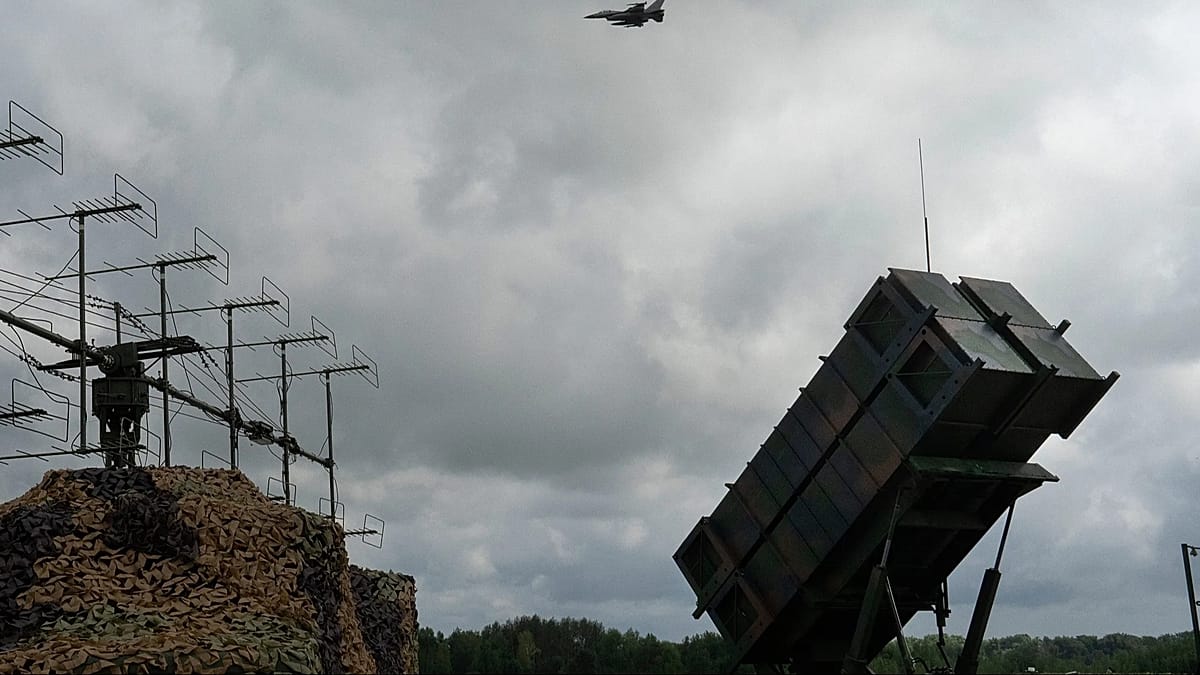
Deep-sea mining isn’t the only project planned for the area around Minamitorishima. The Ministry of Defense has informed Ogasawara Village (which has jurisdiction over Minamitorishima) of its intention to begin missile launch drills starting next year. These drills, which are moving from the United States to Japan, involve launching missiles with a range of 200 to 300 kilometers from truck-mounted launchers.
Minamitorishima is also a candidate for something else entirely. In March 2026, a month after Japan’s first successful rare-earth extraction, the Ministry of Economy, Trade, and Industry (METI) asked Ogasawara Village to accept the first steps in selecting the island as a final disposal site for Japan’s high-level radioactive waste. The mayor consented in April.
That means not one but three national projects – rare earth mining, a potential final disposal facility for radioactive waste, and missile launch drills – are set to converge simultaneously on a single uninhabited island.
Masaaki Shibuya, mayor of Ogasawara Village, which administers the island, is cautious about drawing connections between them. The mayor said he has received explanations through separate channels: the rare earth mining project from the Cabinet Office and the literature survey for the nuclear waste disposal site from METI.
“The rare earth and nuclear waste issues have been presented to us as completely separate matters. Based on the explanations we’ve heard for each, I believe they are entirely distinct,” said Shibuya.
However, the fact remains that Minamitorishima is being considered for three very different initiatives of national importance to Japan. Furthermore, if a final disposal site for nuclear waste and a missile training range were to overlap on the same island, it could become an ideal target for an enemy nation.
Masashi Miyagi, a village council member in Ogasawara Village, shared a concern: “I might have just asked the wrong people, but when I asked the Ministry of Economy, Trade and Industry, which is in charge of geological disposal, and to NUMO [responsible for managing national security risks], they only replied, ‘National defense is not within our jurisdiction, so we don’t know.’”
In other words, there is no one taking overall responsibility for the entire project surrounding Minamitorishima. Senator William Parkinson of the Guam Legislature described this situation as the “logic of the frontier” and is closely monitoring it as a fellow Pacific island sharing the same oceanic environment.
“Because Minamitorishima is uninhabited and far from mainland Japan, it can be treated as a convenient location from an administrative standpoint. However, being uninhabited does not mean it is ecologically empty or that it is cut off from the surrounding Pacific community,” said Parkinson.
Washington and Tokyo Aim to Curb China. Will It work?
In March 2026, an agreement on the joint development of rare earths on Minamitorishima was reached during a Japan-U.S. summit. Amid a rise in mining plans by Chinese state-owned enterprises in international waters off the coast of Minamitorishima – outside Japan’s EEZ – domestic media reported that this joint development initiative was intended to counter China.
Hiroyuki Yamamoto of the Japan Agency for Marine-Earth Science and Technology (JAMSTEC), who said he first learned of the Japan-U.S. joint development through media reports, remarked during the interview that he was “really surprised,” as he had not heard anything about it before.
“I have an acquaintance at the U.S. Department of the Interior, and I received an email from that person saying something like, ‘This kind of story is going to come out.’ I replied, ‘I don’t know anything about that,’” said Yamamoto during an interview conducted in April.
Yamamoto said that an announcement under these circumstances “would likely be more of a political stunt.”
If the issue were simply about resource development, there should be two options, according to Tanaka: Obtain an ISA exploration license for the same area around Japan’s EEZ, or object to China’s continued exploration as an ISA Council member.
“It is true that China’s vessel explores close to Japan’s territorial waters. However, this is in the high seas. It’s not that China is having a monopoly or anything,” said Tanaka.
Tom Hale, a researcher of critical mineral supply chains and the geopolitics of extraction at the University of Delaware, places Japan’s current push in a longer arc. “The original rare earth debate in Washington started with the incident around Senkaku Islands (a group of uninhabited islands in the East China Sea controlled by Japan but also claimed by China and Taiwan) in 2010,” he noted.
The 2024 Marine Energy and Mineral Resources Development Plan from Japan’s METI said that securing a stable supply of mineral resources is “a major challenge for our country,” and that tapping the resources in Japan’s own surrounding waters would “contribute to raising the nation’s self-sufficiency, insulated from international circumstances and geopolitical risk.”
The Cabinet Office’s Strategic Innovation Promotion program now running the Minamitorishima project, in its third phase since 2023, carries a telling name: “Building a Maritime Security Platform.” Resource development, in other words, has been placed squarely in the frame of national security.
Hale argued that there is a paradox here. Treating a resource as a national security problem creates a sense of urgency that actually leaves less room to solve it. “Urgency is reinforced through the securitization of supply chains,” he said.
Minamitorishima is where that tension becomes concrete. Japan is pouring resources into a project that its own scientists doubt is feasible, on a timeline they call unrealistic, all driven by a sense of strategic urgency. The more the island is framed as a matter of security and sovereignty, the harder it becomes to slow down, to wait for the science, or to weigh the alternatives.
“The more you securitize your resources, the less time you have to solve the challenges,” as Hale put it. “However, if you try to find diplomatic, international, and conflict de-escalation pathways, then your time broadens, and it becomes much easier to solve these issues.”
This article was produced as part of the Earth Journalism Network’s “Mining the Unknowns” project. It was first published in Japanese by Toyo Keizai and in English by the Earth Journalism Network and is republished with permission.



















 English (US) ·
 French (CA) ·
 French (FR) ·