

 5 hours ago
5
PROTECT YOURSELF with Orgo-Life® QUANTUM TECHNOLOGY
Orgo-Life the new way to the future Advertising by AdpathwayGUIDES · PANAMA
Key Facts
- —The country Panama, a Central American state that runs the Panama Canal, handled 13,404 ship transits in 2025. It took full control of the waterway on 31 December 1999.
- —United States A memorandum signed on 9 April 2025 allows US training deployments at Panamanian sites but no permanent bases. Panama gave notice of its exit from China’s Belt and Road programme on 6 February 2025.
- —China Panama’s Supreme Court annulled the CK Hutchison port concession on 29 January 2026. China then held nearly 70 Panama-flagged ships in its ports from 8 March 2026.
- —Europe EU finance ministers removed Panama from the EU tax blacklist on 9 October 2026. Panama stays on a monitoring list until an OECD review is done.
- —The United Nations Panama holds a non-permanent seat on the UN Security Council until the end of 2026.
- —Power Index Panama ranks 11th of 14 in The Rio Times Latin America Power Index, with 34.2 points (October 2026 edition).
- —Prediction markets Kalshi gives a 18% chance that the US takes control of part of the Panama Canal before 20 January 2029 (19 October, 5:06 a.m. ET).
Panama geopolitics in one guide: what the United States, China, Europe and other powers want from a country of canal, ports and copper. Every figure carries its date and comes from an official or named source as of October 2026.
Panama geopolitics matters to Americans because the Panama Canal links US coasts to Asia and Europe. In 2026 that waterway, and the ports at both ends, became the sharpest point of contention between Washington and Beijing.
This guide sets out what each power wants from Panama, from the United States and China to Europe, the Gulf, Turkey, India and Russia. For the country’s regional weight, see the companion guide to Panama in Latin America, Its Role, Weight and Alliances.
Why Panama Sits at the Centre of Great-Power Politics
Panama is a small country with an outsized asset, the canal that joins the Atlantic and Pacific oceans. The waterway handled 13,404 ship transits in 2025, according to the Panama Canal Authority.
Panama took full control of the canal on 31 December 1999, under treaties signed with the United States in 1977. Those treaties guarantee the canal’s permanent neutrality, which is meant to keep it open to every flag.
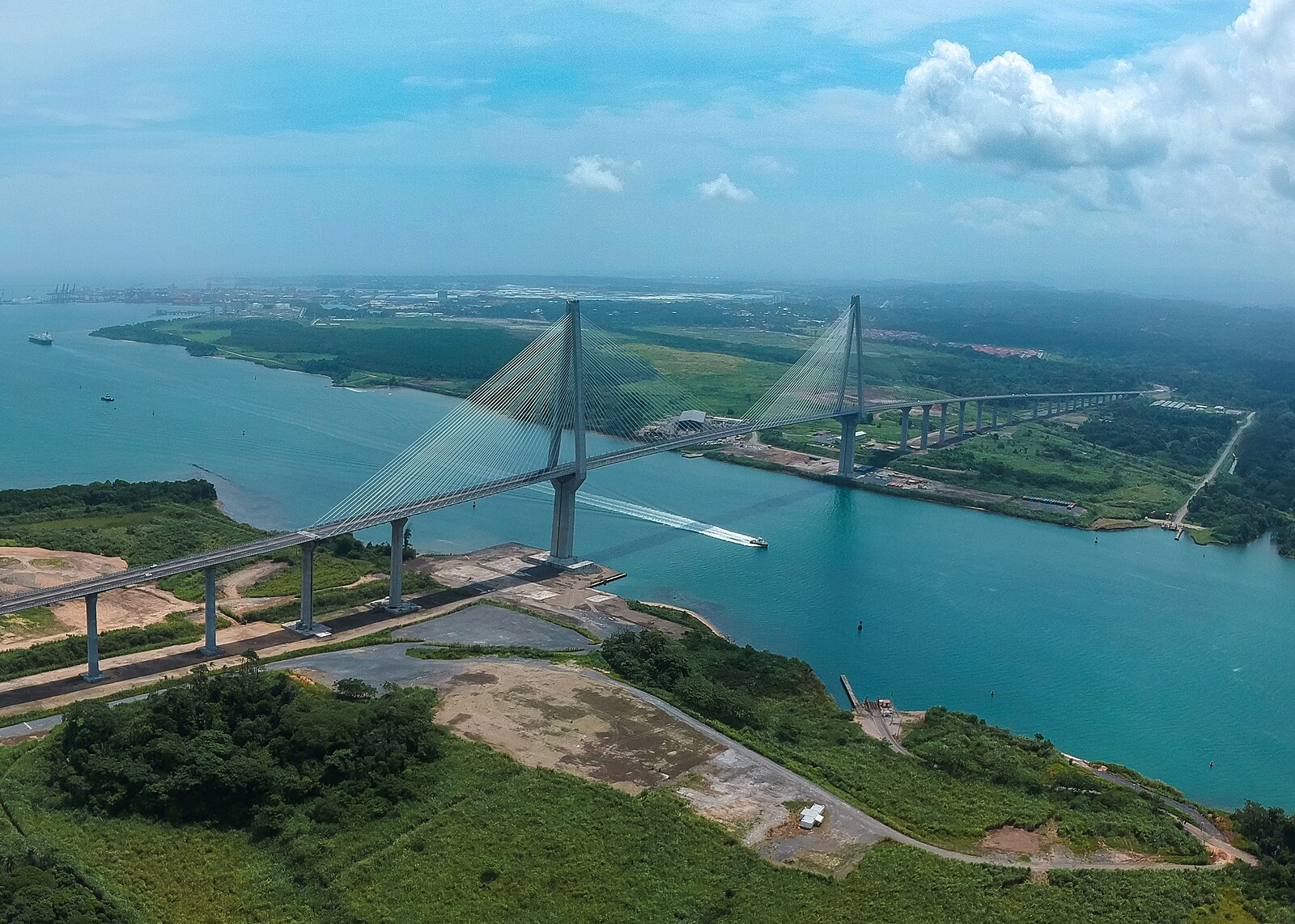
Panama has had no army since the 1990s and keeps only police and border services. Its foreign policy, more than its military, is therefore the tool it uses to manage the powers that depend on the canal.
On 5 October 2026 Singapore’s prime minister, Lawrence Wong, told President Mulino that Singapore had decided to accede to the protocol to the canal’s neutrality treaty, Singapore’s foreign ministry said. The step is covered in Singapore to Join 41 States on Panama Canal Neutrality.
The Rio Times Latin America Power Index, at the Latin America Power Index page, tracks how Panama’s weight compares with 13 other Latin American states. This guide uses it as a reference point, while the sections below cover the foreign powers.
The United States, Treaties, Troops and Trade
The United States signed the 1903 treaty that gave it rights to a canal zone, and the canal opened in 1914. Under the 1977 Carter-Torrijos treaties, which took effect in 1979, Panama took full control on 31 December 1999.
The State Department says the United States is the canal’s top user. It puts US goods trade with Panama at US$8.8 billion in 2021, with US direct investment at US$3.5 billion.
President Donald Trump pledged in January 2025 to take the canal back. Secretary of State Marco Rubio met President José Raúl Mulino in Panama on Sunday 2 February 2025.
Four days later, on Thursday 6 February 2025, Panama gave notice that it would leave China’s Belt and Road Initiative. Rubio called the step “a great step forward” for relations, while Mulino denied that Washington had pressured him.
On Wednesday 9 April 2025 US defence secretary Pete Hegseth and Panama’s security chief, Frank Ábrego, signed a memorandum of understanding. It lets US personnel deploy to Panamanian-controlled facilities for training and exercises, and it does not allow permanent bases.
Panama keeps control of its installations and must approve any deployment. Mulino said he told Hegseth that US bases would be “unacceptable”, while a union leader, Saul Mendez, called the deal a setback to sovereignty.
On Saturday 7 March 2026 Trump convened 12 Caribbean and Latin American leaders in Florida for a meeting called Shield of the Americas. He said the United States would not allow hostile foreign influence in the hemisphere, including at the Panama Canal.
China, Loans and a Shipping Dispute
The Belt and Road Initiative is China’s global programme of infrastructure lending and trade links. Panama became the first Latin American country to join it, in 2017.
After Panama’s exit notice, Chinese foreign ministry spokesperson Lin Jian said Beijing “firmly opposes” US pressure and coercion. He said the US attacks “once again expose its hegemonic nature”.
China’s then ambassador, Xu Xueyuan, wrote in the daily La Estrella de Panamá that China supports the canal’s permanent neutrality. He argued that the United States, not China, had threatened it.
Panama says it does not want to be drawn into the rivalry between the two powers. The test came in 2026, when a court ruling on two ports set Panama against Beijing.
The Ports Ruling and the Arbitration Claims
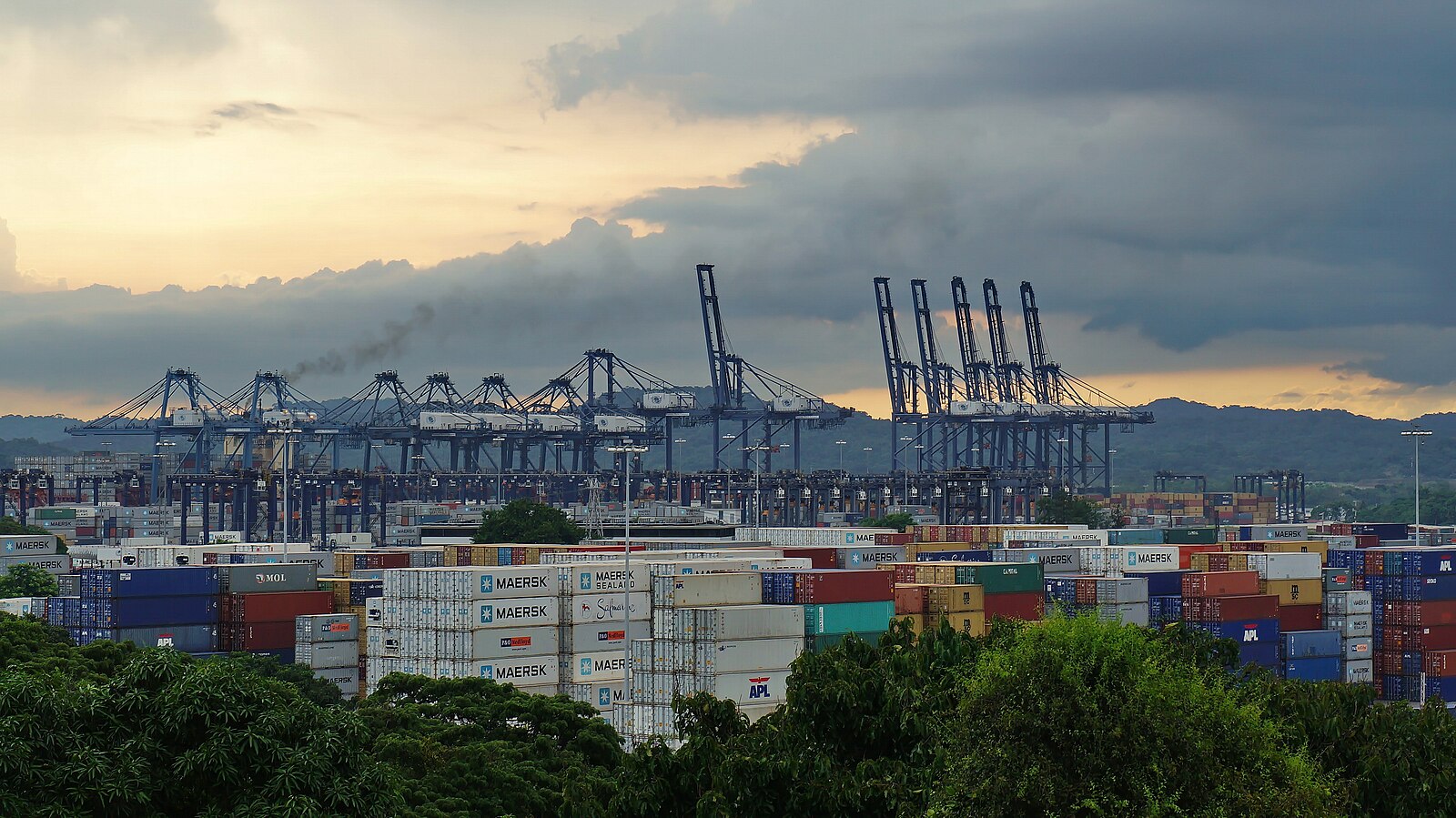
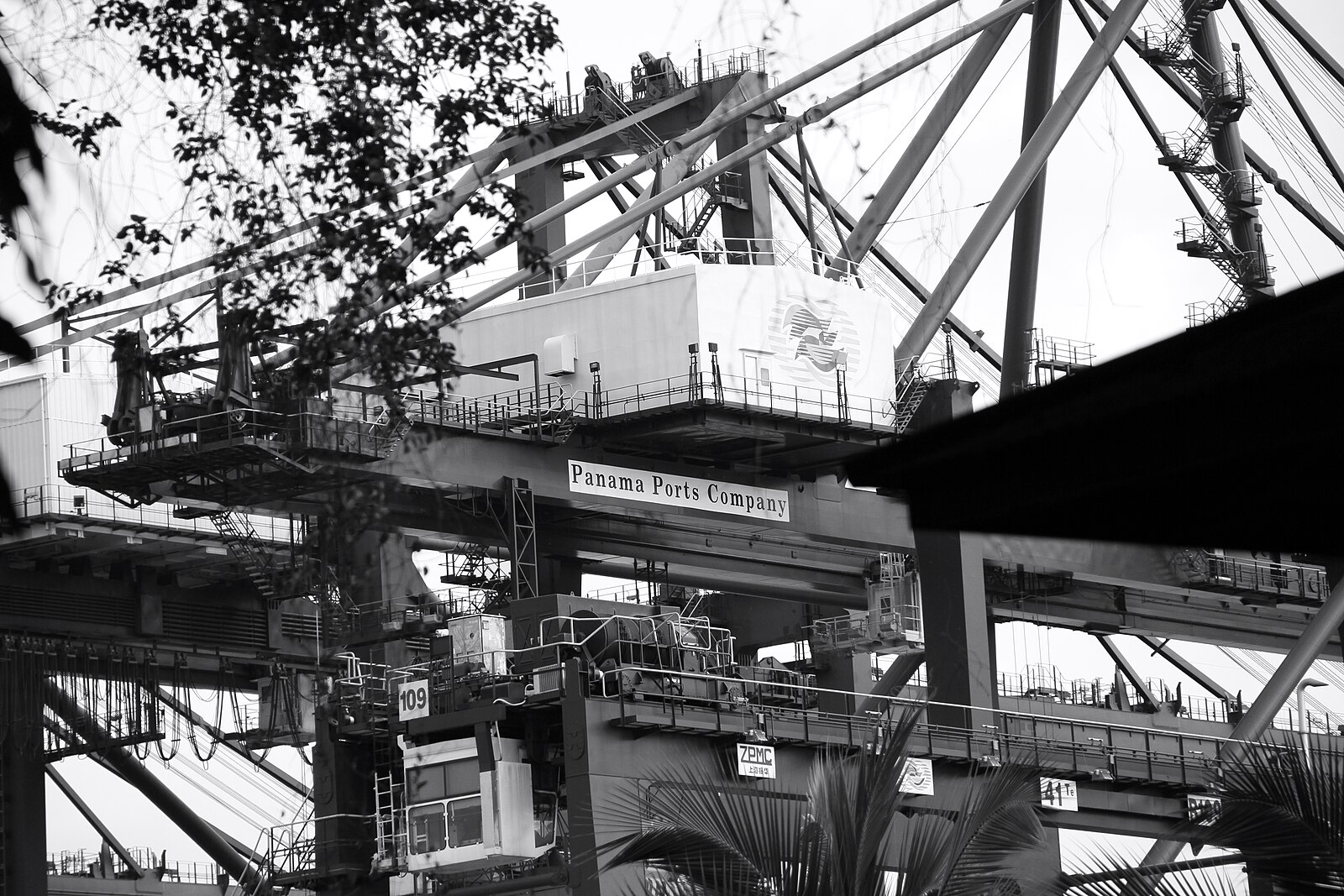
Panama Ports Company, 90% owned by Hong Kong’s CK Hutchison group, ran the Balboa and Cristóbal container terminals from 1997. The two terminals handled about 3.8 million twenty-foot container units in 2024, nearly 40% of the throughput of Panama’s five container ports.
On Thursday 29 January 2026 the Supreme Court declared Law No. 5 of 16 January 1997, which approved the concession, unconstitutional. The ruling also covered the law’s amendments and its extension act.
Comptroller Anel Flores had alleged unpaid sums and accounting errors, and put losses at about US$1.2 billion over the original term. The company denies this, saying it invested US$1.8 billion since 1997 and paid the state US$668 million.
CK Hutchison said its board “strongly disagrees” with the ruling. Panama Ports Company began arbitration under International Chamber of Commerce rules on Tuesday 3 February 2026, and by 24 March it said damages exceeded US$2 billion.
After the ruling Panama’s executive issued an occupation decree and the state took over the two terminals. The Panama Maritime Authority said on 19 March that this was temporary use while a value is set, not an expropriation.
APM Terminals, part of Denmark’s Maersk, and Terminal Investment Limited, part of Switzerland-based MSC, received 18-month interim contracts. Panama says operations have continued, a point covered in Panama Seizes Port Firm Funds for 1,386 Jobs.
China’s foreign ministry pledged “all necessary measures” to protect Chinese firms, and its Hong Kong and Macau Affairs Office warned Panama of “heavy prices”. China’s Ministry of Transport also summoned Maersk and MSC representatives.
China Cosco Shipping, a state-owned line, suspended services at Balboa on Tuesday 10 March 2026. Newsweek reported on 27 March that Beijing had told state firms to halt new investment in Panama, a step with no official confirmation in that report.
Federal Maritime Commission Chairman Laura DiBella said on 26 March 2026 that China’s detentions of Panama-flagged ships were “far exceeding historical norms”. Newsweek, citing Lloyd’s List, counted nearly 70 ships held since 8 March, while China cites routine port state control inspections.
Panama’s Maritime Chamber put the rise in detentions at 145% in the second quarter of 2026. By early July Mulino said they were decreasing, and he has said Panama wants no conflict with China.
In late April 2026 the United States, Costa Rica, Guyana, Trinidad and Tobago, Paraguay and Bolivia accused China of “targeted economic pressure” on Panama. Rubio said Washington was “deeply concerned”.
Foreign Minister Javier Martínez-Acha met China’s foreign minister, Wang Yi, in New York on Tuesday 26 May 2026. Wang urged protection of Chinese enterprises and warned against “third-party interference”, according to the China-Global South Project.
At the 2026 Organization of American States General Assembly in Panama City, China’s observer, Xie Feng, questioned the ruling, and Martínez-Acha replied that Panama is a democracy with separation of powers. China’s ambassador, Xu Xueyuan, left his post early, and Panama delayed approval of his nominated successor, Zhang Xiangyan, for nearly two months.
Officials from both sides were due to meet from 16 to 18 July 2026 in China on detentions and a 2017 maritime transport accord. Panama’s delegation was led by Luis Roquebert, head of the Panama Maritime Authority.
Europe, Tax Lists and Public Tenders
On Friday 9 October 2026 EU finance ministers removed Panama from Annex I of the EU list of non-cooperative tax jurisdictions. Panama had been on that list since February 2020, La Estrella reports.
The EU credited Law 526, an economic substance law for entities earning passive foreign-source income. Panama’s National Assembly approved it unanimously.
Panama stays on Annex II, a monitoring list, until an OECD Global Forum review finds it largely compliant on tax information exchange. La Estrella reports a deadline of 15 February 2027 for that rating.
In February 2026 Mulino barred companies from EU member states, except those from Spain, Italy and Greece, from bidding on public tenders, La Estrella reports. After the October decision he called the outcome a “gran victoria” that opens the door to investment.
The EU delegation in Panama lists cooperation on chemical precursors and a Global Gateway investment programme. Greek shipowners are among the largest users of the Panamanian flag, and Mulino visited Greece in late May 2026 to reassure them.
The Gulf, Turkey and Asia
On Tuesday 30 June 2026 Panama’s commerce minister, Julio Moltó, met United Arab Emirates trade officials at the Mercosur summit in Asunción. He said the Emirates showed interest in investing in canal projects and other infrastructure.
No agreement with the Emirates was signed at that meeting. The sources reviewed show no signed accord with any other Gulf state.
Turkey and Panama established relations on 21 September 1950, according to Turkey’s foreign ministry. They signed a maritime cooperation agreement in 2016 and held a first round of political consultations in Ankara on 4 August 2025.
President Mulino made a State Visit to Singapore from 3 to 5 October 2026, according to Singapore’s foreign ministry. The two governments agreed to begin negotiating a mutual legal assistance treaty, and SATS Ltd and Tocumen International Airport exchanged a memorandum of understanding on air cargo.
Russia, India and BRICS
Russia and India play small roles in Panama geopolitics as of October 2026. The sources reviewed show no major accord between Panama and either country this year.
BRICS is a group of emerging economies that includes Brazil, Russia, India and China. Its information portal lists its members, and Panama is not among them, as accessed on 19 October 2026.
Two BRICS members matter most to Panama at present. China is the source of the ports dispute, and the United Arab Emirates is a prospective investor.
Minerals and the Cobre Panamá Question
Cobre Panamá is a large copper mine run by First Quantum Minerals, a company listed in Toronto. Normal mining stopped in late 2023, after the Supreme Court ruled the company’s 20-year contract unconstitutional.
As of 29 July 2026 First Quantum was processing a stockpile of about 38 million tonnes holding some 70,000 tonnes of recoverable copper. It kept its 2026 guidance of 30,000 to 40,000 tonnes of copper.
An environmental audit found the operation 87.7% compliant with its commitments. The government is weighing a joint venture with a state miner, a 60% to 65% company stake, or a lease for royalties and taxes.
First Quantum has suspended its US$20 billion arbitration claim while talks continue. The shutdown erased about 4.5% of Panama’s economy and over 1% of world copper supply, according to IMF data cited by Mining.com.
Panama at the United Nations and the OAS
Panama is one of five non-permanent Security Council members whose terms end in 2026, with Denmark, Greece, Pakistan and Somalia. Its vice minister, Carlos Ruíz-Hernández, told the Council in January 2025 that Panama welcomed the Gaza ceasefire.
He also recognised Israel’s right to exist in security alongside Palestine. Panama’s Council votes are public, and they are where its alignment with Washington or Beijing is most visible.
What It Means for US Readers
Shipping and logistics investors should watch port contracts, arbitration rulings and canal capacity, because each feeds into US supply chains. Panama-flagged ships carry a meaningful share of US container trade, so Chinese inspections can delay US-bound cargo.
Travellers face no direct effect, since Panama says port and canal operations have continued during the dispute. Expats and companies dealing with Europe may find banking easier, as an EY tax manager said the EU measures should end.
Anyone following US security policy should note that the memorandum does not publish troop numbers. The canal question will stay a recurring theme in US-China relations.
What Prediction Markets Say
Kalshi, a US-regulated exchange, gives a 18% chance that the US takes control of part of the Panama Canal before 20 January 2029 (19 October, 5:06 a.m. ET). About 610,000 contracts have traded, with a bid of 18% and an ask of 20%.
Polymarket gives a 2.8% chance that the US takes the canal before 2027, with about US$178,000 traded in total (19 October, 5:06 a.m. ET). The gap reflects the horizon, since Kalshi runs to January 2029 and Polymarket ends on 31 December 2026.
These are bets, not polls, and each resolves only if the US takes control. Neither market prices the ports dispute with China.
Why we show this: prediction markets turn real-money bets into a live probability that moves within minutes of the news, which is why investors, campaigns and newsrooms in the United States now follow them closely. We show them next to polls and official results, never instead of them.
What Is Not Known
It is not known whether the July 2026 talks between Panama and China ended the ship detentions or renewed the 2017 maritime accord. The sources reviewed publish no outcome.
The final value of the CK Hutchison claim and the timing of any arbitration ruling are also open. So is the identity of the permanent operators of Balboa and Cristóbal once the 18-month interim contracts end.
Panama has not published how many US personnel the 2025 memorandum allows at any one time. Whether a foreign state-backed investor will take a stake in Cobre Panamá has not been announced.
Frequently Asked Questions
Who are the main powers in Panama’s geopolitics?
The United States and China are the two main powers, with the US as the canal’s top user and security partner. Europe, the Gulf states, Turkey and Singapore matter more for trade, tax and shipping than for security.
Does the United States control the Panama Canal?
Panama has run the canal since 31 December 1999. A memorandum signed on 9 April 2025 allows US training deployments without permanent bases.
What happened to CK Hutchison’s ports in Panama?
On 29 January 2026 the Supreme Court declared the 1997 law behind the concession unconstitutional. Maersk and MSC subsidiaries now run Balboa and Cristóbal under 18-month interim contracts, while CK Hutchison pursues arbitration.
Is Panama part of China’s Belt and Road Initiative?
Panama gave notice on 6 February 2025 that it would leave the programme. It had joined in 2017.
Is Panama still on the EU tax blacklist?
EU finance ministers removed it from Annex I on 9 October 2026. It stays on the Annex II monitoring list until an OECD review confirms compliance.
Is Panama a BRICS member?
The BRICS information portal lists its members, and Panama is not among them. Two of those members, China and the United Arab Emirates, matter most to Panama at present.
Sources: Panama Canal Authority (pancanal.com, accessed 19 October 2026); US State Department, US Relations With Panama (state.gov/u-s-relations-with-panama); CK Hutchison announcement of 4 February 2026 (doc.irasia.com/listco/hk/ckh/announcement/a330888-e_ckhh_announcement.pdf); Panama Maritime Authority, communiqué 45 of 19 March 2026 (amp.gob.pa/noticias/notas-de-prensa/comunicado-45/); US Federal Maritime Commission, statement by Laura DiBella, 26 March 2026 (fmc.gov/ftdo/statement-of-chairman-dibella-on-chinas-detention-of-panama-flagged-vessels/); European External Action Service, Panama removed from EU list of non-cooperative jurisdictions, 9 October 2026 (eeas.europa.eu/delegations/panama/panama-removed-eu-list-non-cooperative-jurisdictions-tax-purposes_en); Turkish Ministry of Foreign Affairs (mfa.gov.tr/relations-between-turkiye-and-panama.en.mfa); United Nations Security Council members (main.un.org/securitycouncil/en/content/current-members); BRICS information portal (infobrics.org); La Estrella de Panamá (laestrella.com.pa, 21 January 2025, 9 July 2026, 10 October 2026); Revista E&N (revistaeyn.com, 4 July 2026); Mining.com (29 July 2026); Container News (1 February 2026); Newsweek (27 March 2026); Maritime Executive (28 April 2026); Al Jazeera (7 February 2025); LatinNews (4 February 2025); The Defense Post (11 April 2025); Council on Foreign Relations, China in Latin America, March 2026 (cfr.org); China-Global South Project (17 July 2026); Singapore Ministry of Foreign Affairs, press statements of 3 and 5 October 2026 (mfa.gov.sg); EFE via Revista E&N (4 July 2026); Kalshi and Polymarket market data, 19 October 2026; accessed 19 October 2026.






 English (US) ·
 French (CA) ·
 French (FR) ·