

 7 hours ago
11
7 hours ago
11
PROTECT YOURSELF with Orgo-Life® QUANTUM TECHNOLOGY
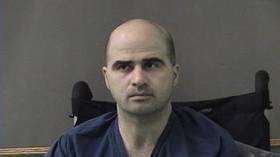
Orgo-Life the new way to the future Advertising by AdpathwayNidal Hasan, who was wounded and left paralyzed from the waist down during his arrest, was sentenced to death more than a decade ago
US Secretary of War Pete Hegseth’s plan to livestream the firing-squad execution of former Army psychiatrist Nidal Hasan, who killed 13 people at the Fort Hood base in 2009, is set to become an unprecedented event in the nation’s history.
Approved by US President Donald Trump, the plan has drawn bipartisan criticism and condemnation from human rights advocates and religious leaders, who say it risks turning an execution into a public spectacle.
What happened at Fort Hood
The fatal shooting occurred on November 5, 2009, at Fort Hood’s Soldier Readiness Processing Center in Texas, where troops prepared for overseas deployment. US Army Major Nidal Malik Hasan, a 39-year-old military psychiatrist, opened fire with two semiautomatic pistols, killing 12 service members and one civilian Defense Department employee, and wounding 32 more.
Military police injured Hasan by returned fire, leaving the shooter paralyzed from the waist down before taking him into custody. A US Senate report designated the spree killing as the deadliest terrorist attack on US soil since September 11, 2001.
The man behind the Fort Hood shooting
Born in the US in 1970 to Palestinian immigrant parents, Hasan trained as a doctor before becoming an Army psychiatrist. Before the shooting, he served at Walter Reed Army Medical Center in Maryland, where he worked with service members, including those returning from combat zones. By 2009, he had attained the rank of major and was preparing for a transfer to Afghanistan.
Was the shooting part of a wider plot?
Hasan said he had acted in the name of jihad, and witnesses reported that he shouted “Allahu akbar” (“God is greatest”) during the shooting. Authorities examined the attack in the context of Islamic extremism, while the FBI said in the days immediately after the shooting that it had found no evidence of accomplices or a wider terrorist plot. Investigators continued examining the circumstances that led Hasan to carry out the attack.
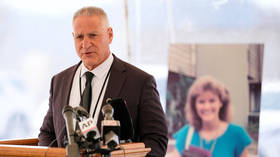
In the years before the attack, Hasan exchanged emails with Anwar al-Awlaki, a radical cleric linked to al-Qaeda. The FBI reviewed some of their correspondence but initially concluded that the available information did not indicate Hasan was involved in terrorist activity. A subsequent review found serious failures in how the FBI and the US Department of Defense had assessed and shared information about him, concluding that the agencies had enough information to identify signs of his radicalization but had failed to act on it.
From conviction to execution date
In August 2013, a military court found Hasan guilty of 13 counts of premeditated murder and 32 counts of attempted premeditated murder. Later that month, a panel of 13 senior military officers unanimously sentenced him to death, ordering his dismissal from the Army and forfeiture of all pay and allowances. Hasan has since been held on military death row at Fort Leavenworth, Kansas.
Earlier this week, Defense Secretary Pete Hegseth said Hasan would be executed by a firing squad of soldiers at Fort Hood on December, 3, at 1 PM – the same time the 2009 shooting began. Hegseth added that the execution would be livestreamed “because people need to understand there’s serious consequences for these types of things.”
Livestream plan draws bipartisan backlash
The plan has drawn criticism from lawmakers across party lines, religious leaders and the United Nations’ human rights office, which warned on Friday that broadcasting the execution would amount to “breach the absolute prohibition of torture.”
Republican Senator Thom Tillis called the proposal “beyond disgusting,” while Democratic Senator Chris Murphy likened public executions to those carried out by terrorist groups. US Vice President JD Vance emphasized the severiity of Hasan’s crimes, saying he had “brutally murdered a lot of innocent people,” but added that he would not watch the livestream.
Archbishop Paul S. Coakley, president of the US Conference of Catholic Bishops, said Hasan’s actions could not be condoned but called the livestream plan “a barbaric promotion of a culture of death,” warning that the decision would undermine the nation’s moral fabric.
The last widely recognized public execution in the US took place in Kentucky in 1936, when a convicted murderer was hanged in front of thousands of spectators.
How execution methods vary across US states
Firing squads are one of several execution methods permitted under US law, alongside lethal injection, electrocution, lethal gas and, in some jurisdictions, hanging. Execution by firing squad is legal in Idaho, Mississippi, Oklahoma, South Carolina and Utah. Electrocution is permitted in nine states, including Alabama, Arkansas, Florida, Kentucky, Louisiana, Mississippi, Oklahoma, South Carolina and Tennessee. Several states also allow execution by lethal gas, including nitrogen hypoxia, under varying legal conditions, according to the Death Penalty Information Center.
If carried out, Hasan’s execution would be the first in the US military since 1961, when Army Private John A. Bennett was hanged. The last known execution by a US military firing squad took place in November 1945. In 2025, South Carolina carried out the first civilian execution by firing squad in the US in 15 years.
Why is the Fort Hood shooter facing a firing squad?
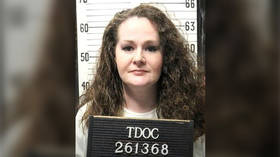
The decision to execute Hasan by firing squad comes amid renewed scrutiny of lethal injection following a botched execution attempt in Tennessee last week. Christa Pike, a death-row inmate, survived after prison personnel failed to administer the lethal injection properly and was taken to hospital in critical condition. Earlier this week, her lawyers said she awoke, stressing that she had pneumonia, a blood clot, couldn’t swallow, and was unable to move her arms or hands.


















 English (US) ·
  French (CA) ·
  French (FR) ·