

 1 week ago
2
PROTECT YOURSELF with Orgo-Life® QUANTUM TECHNOLOGY
Orgo-Life the new way to the future Advertising by AdpathwayThe number of people living in “multidimensional” poverty has risen for the first time in 15 years, reaching 1.2 billion, as families struggle to meet their basic needs.
The finding comes in the 2026 update of the global Multidimensional Poverty Index (MPI) published by the United Nations Development Programme (UNDP) and Oxford University, which measures overlapping hardship across health, education and standard of living.
The 1.2 billion figure represents 51.5 million more people than in the 2025 update. Of this number, more than half are children – 617 million – and 83 per cent live in rural areas.
‘This is unacceptable’
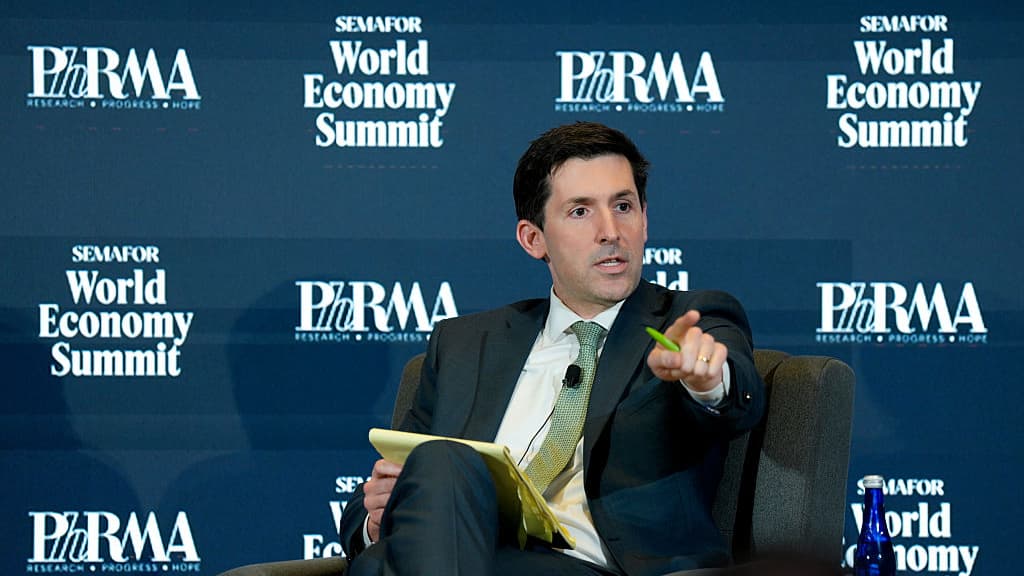
“The rise in poverty should be a wake-up call for the world,” said UNDP Administrator Alexander De Croo.
“Behind these figures are 1.2 billion people facing hardships that reinforce one another: hunger, missed schooling and a lack of clean water or electricity. This is unacceptable.”
The index was developed in 2010 to measure poverty beyond what people earn.
Overlapping deprivations
It examines 10 indicators of health, education and standard of living, such as nutrition and child mortality, years of schooling, and access to electricity, drinking water and sanitation.
A person is considered “multidimensionally poor” if they are deprived in one-third or more of the indicators.
Sub-Saharan Africa and South Asia account for the overwhelming majority of deprivations across every indicator.
Mixed picture, fragile success
The 2026 update – which covers 108 countries, representing some 78 per cent of the global population – reveals that the increase in poverty is partly due to population growth outpacing efforts to improve living standards.
In 95 countries where no new survey data was available, updated population estimates increased the number of people counted as poor by nearly 16 million.
The remainder of the increase comes from 13 countries where data was gathered, reflecting the genuine change in poverty incidence and the associated demographic change, as well as differences in indicator coverage.
The updated surveys also revealed a mixed picture on the ground. Five of these countries – Egypt, Nepal, Tajikistan, Angola and Zambia – have reduced the share of people living in multidimensional poverty, however population growth outpaced poverty reduction in both Angola and Zambia, meaning that the total number of people living in poverty still increased.
Meanwhile, Nigeria provides an example of how fragile progress in tackling poverty can be. Although the country made significant reductions in multidimensional poverty in the 2010s, both the poverty rate and the number of people struggling to make ends meet have increased.
‘Progress is possible’
The international community has pledged to reduce the proportion of people living in poverty by at least half before the end of this decade, in line with the Sustainable Development Goals (SDGs).
The authors of the 2026 MPI update believe that this target is achievable.
“We know progress is possible,” Mr. De Croo insisted. “Countries that have tackled these challenges together, rather than in isolation, have shown what determined action can achieve.”
UNDP reported that 33 countries have halved their MPI value in fewer than 15 years, including six in sub-Saharan Africa. In Eswatini, the share of people living in multidimensional poverty has fallen from nearly 39 per cent to eight per cent.
Meanwhile, China recorded the fastest reduction among countries with available data by halving its MPI value from 9.5 per cent to 4.2 per cent in just four years (2010-2014).
The shows that many countries continue to make progress, with some reducing poverty rapidly and at scale, underscoring both the urgency of renewed action and the possibility of success, the agency said.
Where next?
Latest news
Read the latest news stories:
- How Nepal is Learning To Cope With the Psychological Toll of Its Missing Monday, October 12, 2026
- Kazakhstan Has Spent 23 Years Bringing Faiths Together. Now Comes the Harder Part. Monday, October 12, 2026
- UN aid operation underway in Nepal following fresh floods Monday, October 12, 2026
- ‘Efficiency has limits’: UNHCR chief warns refugee protection is buckling under cuts Monday, October 12, 2026
- Rise in poverty is ‘a wake-up call for the world’, UN development chief says Monday, October 12, 2026
- Djibouti shipwreck: Death toll rises to 139 as 84 remain missing Sunday, October 11, 2026
- ‘These attacks must cease immediately’: Guterres condemns deadly Houthi strike on Riyadh airport Sunday, October 11, 2026
- Sustaining livelihoods amid crisis in Gaza Sunday, October 11, 2026
- India: UN rights office urges release of ‘arbitrarily detained’ protesters Saturday, October 10, 2026
- UN chief ‘gravely concerned’ by renewed fighting in northern Ethiopia, warns against escalation Saturday, October 10, 2026
Link to this page from your site/blog
Add the following HTML code to your page:
<p><a href="https://www.globalissues.org/news/2026/10/12/44319">Rise in poverty is ‘a wake-up call for the world’, UN development chief says</a>, <cite>Inter Press Service</cite>, Monday, October 12, 2026 (posted by Global Issues)</p>… to produce this:
Rise in poverty is ‘a wake-up call for the world’, UN development chief says, Inter Press Service, Monday, October 12, 2026 (posted by Global Issues)



















 English (US) ·
 French (CA) ·
 French (FR) ·