

PROTECT YOURSELF with Orgo-Life® QUANTUM TECHNOLOGY
Orgo-Life the new way to the future Advertising by Adpathway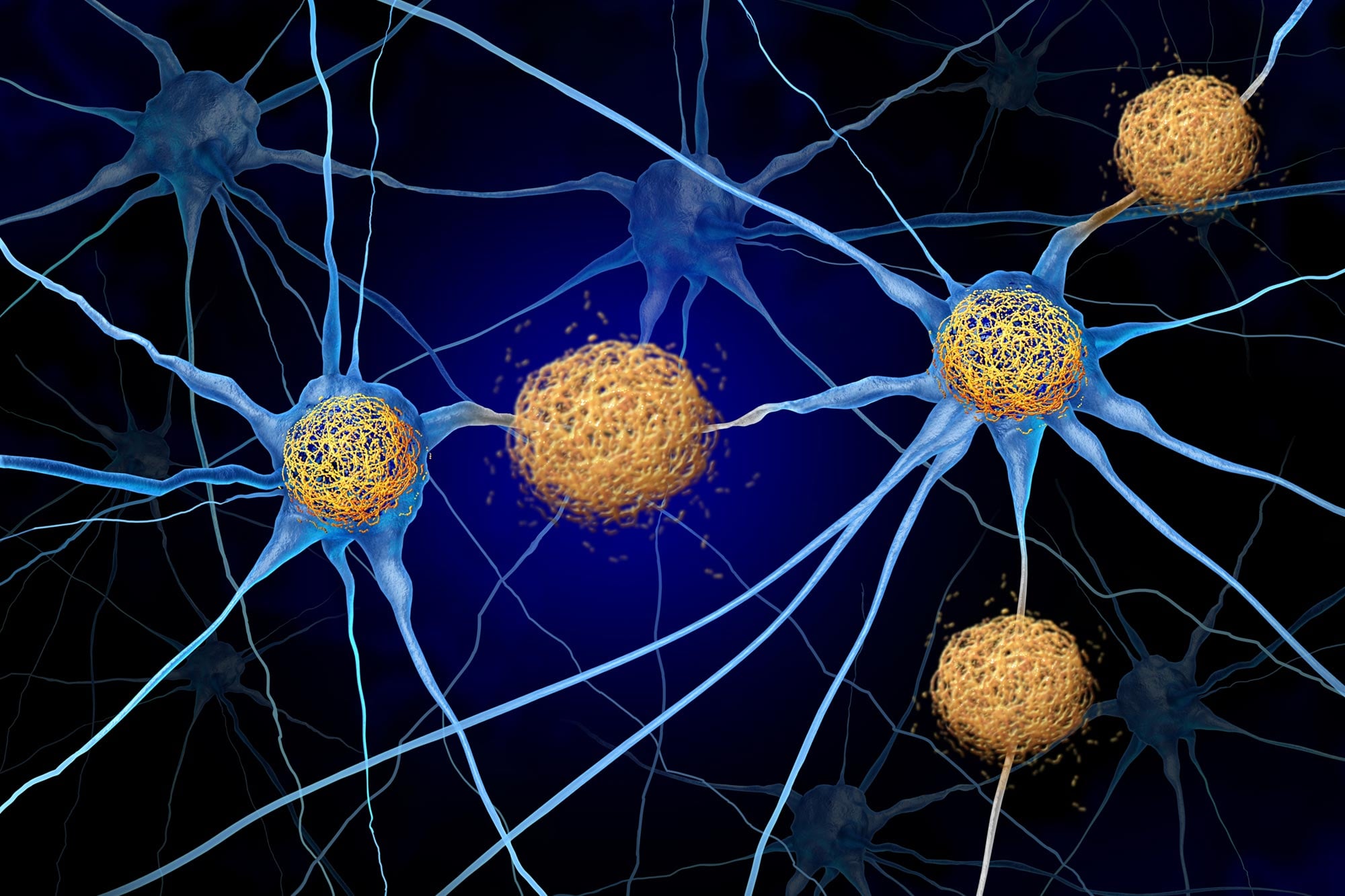 A study in mice has revealed an unexpected role for tau, a protein best known for its link to Alzheimer’s disease, in helping memories remain stable long after they are formed. Credit: Shutterstock
A new study shows that tau helps organize and preserve long-term memories, while abnormal tau may contribute to memory problems in Alzheimer’s disease by disrupting memory formation and recall.
New research has revealed that tau, a protein closely linked to Alzheimer’s disease, is also essential for creating long-lasting memories. The findings could point to new strategies for treating dementia in the future.
The study, led by Flinders University in partnership with researchers from the University of New South Wales and Macquarie University, was published in Nature Communications. It found that tau, which is commonly associated with memory loss in dementia, plays a crucial role in organizing and stabilizing memories so they can be retained over time.
Researchers examined “remote memory” in mice, which refers to memories recalled days or weeks after an event. They discovered that tau is not necessary for learning new information or recalling it in the short term. However, it is vital for maintaining the strength of memories over longer periods.
Although the results were observed in mice and cannot be directly applied to human brain function or dementia, they provide valuable insights that may help shape future treatments.
Tau Protein Found Essential for Long-Term Memory Formation
Senior author and neuroscientist Associate Professor Arne Ittner says the findings help explain why people with dementia can experience memory loss even when their ability to learn new information initially appears unaffected.
 Associate Professor Arne Ittner, FHMRI, and the College of Medicine and Public Health, Flinders University. Credit: Flinders University
“Why some memories last while others fade has long puzzled scientists, and our study shows that tau plays a key role in how the brain forms long-lasting memories. Without it, memories can still form in the moment, but they are weaker,” says Associate Professor Ittner from Flinders’ College of Medicine and Public Health.
Central to this process are specialized brain cells called “engram cells,” which store the physical representation of a memory. When learning occurs, only a small number of these cells are selected to encode a particular experience.
The study found that tau is active during this important stage, helping determine which cells are chosen to store a memory.
Engram Cells and How Memories Are Selected
Lead author Renée Kosonen says tau acts as an organizer that helps ensure memories are formed accurately.
“Our findings show that tau helps determine which cells are selected to store a memory, shaping how an experience forms a lasting memory trace,” says Ms. Kosonen, a researcher at Flinders’ Neuroscience and Dementia Research.
The team also found that tau reduces excess brain activity, or “noise,” allowing only a specific group of cells to become part of a memory trace. This process helps create clearer and more stable memories.
Researchers identified an important molecular process behind this effect. During learning, tau undergoes a subtle chemical change known as phosphorylation, which helps coordinate the activity of engram cells.
Tau Phosphorylation Helps Stabilize Memory Traces
While abnormal tau phosphorylation is a well-known feature of Alzheimer’s disease, the study showed that controlled, low-level phosphorylation is necessary for normal brain function.
The researchers also discovered that memory traces can still exist without tau and can be accessed by directly stimulating engram cells. This suggests that tau is needed to connect natural cues, such as sights and sounds, to memory recall rather than to store the memory itself.
The findings also provide new insight into how abnormal tau contributes to memory problems in dementia. When disease-associated forms of tau were present in engram cells during learning, they disrupted the formation of new memories. When the abnormal tau appeared later, it interfered with the brain’s ability to retrieve existing memories.
The researchers linked these effects to abnormal patterns of brain activity, suggesting that memory problems in dementia may result not only from memory loss but also from difficulties with memory organization and retrieval.
Alzheimer’s-Linked Tau Disrupts Memory Retrieval
“Knowing how tau supports the formation and recall of memory could help us better understand what goes wrong in memory loss,” says Associate Professor Ittner.
“Future research will hopefully be able to confirm concepts developed in our study in human memory and show their implication in dementia.”
According to the researchers, the findings show that tau is more than a disease-related protein. It also serves as a fundamental regulator of how memories are organized and preserved, offering new insight into both healthy brain function and the processes that drive memory loss in Alzheimer’s disease.
Reference: “Tau T205 phosphorylation modulates engram cell recruitment and remote memory in mice” by Renée Kosonen, Kristie Stefanoska, Yijun Lin, Samantha Edwards, Emmanuel Prikas, Josefine Bertz, Anne Poljak, Lars M. Ittner and Arne Ittner, 17 May 2026, Nature Communications.
DOI: 10.1038/s41467-026-73207-9
This work was supported by funding from the National Health and Medical Research Council (grant nos. 1143978, 1176628, 2028265) to A.I. and (grant nos. 2029740, 2020624) to L.I.; from the Australian Research Council (grant nos. DP200102396 and DP220101900) to A.I. and (grant no. DP240101654) to L.I.; from the Flinders Foundation and Flinders University to A.I.; from the BrightFocus Foundation (grant no. A2022022F) to K.S.; from Dementia Australia Research Foundation to A.I., K.S., E.P. K.S. was supported by a Scientia Professor Henry Brodaty Post-doctoral Fellow of the Dementia Australia Research Foundation. A.I. was supported by a National Health and Medical Research Council Emerging Leadership grant. Microscopy Australia is supported by NCRIS and the government of South Australia at Flinders Microscopy and Microanalysis (ROR: 04z91ja70), and Flinders University (ROR: 01kpzv902).
Never miss a breakthrough: Join the SciTechDaily newsletter.
Follow us on Google and Google News.
















 English (US) ·
  French (CA) ·
  French (FR) ·