

PROTECT YOURSELF with Orgo-Life® QUANTUM TECHNOLOGY
Orgo-Life the new way to the future Advertising by Adpathway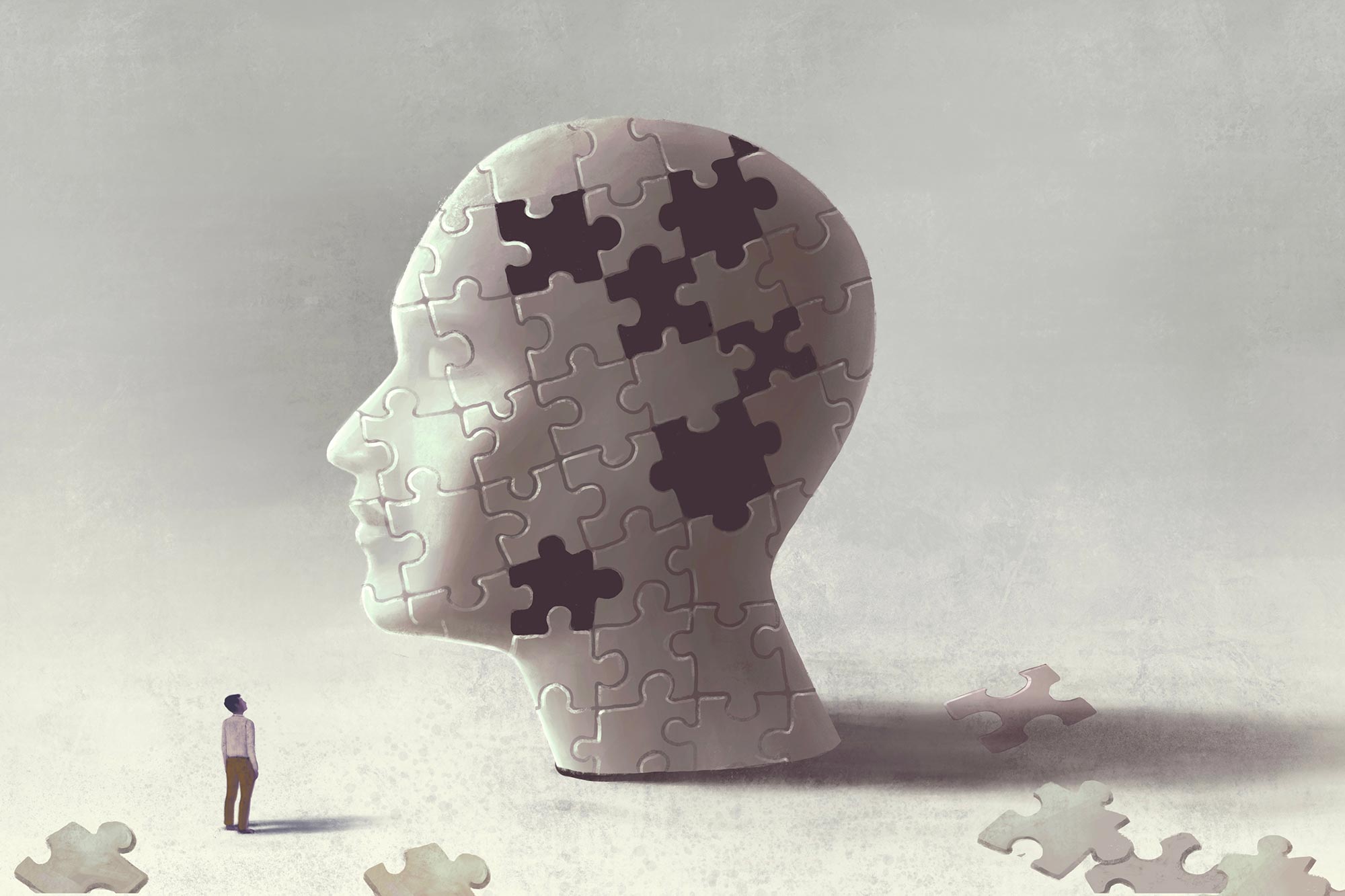 Researchers have identified how sleep deprivation disrupts a specific brain circuit critical for social memory, revealing precise changes in neural communication and behavior. Their findings also suggest that a widely used stimulant may selectively restore this impaired pathway, pointing to more targeted effects than previously understood. Credit: Shutterstock
New research shows that sleep loss alters specific memory circuits, but also hints that a familiar compound may help restore them in unexpected ways.
Researchers at the Yong Loo Lin School of Medicine at the National University of Singapore have found that caffeine may counteract the effects of sleep deprivation on social memory by acting on a specific brain pathway.
Social memory allows people to recognize and distinguish familiar individuals. The study, published in Neuropsychopharmacology, sheds light on how caffeine influences memory and cognitive performance.
Investigating Sleep Deprivation and Social Memory
The research was led by Associate Professor Sreedharan Sajikumar and first author Dr. Lik-Wei Wong from the Department of Physiology and the Healthy Longevity Translational Research Programme at NUS Medicine. The team focused on the hippocampal CA2 region, an area of the brain that plays a key role in learning and memory, particularly social memory.
 Associate Professor Sajikumar Sreedharan and Dr Wong Lik-Wei in front of their electrophysiology setup, with hippocampal signals recorded from sleep-deprived laboratory models. Credit: NUS Medicine
This region is also involved in regulating the sleep-wake cycle, making it a relevant target for studying the effects of sleep loss.
In laboratory experiments, the researchers induced five hours of sleep deprivation, followed by seven days of unrestricted caffeine intake through drinking water. Caffeine acts as a stimulant by blocking adenosine receptor signaling pathways, which normally build up during wakefulness and reduce brain activity.
The team then used electrophysiological recordings from hippocampal tissue to measure synaptic plasticity, the brain’s ability to strengthen or weaken connections between neurons based on experience.
Effects of Sleep Loss on Brain Function
Results showed that sleep deprivation disrupted synaptic plasticity in the CA2 region, weakening communication between neurons. This impairment reduced the brain’s ability to strengthen synaptic connections and led to noticeable deficits in social recognition memory.
Overall, sleep loss affected both brain function and behavior in a highly specific way, targeting a distinct neural circuit.
When caffeine was given before sleep deprivation, these effects were reversed. Synaptic communication in the CA2 region recovered, and plasticity returned to normal levels. Social memory performance also improved.
Importantly, caffeine acted in a targeted manner, restoring the affected pathway without broadly increasing neural activity. As a result, the control group that was not sleep deprived showed no signs of overstimulation despite caffeine exposure.
Expert Insights on the Findings
“Sleep deprivation does not just make you tired. It selectively disrupts important memory circuits,” noted Dr. Wong. “We found that caffeine can reverse these disruptions at both the molecular and behavioral levels. Its ability to do so suggests that caffeine’s benefits may extend beyond simply helping us stay awake.”
Assoc Prof Sajikumar said, “Our findings position the CA2 region as a critical hub linking sleep and social memory. This research enhances our understanding toward the biological mechanisms underlying sleep-related cognitive decline. This could inform future approaches to preserving cognitive performance.”
The findings highlight the essential role of sleep in maintaining cognitive health. By showing that caffeine can restore specific neural pathways affected by sleep deprivation, the study points to new possibilities for targeted treatments in cognitive disorders.
The researchers plan to continue exploring how caffeine influences memory consolidation and retrieval. They also aim to use targeted circuit manipulation techniques to better understand cause-and-effect relationships within these neural pathways.
Reference: “Caffeine reverses sleep deprivation-induced synaptic and social memory deficits via adenosine receptor modulation in the male mouse hippocampal CA2 region” by Lik-Wei Wong, Mohammad Zaki Bin Ibrahim, Aiswaria Lekshmi Kannan and Sreedharan Sajikumar, 10 February 2026, Neuropsychopharmacology.
DOI: 10.1038/s41386-026-02362-w
Never miss a breakthrough: Join the SciTechDaily newsletter.
Follow us on Google and Google News.






















 English (US) ·
  French (CA) ·
  French (FR) ·