

PROTECT YOURSELF with Orgo-Life® QUANTUM TECHNOLOGY
Orgo-Life the new way to the future Advertising by Adpathway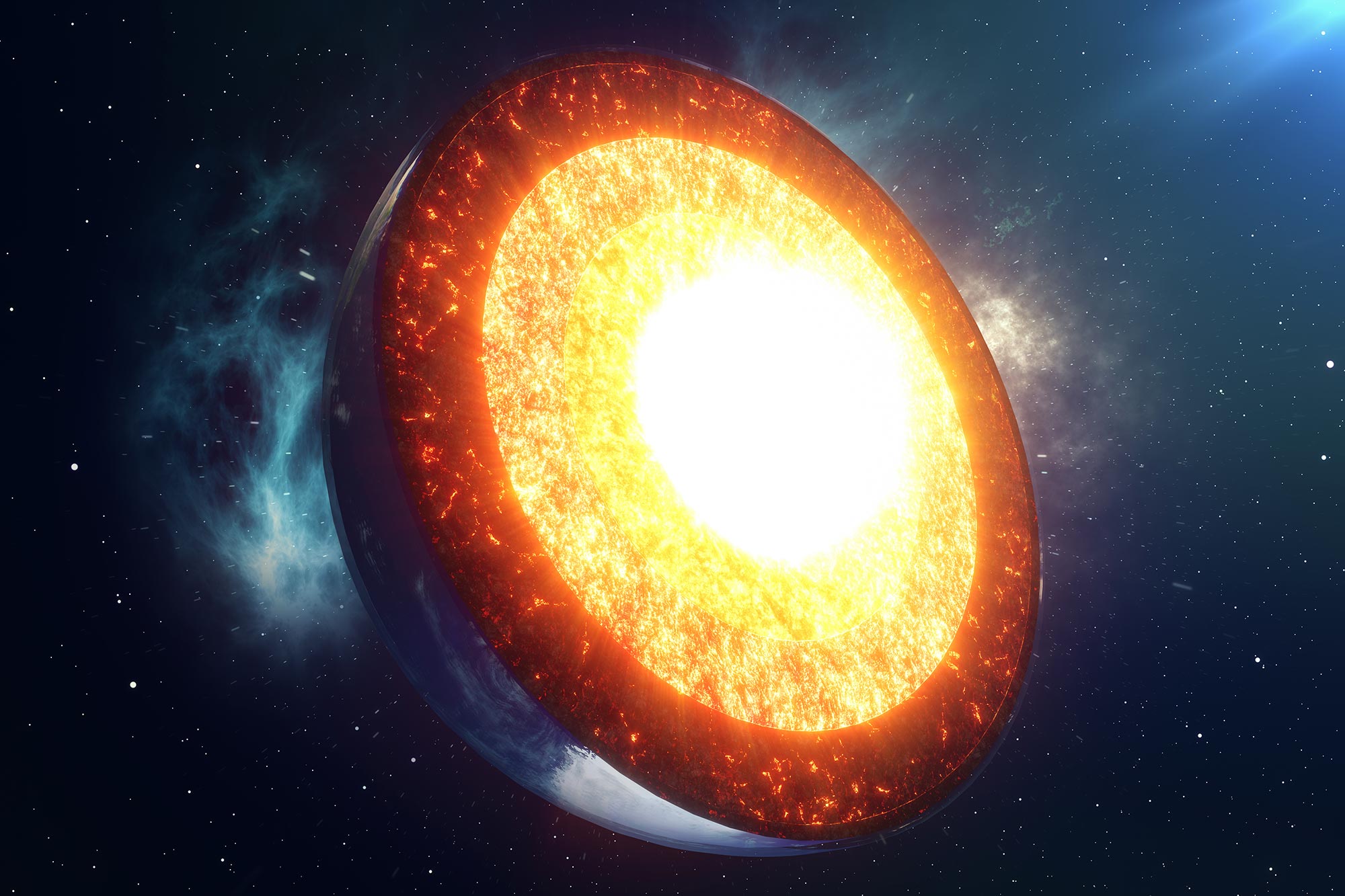 A rock’s extraordinary 90-kilometer journey beneath Earth has exposed a hidden heat mystery that challenges scientists’ understanding of the planet’s interior. Credit: Stock
A rock from Papua New Guinea was hotter than expected during its descent into Earth, challenging models of a process that influences earthquakes, volcanoes, and climate.
Earth recycles its own surface. In regions called subduction zones, one tectonic plate, a vast slab of Earth’s outer shell, sinks beneath another as the plates collide. These zones are sites of earthquakes and volcanic activity, and they help stabilize Earth’s climate over millions of years by recycling molecules such as carbon dioxide.
A rock from Papua New Guinea has revealed a gap in scientists’ understanding of the temperatures inside these regions. Four million years ago, it descended more than 90 kilometers, or about 56 miles, below Earth’s surface. But roughly halfway down, it was already much hotter than current models would predict.
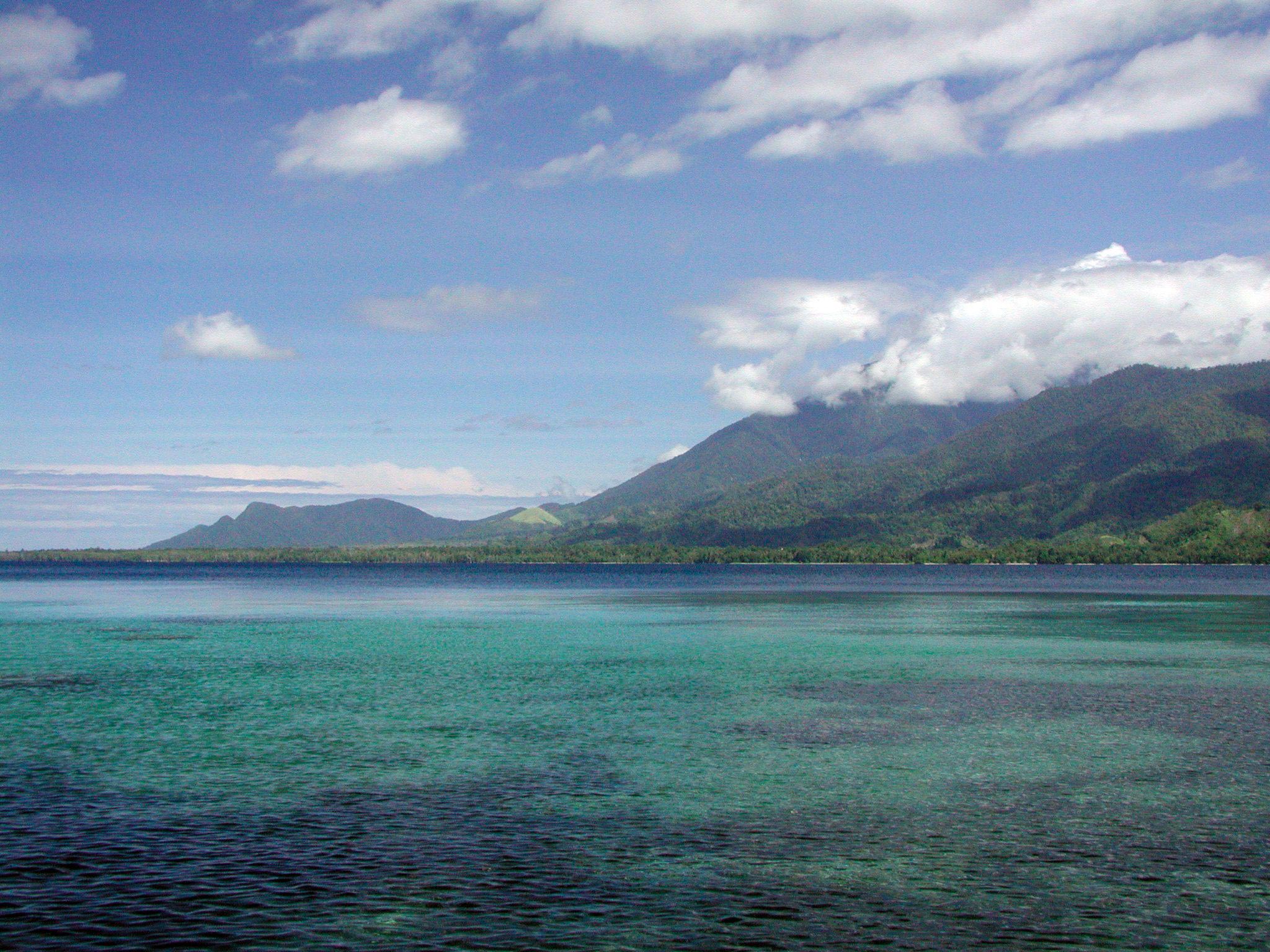 Taleba Bay vista , Goodenough Island in the Milne Bay province of Papua New Guinea. The sample investigated in this study was collected from an outcrop in Taleba Bay. Credit: Paul Fitzgerald
Minerals record a descent beyond 56 miles
An international research team led by Göttingen University reconstructed the journey by studying eclogite, a red and green rock that forms under the high pressures found in subduction zones. Minerals within the rock preserve evidence of the conditions it experienced underground, allowing researchers to piece together its history. The findings were published in Nature Geoscience.
Using a combination of analytical techniques, the researchers found tiny inclusions of coesite trapped inside another mineral during the rock’s formation. Coesite is a mineral that requires extremely high pressure to form. Its presence helped the team conclude that the rock had reached a depth of at least 90 kilometers, where it experienced temperatures of around 800°C, or 1,470 °F.
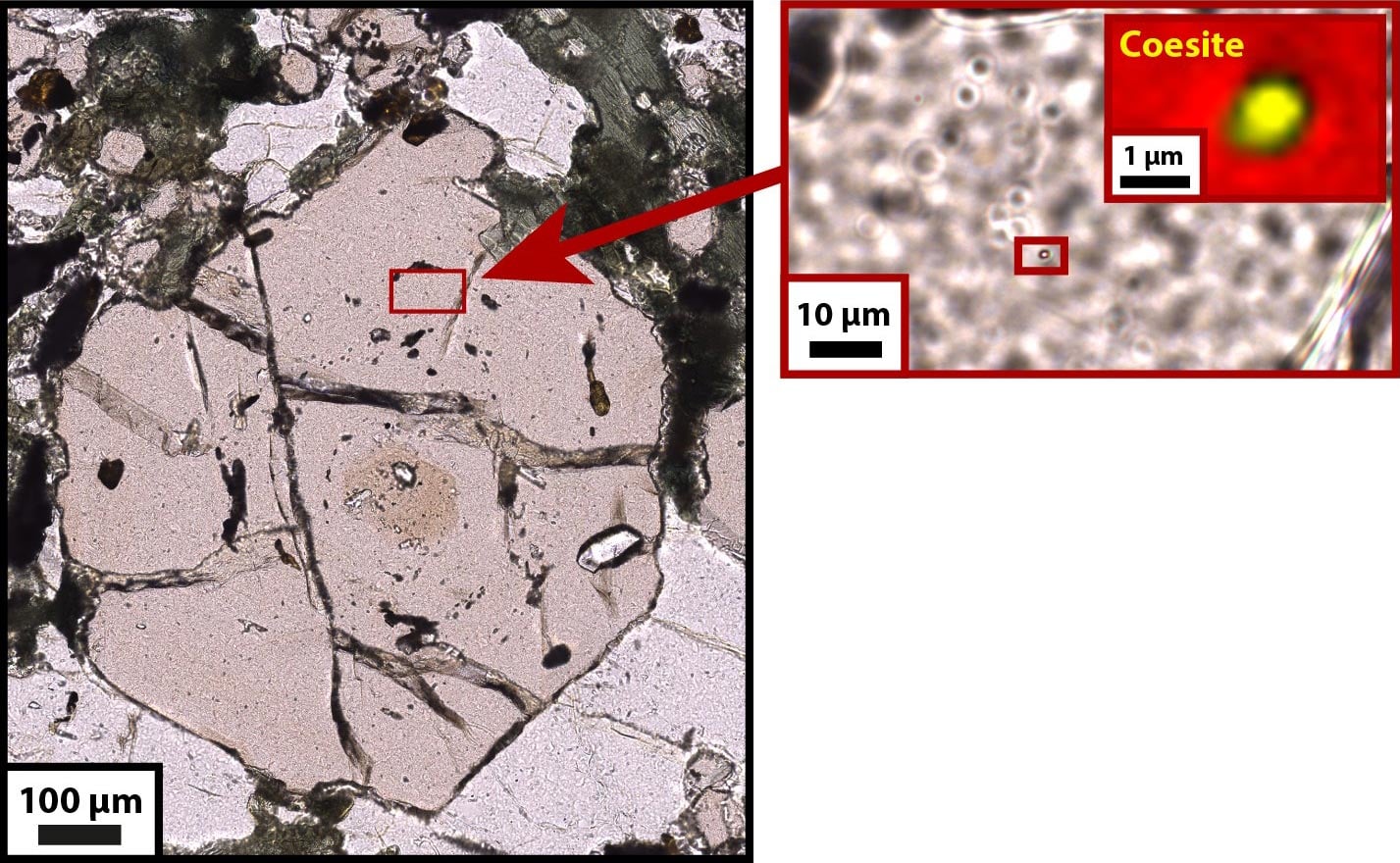 The larger image (left) is a close-up of one of the red garnet crystals on the eclogite. The microscope has zoomed in to this crystal to show a tiny coesite inclusion which proves a subduction depth of more than 90 km. The inclusion is a bit smaller than 1 µm – approximately one hundredth the size of the thickness of a human hair. Credit: Reproduced from Schönig, J., Ferrero, S., Gresky, K. et al. Geothermal gradient change during subduction recorded by ultrahigh-pressure eclogite. Nature Geoscience (2026). https://doi.org/10.1038/s41561-026-02110-1
Unexpected shallow heat challenges subduction models
At about 45 kilometers, or 28 miles, however, the rock had been only 100°C cooler, a difference of 180°F. In other words, it had already reached around 700°C, or 1,290°F, at roughly half the depth. Those shallower conditions were unusually hot, while the deeper conditions fit the more common, relatively cold pattern of subduction. Calling the deeper conditions cold does not mean the rock cooled as it sank. It means that its temperature was lower relative to its depth than it had been earlier in the journey.
Dr. Jan Schönig at Göttingen University’s Geoscience Center explains, “Finding this change from hot to cold subduction was unexpected, as this contradicts our current thermal models of subduction zones.”
Researchers have found rocks that recorded unexpectedly high temperatures before. This is the first time, though, that a rock’s journey from shallow to deep conditions has so clearly shown an accompanying shift to relatively colder temperatures for its depth.
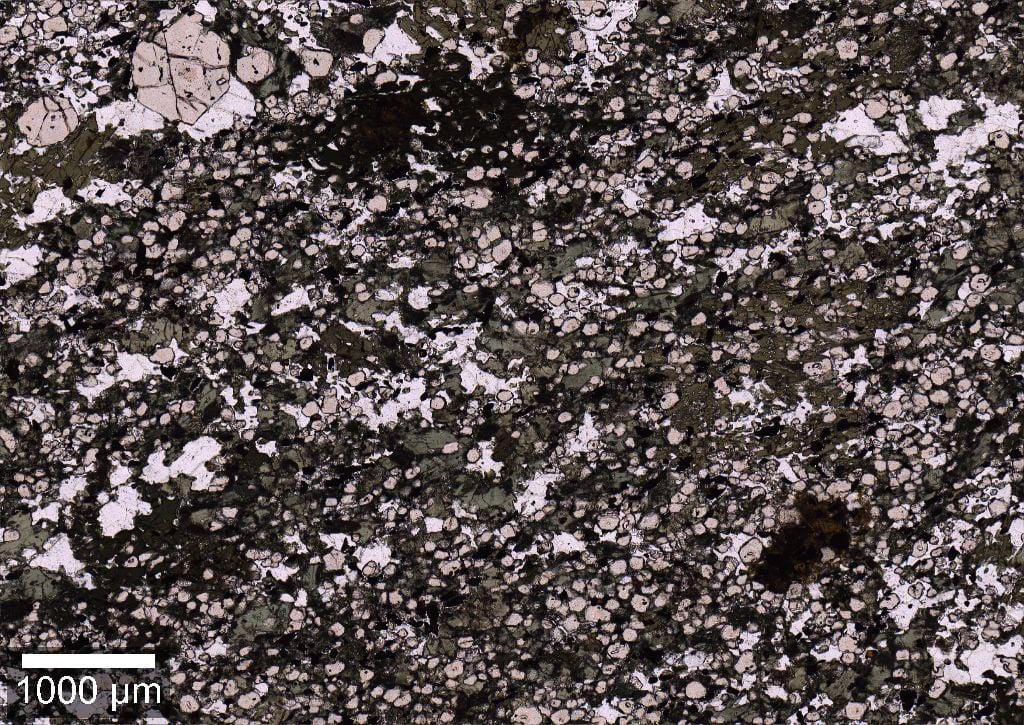 Microscope image of a thin section from the eclogite – the rock which was studied for this research. It formed at ultrahigh-pressure and the image shows its distinctive red-and-green crystals which gave information about its unusual journey. Credit: J Schönig/Göttingen University
Two explanations for the excess heat
One possible explanation is that shearing stress, produced as plates move against one another, heats rocks at shallow depths more than scientists have assumed. Another is that the subduction zone had not yet had enough time to develop the lower temperatures expected there. Both processes could have contributed.
Understanding these temperatures more accurately could help researchers assess how subduction affects earthquakes, volcanic activity, and the movement of chemicals through Earth, including the long-term carbon cycle. It could also clarify how subduction has operated over millions to billions of years and how it continues today.
 Dr. Jan Schönig. Credit: Dr. Jan Schönig
Reference: “Geothermal gradient change during subduction recorded by ultrahigh-pressure eclogite” by Jan Schönig, Silvio Ferrero, Kerstin Gresky, Dominik Sorger, Axel K. Schmitt, Bernd Wunder, Suzanne L. Baldwin and Adam F. Holt, 1 October 2026, Nature Geoscience.
DOI: 10.1038/s41561-026-02110-1
The research was supported by funding from the German Research Foundation (DFG).
Never miss a breakthrough: Join the SciTechDaily newsletter.
Follow us on Google and Google News.






















 English (US) ·
 French (CA) ·
 French (FR) ·